AI Coding Live News

Meta Rolls Out Muse Realtime Avatar in the US Muse App: Speech-Driven Expression and Gesture at ~870ms First-Byte Latency

On November 5 Meta AI (@AIatMeta) said Muse Realtime Avatar, previewed at Connect, is rolling out in the US Muse app, turning Muse Realtime Voice into interactive live avatars. The research blog describes an audio-driven Diffusion Transformer that shares the speech-token stream with voice for lip-sync and expression; a single GB200 session streams 448×768 at 25 fps with about 870 ms from end of user turn to first synchronized audio-video byte, with Meta Video Seal invisible watermarking. Muse is for users 18+; no global schedule or developer API was announced.

Meta Rolls Out Muse Realtime Avatar in the US Muse App: Speech-Driven Expression and Gesture at ~870ms First-Byte Latency

Key Takeaways

  • US Muse app rollout of Realtime Avatar after the Connect preview (@AIatMeta)
  • Shared speech VQ tokens drive audio decode and avatar video; causal chunks with self-forcing distillation cut ~120 teacher NFEs to 2 student NFEs (~60x)
  • Vendor perf: 448×768@25fps, ~870ms first-byte latency; ~8x serving capacity vs BF16 baseline, up to 12 concurrent sessions on one GB200
  • Vendor preference study favored Muse over Runway Characters and HeyGen LiveAvatar on overall and most axes
  • Safety: Video Seal invisible watermark; blog demos are not the full in-app avatar set; no public developer API stated
Read full story
Linked Models & Agents:
⚡ Muse Spark⚡ Muse Presence🤖 Muse🌐 Meta

Mistral Studio Adds Managed Agents and Apps: Durable Background Agents, Natural-Language Workflow Builder, HTTP Connectors and Online Evals

On November 5 Mistral expanded Mistral Studio. Managed Agents, built with the Agents SDK (mistralai-agents), run the same code in-process, self-hosted (agents serve) or Mistral-managed (agents deploy), with durable execution for hours or days, crash resume and human approvals. Mistral also shipped a Vibe-powered workflow builder, the mistral apps CLI, HTTP API connectors, webhooks and triggers, a managed search index, and offline and online evaluations, mostly in Public Preview.

Mistral Studio Adds Managed Agents and Apps: Durable Background Agents, Natural-Language Workflow Builder, HTTP Connectors and Online Evals

Key Takeaways

  • One agent codebase, three run modes: in-process, self-hosted agents serve, or managed agents deploy
  • Durable background execution for hours or days, resuming from the last finished step; Mistral stores sessions
  • Connectors now speak HTTP APIs with no MCP server needed; webhooks and triggers start workflows or agents
  • Managed agents emit agent, model and tool spans by default, and traces can become eval datasets in one click
  • Observability and evaluations are Enterprise-tier; most new features are Public Preview (vendor statement)
Read full story

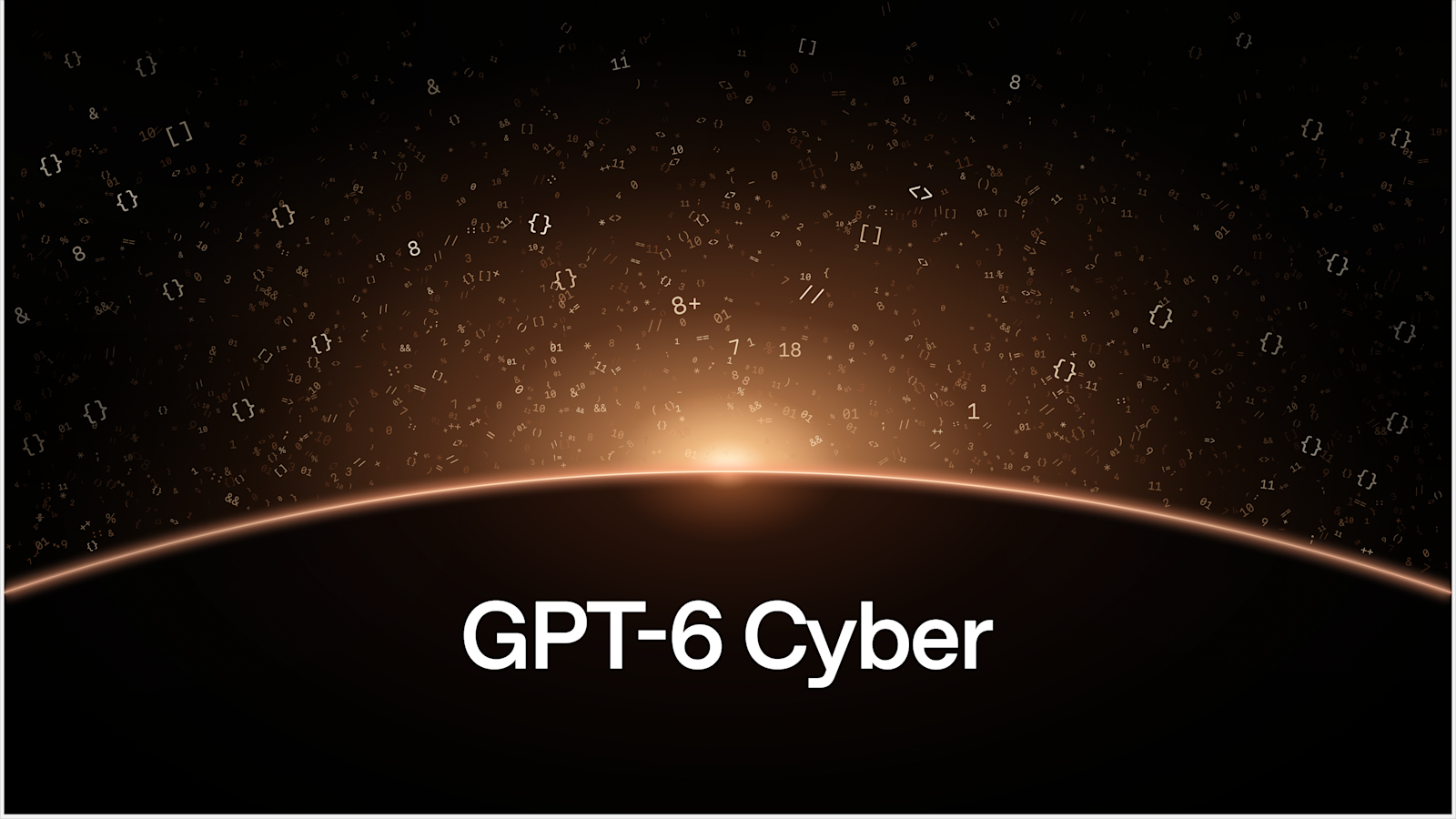
OpenAI Launches GPT-6 Cyber: ExploitGym 48.5%, Out-of-Scope Rate Down to 0.07%, Daybreak Red Select Access, Critical Preparedness

On November 5 OpenAI launched GPT-6 Cyber for authorized security research: ExploitGym rose from GPT-5.6 Cyber's 32.1% to 48.5% (about 51% relative), out-of-scope exploitation fell to 0.07% without deployment prompts and 0% with them. The model helped find 81 novel high-severity Firefox bugs and develop exploits for 948 Linux privilege-escalation cases, and OpenAI raised its Preparedness Framework cyber rating from High to Critical. It is initially available via API and Codex to select Daybreak Red customers, with expansion to all Red customers planned.

OpenAI Launches GPT-6 Cyber: ExploitGym 48.5%, Out-of-Scope Rate Down to 0.07%, Daybreak Red Select Access, Critical Preparedness

Key Takeaways

  • ExploitGym 48.5% vs GPT-5.6 Cyber 32.1% (~51% relative gain; vendor figures)
  • Scope alignment: 99.93% avoided out-of-scope services without deployment prompts; 100% with them
  • Real-world: 81 novel high-severity Firefox vulns; 1,724 Linux vulns reproduced, 948 exploits developed
  • Preparedness raised to Critical; RemoteExploitBench 95% completion (Astra refused 100%)
  • Select Daybreak Red via API/Codex first; Daybreak Blue alpha for Astra defensive use expanding
Read full story
Linked Models & Agents:

Gemini Omni 1.2 Flash GA: Up to 15s Clips, ~30% Lower Output Price, About $0.07/s at 720p; 1.1 Routes to 1.2 on Dec 3

On November 5 Google made Gemini Omni 1.2 Flash (gemini-omni-1.2-flash) generally available in AI Studio and the Gemini API: video generate/edit length rises to 15 seconds, vendor pricing cuts video output about 30% (~$12 per 1M tokens, roughly $0.07/s at 720p), with stronger multi-reference consistency and more natural speech. The changelog states that from December 3, 2026, requests to gemini-omni-1.1-flash will automatically route to 1.2 at 1.2 rates.

Gemini Omni 1.2 Flash GA: Up to 15s Clips, ~30% Lower Output Price, About $0.07/s at 720p; 1.1 Routes to 1.2 on Dec 3

Key Takeaways

  • Model id gemini-omni-1.2-flash live in AI Studio and Gemini API (changelog Nov 5)
  • Clips 3–15s at 360p/720p/1080p/4K; vendor notes consistency across up to 6 reference images
  • Vendor pricing: ~30% lower video output; ~$0.07/s at 720p (~$1.04 for 15s)
  • From 2026-12-03, gemini-omni-1.1-flash auto-routes to 1.2 at 1.2 rates
  • Consumers: Flow, Google Vids, and Gemini App support up to 15s clips and multi-turn edits
Read full story
Linked Models & Agents:
⚡ gemini-omni-1.2-flash⚡ gemini-omni-1.1-flash🌐 Google DeepMind
ADSponsored

Gemini API Computer Use Tool Goes GA: Browser, Mobile and Desktop Agents Production-Ready, No Breaking Changes from Preview

The Gemini API changelog shows the Computer Use tool reached general availability on October 30 across both the Interactions and GenerateContent APIs; @GoogleAIStudio announced on November 4 that there are no breaking changes from preview and it is production-ready for browser, mobile and desktop control agents. Official docs list supported models: Gemini 4 Argon, the recommended Gemini 3.8 Flash, Gemini 3.5 Flash-Lite and Gemini 3 Flash Preview. Actions carry an intent field, responses may include a safety_decision requiring user confirmation, and opt-in screenshot prompt-injection detection is available.

Key Takeaways

  • Computer Use is GA on both the Interactions and GenerateContent APIs as of October 30
  • Google says there are no breaking changes from preview, so existing code carries over
  • Three environments: browser, mobile and desktop; Gemini 3.8 Flash is the recommended model
  • Every action includes an intent field; safety_decision can require user confirmation or block
  • Opt-in screenshot prompt-injection detection (Gemini 3.5 Flash-Lite and later, off by default)
Read full story

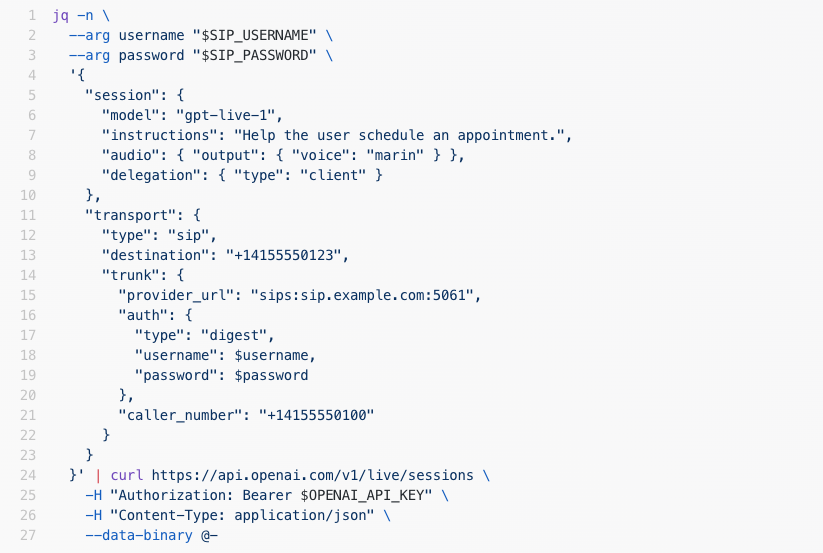
OpenAI Realtime Lead: GPT-Live Outbound Telephony API Hits GA via Any SIP Trunk, with HD Voice and DTMF

On November 4, Justin Uberti, Head of Realtime AI at OpenAI, said the GPT-Live outbound telephony API is generally available: Live voice agents can dial through any SIP trunk such as Telnyx or Twilio, with HD Voice and bidirectional DTMF. Official docs describe Live API + SIP transport; Greg Brockman amplified the note.

OpenAI Realtime Lead: GPT-Live Outbound Telephony API Hits GA via Any SIP Trunk, with HD Voice and DTMF

Key Takeaways

  • Justin Uberti (Head of Realtime AI, OpenAI): GPT-Live outbound telephony API is GA via any SIP trunk
  • Official docs: Live API POST /v1/live/sessions with transport.type=sip; HD Voice and bidirectional DTMF
  • Trunks need TLS (sips:) signaling and SDES-SRTP; examples cite Telnyx and Twilio
  • Documented limits: ~3 minutes ringing and ~2 hours connected call duration
  • Amplified by Greg Brockman; frame as a first-hand employee note, not an @OpenAI press post
Read full story
Linked Models & Agents:
⚡ OpenAI GPT Live 1🌐 OpenAI

Gemini 3.8 TTS Adds Voice Remixing: Edit Prebuilt or Designed Voices With Natural-Language Instructions Into New Reusable Voice IDs

The official Gemini API changelog released Voice remixing on November 4. Starting from a prebuilt voice, an Extended Voice Library voice or a Voice Design persona, developers describe changes such as accent, pitch, pacing or age in natural language, and POST /v1beta/voices returns a new standalone voice_ ID usable with Gemini 3.8 Flash TTS and Flash-Lite TTS. It is also available interactively in Google AI Studio.

Key Takeaways

  • New Voice remixing feature: apply relative natural-language edits to an existing voice to create a new standalone voice
  • Uses POST /v1beta/voices (type=prompted, store=true, plus a new prompted.base_voice field) and returns a voice_ ID with a 24kHz WAV preview
  • Base voices can be any of 30 prebuilt voices, an Extended Voice Library voice, or a stored custom voice_ voice in the project
  • The resulting voice_ ID works with gemini-3.8-flash-tts and gemini-3.8-flash-lite-tts and can itself be remixed again
  • The original voice is never modified, and deleting it does not affect voices remixed from it
Read full story
Linked Models & Agents:
⚡ Gemini 3.8 Flash TTS⚡ Gemini 3.8 Flash-Lite TTS🌐 Google🌐 Google DeepMind

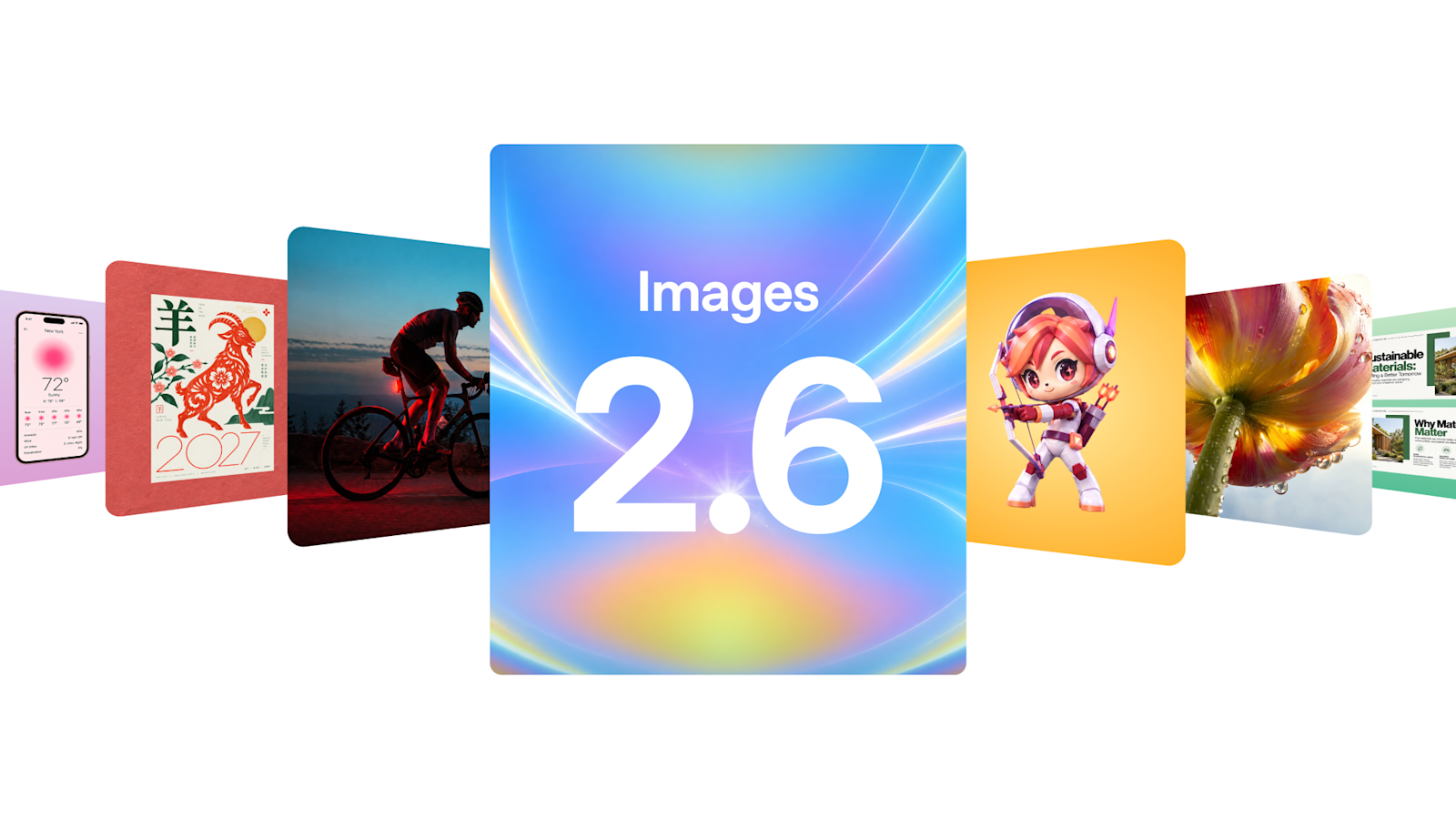
OpenAI Launches Images 2.6: GIFs and Saved Reference Images in ChatGPT, GPT-Image-2.6 Flare and Sunburst in the API, 50% Faster Generation

On November 4 OpenAI launched Images 2.6 across all ChatGPT and Codex tiers. Users can turn a prompt or image into a looping GIF and save reference images for reuse. The API gets two new models, GPT-Image-2.6 Flare and Sunburst, which generate images 50% faster than before; Flare can produce an image in about six seconds at low quality. The API also adds image markup edits, SVG export and a new complexity parameter.

OpenAI Launches Images 2.6: GIFs and Saved Reference Images in ChatGPT, GPT-Image-2.6 Flare and Sunburst in the API, 50% Faster Generation

Key Takeaways

  • Available today in ChatGPT and Codex on all subscription tiers across web, desktop and mobile
  • New GIF creation with adjustable speed and per-frame editing, even from a simple sketch
  • New API models: GPT-Image-2.6 Flare (as fast as about six seconds at low quality) and Sunburst (better consistency across edits at medium or high quality)
  • The API adds image markup edits, SVG export and a complexity parameter that controls how much the model plans
  • OpenAI says people create about 4 billion images per week across ChatGPT, Codex and the API
Read full story
Linked Models & Agents:
⚡ GPT-Image-2.6 Flare⚡ GPT-Image-2.6 Sunburst🤖 Codex🌐 OpenAI

OpenAI Details Autonomous Vulnerability Pipeline: An Upcoming Cyber Model Produced Exploits and Patches for 948 Linux Kernel Privilege Escalation Bugs for $1.2M in API Costs

On November 4 OpenAI published "A thousand fewer paths to root." Its autonomous pipeline for vulnerability discovery, validation, exploitation and patching scanned the Linux kernel in mid-October with an upcoming cyber model, reproduced 1,724 vulnerabilities and produced exploits and patches for 948 distinct local privilege escalation (LPE) bugs. The run cost $1,213,430 in API credits, about $1,279 per LPE, and hundreds of reports and patches have already gone to maintainers.

OpenAI Details Autonomous Vulnerability Pipeline: An Upcoming Cyber Model Produced Exploits and Patches for 948 Linux Kernel Privilege Escalation Bugs for $1.2M in API Costs

Key Takeaways

  • Five-stage pipeline: discovery, dynamic validation, exploitability assessment, patch generation, human review
  • Of 2,308 candidate findings, 1,724 were reproduced, yielding 291 info-leak PoCs and 948 distinct LPEs
  • Total cost $1,213,430; historical Pwn2Own and TyphoonPWN bounties imply a hypothetical $18.9M to $66.3M value
  • The newer model found more than 5x the novel LPEs of a July GPT-5.6 Sol run (166)
  • The agents used at least 10 novel Linux exploitation techniques, withheld for safety reasons
Read full story
Linked Models & Agents:

Artificial Analysis Makes Time per Task Its Headline Performance Metric: GPT-6 Astra Finishes a Max-Effort Task in About 17 Minutes, Ahead of Opus 5.5 and Gemini 4 Carbon

Independent benchmarker Artificial Analysis announced on X on November 4 (17:34 UTC) a new version of its API performance benchmarking: the headline metric moves from output speed to Time per Task, the time to finish one Intelligence Index task (output tokens per task divided by end-to-end output speed). It covers about 1,000 serverless endpoints, measures speed from sending the request to the final token, and adds multi-turn agentic coding and knowledge-work workloads. Per its data, GPT-6 Astra at max effort runs at 51 tokens/s yet finishes a task in about 17 minutes, against about 26 for Claude Opus 5.5 (max) and about 29 for Gemini 4 Carbon (high).

Key Takeaways

  • Time per Task equals output tokens per Intelligence Index task divided by end-to-end output speed, so a model that is fast per token but verbose can finish later than a slower model that uses fewer tokens.
  • End-to-end output speed runs from sending the request to the final token, including the wait before the first token (prefill and hidden reasoning); output tokens now come from each provider's API-reported counts instead of the o200k_base tokenizer.
  • GPT-6 Astra (max) runs at 51 tokens/s with about 50k output tokens per task and takes about 17 minutes; Claude Opus 5.5 (max, 111 tokens/s) takes about 26 minutes and Gemini 4 Carbon (high, 71 tokens/s) about 29, using roughly 120k to 170k tokens per task.
  • At each lab's API default effort (medium for all three), GPT-6 Astra, GPT-6.1 Sol and Opus 5.5 cut Time per Task by about 3 to 5x and Cost per Task by about 2 to 4x, scoring about 5 to 11 points lower; Opus 5.5 drops from about 26 minutes and $10.04 to about 6.8 minutes and $2.45.
  • The official methodology page lists this as version 3.0.0 (October 30), with runs now every 6 hours and a new endpoint error rate metric.
Read full story
ADSponsored

Kling 4.0 Flash Is Fully Available With an API: 3-20 Second 720P Videos via Text, Image and Omni Reference Generation

Kling AI announced on November 4 that Kling 4.0 Flash is open to all users on the website and via API, and is also reachable through MCP, CLI and AI plugins, including Photoshop, Premiere Pro and After Effects. The official API changelog says the Flash API generates 3 to 20 second videos at 720P, supports text-to-video, image-to-video and Omni reference-to-video, accepts up to 15 inputs per task and bills by total duration.

Kling 4.0 Flash Is Fully Available With an API: 3-20 Second 720P Videos via Text, Image and Omni Reference Generation

Key Takeaways

  • Flash had been in early access for Ultra yearly subscribers since September 28; it is now open to all users and the API.
  • The API paths are kling-4.0-flash under /text-to-video, /image-to-video and /omni-video; image-to-video takes a single first-frame image.
  • Prompts can be up to 26,000 English characters, with up to 10 reference images and 5 reference videos, plus 21:9 and adaptive aspect ratios.
  • Billing is by the total duration of input and output video; unit prices are on the official pricing page and were not stated in the announcement.
Read full story
Linked Models & Agents:
⚡ Kling 4.0 Flash⚡ Kling 4.0🌐 Kling AI🌐 Kuaishou🌐 Adobe

SenseTime Ships SenseNova 6.8 Flash: An Office Agent Model With Long-Term Memory and Proactive Interaction That Builds Animated Slides, Motion Posters and Editable Blender 3D Projects

On the evening of November 2, SenseTime released the official version of SenseNova 6.8 Flash, a multimodal agent model with two main upgrades. First, long-term memory and proactive interaction: it keeps user goals and constraints across tasks and sessions and flags affected items when information changes. Second, design generation across Web, SVG, Three.js, Blender, animated PPT and motion posters, with Figma integration. It is live in SenseNova Studio, the Raccoon assistant and the SenseNova Token Plan; the official X account says the Token Plan offers a free trial of 1,500 API requests every 5 hours. SenseTime says it beats some international frontier models on agent collaboration, data analysis and presentation generation, but the announcement lists no specific scores.

SenseTime Ships SenseNova 6.8 Flash: An Office Agent Model With Long-Term Memory and Proactive Interaction That Builds Animated Slides, Motion Posters and Editable Blender 3D Projects

Key Takeaways

  • The official release landed on the evening of November 2, positioned as a multimodal agent model for office collaboration and design delivery
  • Long-term memory plus proactive interaction: it remembers goals, constraints and preferences across sessions and suggests changes when related information shifts (demos ran on an internal Raccoon build)
  • Design output spans Web, SVG, Three.js, Blender, animated PPT and motion posters, producing editable PPTX files and Blender projects, with Figma integration
  • Available in SenseNova Studio, the Raccoon assistant and the SenseNova Token Plan; the official X post cites 1,500 free API requests every 5 hours
  • SenseTime only says it beats some international frontier models on agent collaboration, data analysis and presentation generation; no scores were published and there is no independent evaluation yet
Read full story
Linked Models & Agents:
⚡ SenseNova 6.8 Flash⚡ SenseNova Loop-9B-Preview🤖 Raccoon🌐 SenseTime

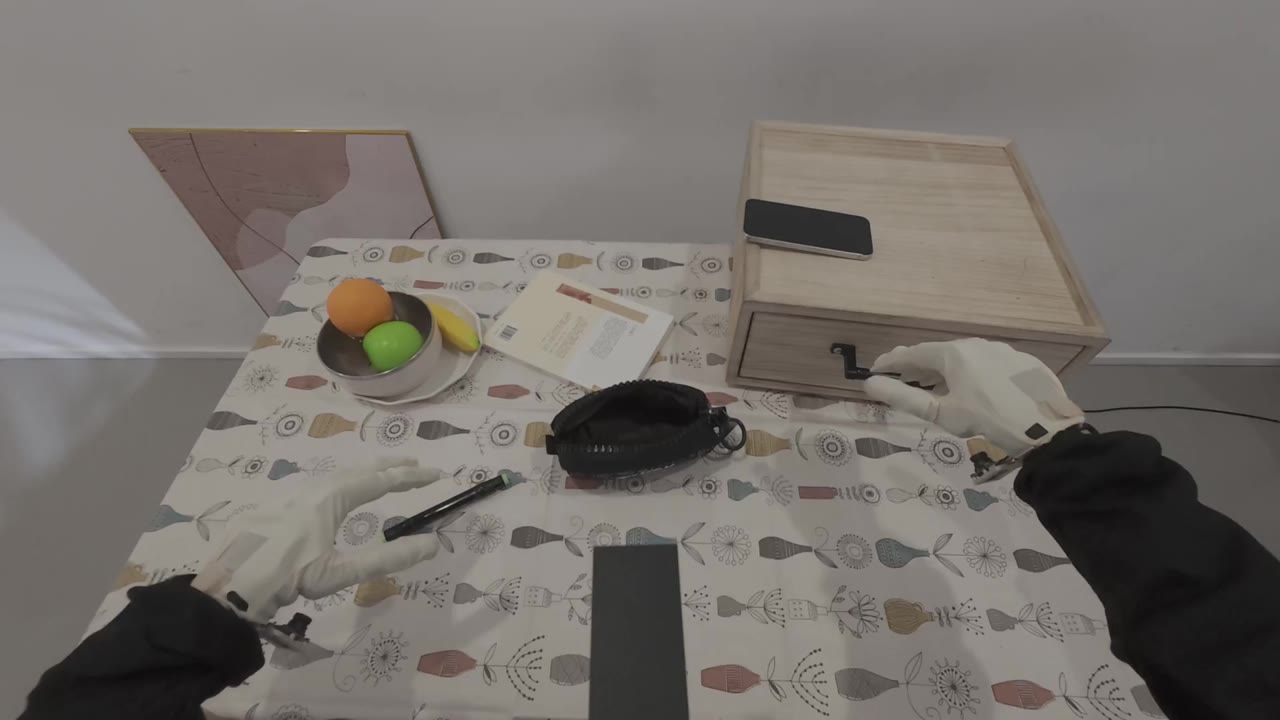
LiberAI Unveils Liber-0 World Action Model: Pretrained on 2.2M Hours of Human Experience, 36% Zero-Shot Success Across 60 Manipulation Tasks

Robotics company LiberAI announced Liber-0 on its official X account and technical blog. It is a World Action Model that jointly predicts future frames and actions, pretrained on more than 2.2 million hours of human experience and anchored by precise hand-motion data from its own LiberSense Glove. On 60 tasks proposed by GPT-6 across 600 trials, Liber-0 reached 36.0% overall success without robot demonstrations collected for those tasks, but only 10.5% on challenging multi-step tasks. No open weights or API have been announced.

LiberAI Unveils Liber-0 World Action Model: Pretrained on 2.2M Hours of Human Experience, 36% Zero-Shot Success Across 60 Manipulation Tasks

Key Takeaways

  • Zero-shot results: 63.5% on pick-and-place, 34.0% on short non-pick-and-place tasks and 10.5% on challenging multi-step tasks, 36.0% overall (60 tasks x 10 trials)
  • For comparison, GPT-6 Astra used alone as a robot policy scored 8.3%, 5.0% and 1.7% on the same three task groups, with 87.3 s of reasoning per decision
  • 10K hours of glove data beat 200 times more web human video (2,000K hours), suggesting precise action labels matter more than raw video volume
  • Glove data plus 25% of the robot demonstrations reached a progress score of 75.6, above the 72.8 from robot-only training with the full pool, using 75% fewer robot demos
  • All figures are LiberAI self-reported internal evaluations; no open weights, API or commercial timeline has been announced
Read full story
Linked Models & Agents:

Tencent Releases Hy4: First Hy Model With Vision and Computer Use, Live on Tencent Cloud and OpenRouter, Open Weights Planned

On November 4, Tencent Hy published Hy4 on its official site. Versus Augusts Hy4 preview, Tencent says it scaled up pre-training and post-training, added vision for the first time, added computer use across CLI and GUI, and trained specifically on Blender, CAD and engines like Unreal, Unity and Godot. Hy4 is live on Tencent Cloud and OpenRouter (tencent/hy4, 1M context) at the same API price as the preview. Weights and a system card are promised soon, and a cheaper Hy4 flash is coming.

Key Takeaways

  • Official blog: Introducing Hy4, dated 2026-11-04; the Tencent Hy transparency center also lists V1.0 Hy4
  • Two firsts: vision (fine-grained image detail, complex charts, math visual reasoning) and computer use (CLI plus GUI, with targeted training on Blender, CAD and long cross-app workflows)
  • Tencent's own evals: on 579 real finance tasks rated by 213 finance professionals Hy4 scores 3.04, first among open-weight models (DeepSeek-V4.1-Flash-1017 2.97, Kimi K3.1 Pro 2.68, GLM-5.3 2.68); GameDev +19.1%, GameLogic +9.8%; internal search hallucination rate 15.76% to 5.45%
  • Same API price as the preview: $0.042 cached input, $0.834 input, $2.501 output per million tokens; the OpenRouter page currently shows 50% off ($0.417/$1.251), 1,048,576 context and up to 65,536 output tokens
  • Weights are not out yet: Tencent says it will open-source them with a full system card, working with vLLM and SGLang; Hy4 flash is due soon
Read full story
Linked Models & Agents:
⚡ Hy4⚡ Hy4 preview⚡ Hy4 flash🤖 CodeBuddy🤖 WorkBuddy🌐 Tencent

fal Announces $1.65B Across Series E and F for Generative Media Inference, Led by Sequoia and Bessemer with NVIDIA

fal, which hosts inference for image, video and audio models, announced on its official X account and blog on November 3 that it raised a combined $1.65B across Series E and Series F. Sequoia Capital led the Series E, closed earlier this year, and Bessemer Venture Partners led the Series F with continued investment from NVIDIA. fal did not disclose valuation or per-round amounts; Bloomberg reported the Series F at $1.3B at a $16B valuation, double the $8B from April. fal says the money funds inference capacity, hiring, and research and platform work in 2027.

fal Announces $1.65B Across Series E and F for Generative Media Inference, Led by Sequoia and Bessemer with NVIDIA

Key Takeaways

  • Confirmed by fal: $1.65B combined across Series E and F, Sequoia led E, Bessemer led F, NVIDIA continued investing (fal blog)
  • fal did not disclose valuation; Bloomberg reported the Series F at $1.3B at a $16B valuation and the Series E at $350M at $8B
  • Per Bloomberg, CEO Burkay Gur said demand spiked so much over the summer that fal had to rate limit customers, driving the large raise
  • Funds go to inference capacity, team growth and new research in 2027; fal hosts many third-party media models such as Seedance, Kling, Veo and FLUX
Read full story