AI Coding Live News

Canva launches Brush, a vision-language model for design editing that is up to 69% faster and 46% cheaper per task

On Oct 29 Canva launched Brush, Canva Research's first vision-language model for design. It reads a design's layout, layers and style, edits anything from one line of copy to a whole deck, and iterates through an agent loop that writes code and then inspects the page. Canva says it is up to 69% faster and 46% cheaper per task than its previous design agent (vendor figures). It now powers supported design edits in Canva AI for Canva Pro subscribers.

Canva launches Brush, a vision-language model for design editing that is up to 69% faster and 46% cheaper per task

Key Takeaways

  • Canva says Brush is up to 69% faster on general design editing tasks and 46% cheaper per edit task than its previous design agent (vendor figures from internal testing; sample size and conditions not published)
  • Brush was post-trained from a leading open-weights model and then refined with large-scale reinforcement learning, with rewards for visual quality, layout that follows design principles, and task completion
  • Built by Canva Research, a lab of about 160 people, one week after Canva shipped its first image model, Canva Craft
  • From Oct 29 it powers supported design edits in Canva AI for Canva Pro subscribers, selected from a Brush dropdown; wider availability is coming soon
  • The official post had about 276K views, 618 likes and 452 bookmarks when this was written
Read full story
Linked Models & Agents:
⚡ Canva Brush⚡ Canva Craft🌐 Canva

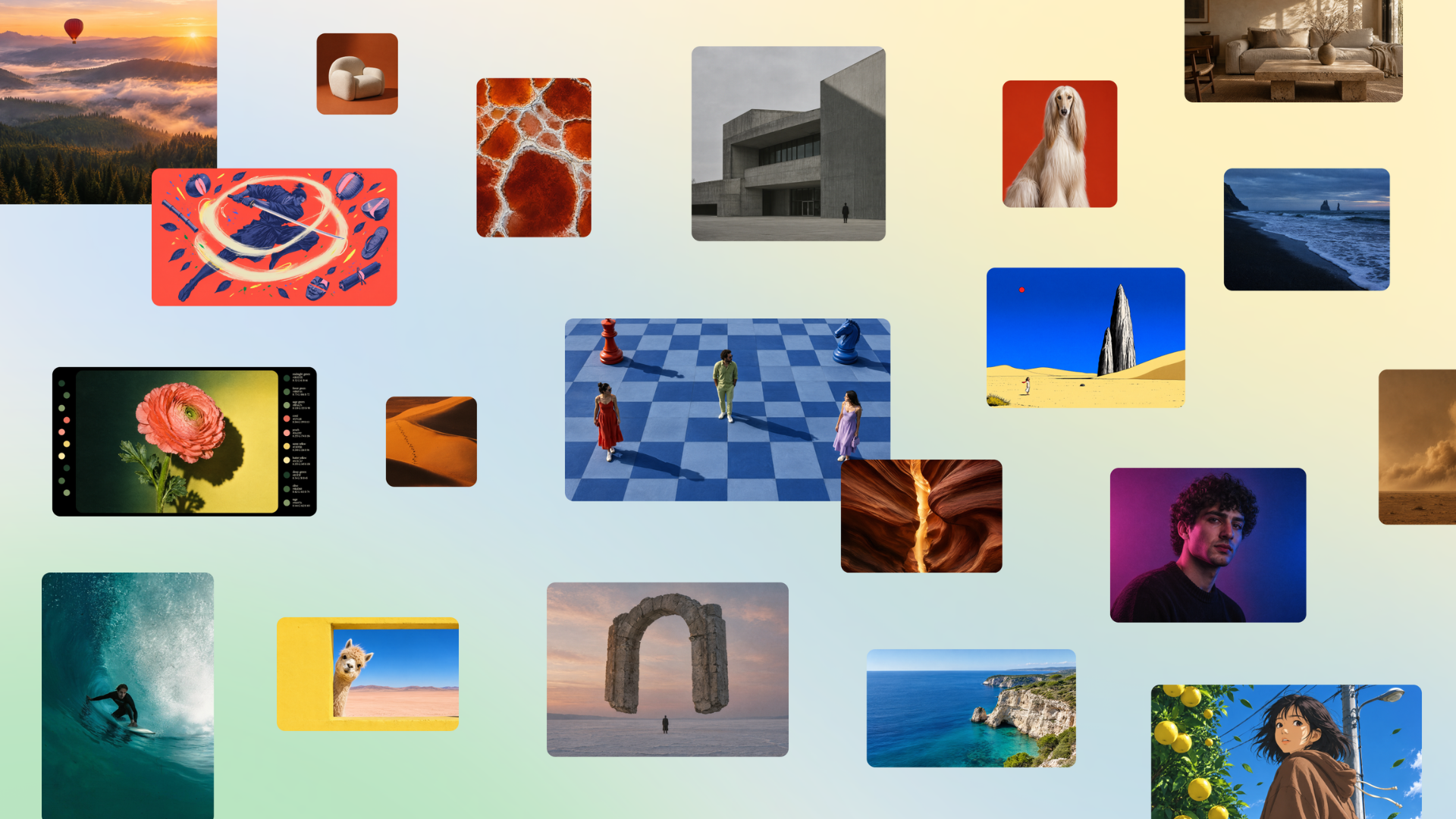
Canva launches Canva Craft, its first in-house image model: plans the layout before rendering, outputs up to 2K, renders text in 55 languages, and is open to all users and the public API

On Oct 22 Canva released Canva Craft, the first image-generation foundation model trained from scratch by its in-house lab, Canva Research. It works in two stages: a planning model writes out the composition (elements, spatial relationships, hierarchy and any text), then a rendering model produces the image at up to 2K across more than 30 aspect ratios. Training leaned heavily on millions of human-made templates from Canva's library, such as posters, social posts, slides and infographics. Canva says it debuted 4th overall on the crowdsourced DesignArena leaderboard and 1st in the People & Portraits and Landscapes & Nature categories. It is available now to all Canva users in Dream Lab and to developers through the Connect API as craft_v1_2k, with Canva MCP access coming soon.

Canva launches Canva Craft, its first in-house image model: plans the layout before rendering, outputs up to 2K, renders text in 55 languages, and is open to all users and the public API

Key Takeaways

  • Two-stage design: a planning model writes the composition (elements, relative scale, hierarchy, text), then a rendering model outputs up to 2K across 30+ aspect ratios (announcement)
  • Vendor-reported ranking: 4th overall on DesignArena, 1st in People & Portraits (of 87 models) and Landscapes & Nature (of 85), 2nd in Abstract & Patterns and 4th in Products
  • Training emphasized millions of human-made Canva templates; designers judged more than 25,000 head-to-head image pairs against leading models
  • For developers: POST /v1/image-generations on the Connect API with model set to craft_v1_2k, which spends the user's AI credits (API docs)
  • Prompts work in any language and in-image text covers 55 languages; the faster, cheaper Craft-fast and Craft-ultrafast variants and MCP access are not out yet
Read full story
Linked Models & Agents:
⚡ Canva Craft⚡ Craft-1 2K🌐 Canva

VS Code Preview Introduces Canvases: Shared Workspaces for Developers and Coding Agents

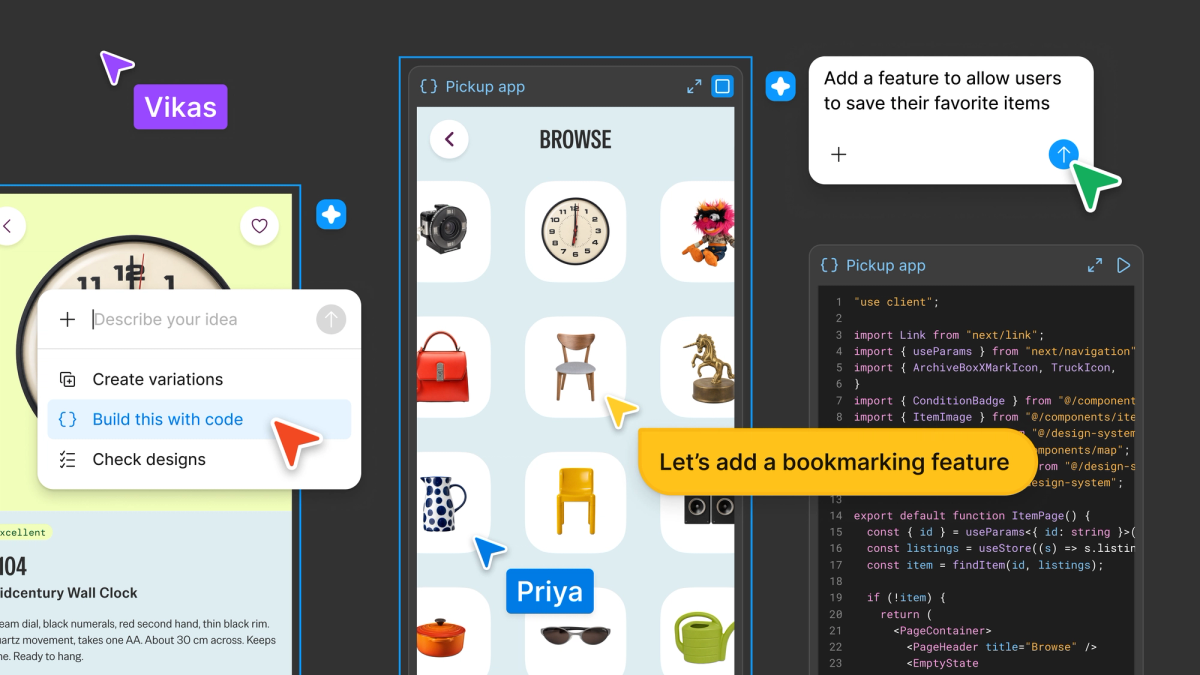
The Microsoft VS Code team announced Canvases in VS Code Preview (v1.142), introducing dedicated shared visual workspaces connecting developers with autonomous coding agents. Addressing the severe UX limitations of cramped sidebar chat windows—where complex multi-file architectural modifications and agent diffs become hard to track—Canvases provides an expansive, interactive infinite-canvas whiteboard. Developers and agents (such as GitHub Copilot, Claude Code, and Cline) can collaboratively organize system flowcharts, live interactive code diffs, execution traces, and unit test rollouts side by side.

VS Code Preview Introduces Canvases: Shared Workspaces for Developers and Coding Agents

Key Takeaways

  • Microsoft VS Code Preview v1.142 introduced Canvases, pioneering a spatial human-agent collaborative interface
  • Transceives beyond claustrophobic sidebar chats to an expansive, pan-and-zoom whiteboard mapping concurrent multi-file agent diffs
  • Embeds code files, architecture diagrams, interactive git diffs, terminal outputs, and test runners as unified interactive cards
  • Natively bridges GitHub Copilot, Claude Code, and third-party coding agent harnesses, accelerating IDE spatial development
Read full story

ControlNet Author Team Releases MTEdit: Packed Trajectories Beat Sequential Rollouts with 2.69M Multi-Turn Edits

ControlNet creator Lvmin Zhang and researchers from Stanford and CUHK unveiled MTEdit (arXiv:2610.23751). To resolve the visual degradation and cumulative error drift inherent in conventional sequential rollout for multi-turn image editing, the team introduced Packed Trajectory Canvas (PTC). MTEdit constructs a landmark dataset of 500K trajectories and 2.69M editing turns (averaging 5.38 turns, up to 8 turns), demonstrating stable instruction following and ambient identity consistency across 8 consecutive edits.

ControlNet Author Team Releases MTEdit: Packed Trajectories Beat Sequential Rollouts with 2.69M Multi-Turn Edits

Key Takeaways

  • ControlNet author Lvmin Zhang's team released MTEdit (arXiv:2610.23751), introducing Packed Trajectory Canvas (PTC) to eliminate visual drift in multi-turn image editing
  • Packs four progressive edits into a single 2x2 canvas, generating the full trajectory in one diffusion pass to enforce ambient consistency
  • Constructs the largest multi-turn dataset with 500K trajectories and 2.69M edits spanning up to 8 turns (averaging 5.38 turns per trajectory)
  • Maintains superior fidelity through Turn 8 with a 7.63 score, with full code and datasets released on GitHub
Read full story
Linked Models & Agents:
ADSponsored

Cursor Cloud Agents Can Now Build and Share Interactive Canvases for Live Dashboards and Technical Reports

Cursor (@cursor_ai) announced that Cursor Cloud Agents can now build Interactive Canvases. While a cloud agent works through a repository, developers can ask it to construct interactive dashboards or visual technical reports and share the finished canvas directly with their team via a single link.

Cursor Cloud Agents Can Now Build and Share Interactive Canvases for Live Dashboards and Technical Reports

Key Takeaways

  • Interactive Canvases in Cursor Cloud Agents: allows developers to request live interactive dashboards and visual reports while the agent works
  • Instant team link sharing: finished canvases can be shared with teammates as a direct URL for collaborative review
  • Clean repository workflow: keeps diagnostic visualizations and interactive PR walkthroughs in cloud canvases without polluting git history
Read full story

Figma Config India: Code Layers and Specs enter open beta, and agents can read and write specs and code layers through the Figma MCP server

At Config India on 2026-10-15 Figma launched agent-oriented features: Code Layers (running code on the canvas) in open beta on all plans, Specs (collaborative Markdown spec containers) in open beta on paid plans, Guidelines in open beta and Code Sources in closed beta. The Figma MCP server can now generate code layers and read/write Specs, with 20 new MCP partner integrations including OpenCode and JetBrains Junie.

Figma Config India: Code Layers and Specs enter open beta, and agents can read and write specs and code layers through the Figma MCP server

Key Takeaways

  • Code Layers: open beta on all plans, created from designs, local folders, GitHub, MCP or Chrome-extension page capture; uses AI credits, free on paid plans through 2026-11-04
  • Specs: open beta on Professional/Organization/Enterprise across web, desktop and mobile; pasting a Spec link into a coding agent carries Markdown, frame references, code layers and Code Connect snippets
  • MCP: the figma-spec skill lets agents read, create and update Specs; use_figma canvas writes remain a free beta with up to 20 KB output per call
  • Design systems: Guidelines open beta and Code Sources closed beta (import from a GitHub repo or npm package) on paid plans; Payload lands in Figma Make, with downloads up 6x in 12 months per Figma
  • Ecosystem: 20 new MCP partner integrations including OpenCode, Dia, JetBrains Junie and Meta Muse; the Figma agent is generally available
Read full story

OpenHands v1.24.0: workspace folder toggle, read-only shared automations, MCP OAuth kept on cloud save

OpenHands Agent Canvas v1.24.0 (2026-09-25) adds header workspace-folder toggles, read-only shared automation conversations on cloud, MCP OAuth credentials preserved on cloud saves (skip consent when tokens still work), OpenAI subscription caches scoped by backend, and Node.js ≥24.

OpenHands v1.24.0: workspace folder toggle, read-only shared automations, MCP OAuth kept on cloud save

Key Takeaways

  • Shipped 2026-09-25: GitHub v1.24.0 + npm @openhands/[email protected]
  • UX: toggle all workspace folders from Conversations header; shared automation conversations open read-only on cloud
  • MCP: keep OAuth credentials on cloud saves; skip consent when tokens still work; render ACP tool-call blocks in chat cards
  • Multi-backend: scope OpenAI subscription caches and settings cache by answering backend
  • Install: npm i -g @openhands/agent-canvas requires Node ≥24; see docs.openhands.dev
Read full story

DiffusionGemma-Jev runs on vLLM: one denoising step yields answer confidence distributions

vLLM (@vllm_project) says DiffusionGemma-Jev now runs on vLLM. The server seeds a canvas with a response template, leaves only answer slots noisy, then reads a probability distribution from every slot in a single denoising step—so yes/no, multiple-choice, or scored questions return both an answer and confidence. Upstream PR: vllm-project/vllm#57250.

Key Takeaways

  • DiffusionGemma-Jev is now servable on the vLLM inference stack.
  • Template canvas plus one denoising step yields confidence distributions over structured answers.
  • Fits yes/no, multiple-choice, and scored decision queries that need calibrated probabilities.
Read full story
Linked Models & Agents:

draw.io Lands in Claude Connector Directory With Inline Interactive Diagrams

draw.io announced it is now in the Claude connector directory: ask Claude for a diagram and it renders inline as an interactive draw.io canvas, with one click into the editor for further edits and no install required. It targets docs, architecture, and explanatory diagrams where text-based formats struggle with complex layouts.

Key Takeaways

  • Listed in the Claude connector directory for in-chat diagram generation
  • Inline interactive rendering with one-click open in the draw.io editor
  • No install needed—useful for architecture and complex explanatory diagrams
Read full story
Linked Models & Agents:

GitHub: Copilot Canvases give agentic workflows a durable shared surface for runs, diffs, and review

GitHub’s official post on Copilot Canvases: a durable shared surface instead of endless agent chat scrolls, tracking what ran, what changed, and what still needs review. The write-up stresses visible, steerable, cost-efficient agentic workflows and points to Java Modernization Studio, Site Studio in awesome-copilot, plus /create-canvas.

Key Takeaways

  • Product: Canvases replace endless agent chats with a durable shared surface.
  • Value: track runs, changes, and review queue with steerable, cost-aware workflows.
  • Ecosystem: awesome-copilot ships Java Modernization Studio and Site Studio; build more with /create-canvas.
Read full story
ADSponsored

Google Pics GA in Workspace: Nano Banana image gen with object-level editing

Google launched Google Pics on September 1 for Workspace business tiers and Google AI Pro/Ultra. Built on the Nano Banana image model, it supports prompt generation, object segmentation edits, in-image text edit/translate, 2K/4K upscaling, and multiple generations per prompt. It is live inside Docs and Slides via pics.new, with Drive coming in weeks — an AI-first Canva-style Workspace surface rather than a creator template marketplace.

Key Takeaways

  • Available on Business Standard/Plus, Enterprise Standard/Plus, and Google AI Pro/Ultra (plus Education Pro)
  • Object-level and in-image text edits avoid full-image regenerations
  • Docs/Slides start today; Drive follows in weeks; standalone entry is pics.new
Read full story
Linked Models & Agents:
⚡ Nano Banana⚡ gemini🌐 Google DeepMind

GitHub Copilot app unifies chat-to-dev: multi-agent sessions, Quick Chat, and browser canvas

GitHub said developers no longer need to hop between a separate AI chat and their development surface. Inside the GitHub Copilot app they can start projects, run multiple agent sessions, use Quick Chat, and preview the app in a browser canvas. The pitch is a single control plane from conversation to running UI, rather than copying context across tools.

Key Takeaways

  • The Copilot app can run multiple agent sessions in one surface instead of extra chat windows.
  • Quick Chat handles short questions; a browser canvas previews the app being built.
  • GitHub is positioning the app as the path from chat through coding to live preview.
Read full story
Linked Models & Agents:

GitHub Copilot generally available with Gemini 3.7 Flash, MAI-Code-1.1-Flash, and Kimi K3

GitHub said Gemini 3.7 Flash, Microsoft MAI-Code-1.1-Flash, and the Fireworks-hosted open-weight Kimi K3 model are generally available in the GitHub Copilot app, Copilot CLI, VS Code, and related surfaces. Developers can switch among Google's low-cost coding model, Microsoft's in-house code model, and an open-weight option without leaving the Copilot workflow. The same Copilot weekly thread also promoted a Customize tab that gathers MCP servers, plugins, skills, and canvases, plus Slack and Microsoft Teams integrations that let teams mention GitHub to plan changes, investigate problems, and hand off coding tasks from chat. For organizations standardizing on GitHub as the agent control plane, the release is less about a single SOTA model and more about routing: pick Gemini 3.7 Flash for cheap iteration, MAI-Code for Microsoft-stack tasks, or Kimi K3 when open weights and Fireworks hosting matter.

Key Takeaways

  • Gemini 3.7 Flash, MAI-Code-1.1-Flash, and Kimi K3 are GA in Copilot app, CLI, and VS Code.
  • Kimi K3 lands as a Fireworks-hosted open-weight option inside Copilot.
  • Teams can route tasks across closed-source efficiency models and open weights, including from Slack and Teams.
Read full story

GitHub Copilot app Customize tab is generally available for MCP servers, plugins, skills, and canvases

GitHub made the Customize tab generally available in the Copilot app. It gathers MCP servers, plugins, skills, and canvases in one discovery surface, with featured customizations and type filters so teams can tailor Copilot without hand-editing scattered config files. GitHub's changelog dates general availability to August 25, 2026.

Key Takeaways

  • Customize unifies MCP servers, plugins, skills, and canvases inside the Copilot app.
  • Featured listings and type filters replace scattered JSON/config edits.
  • Gives orgs a single place to install shared toolchains and personal skills.
Read full story
Linked Models & Agents:

OpenHands introduces Agent Client Protocol (ACP) for universal execution across Canvas, SDK, and Cloud

All-Hands AI introduced Agent Client Protocol (ACP) across OpenHands Agent Canvas, SDK, and Cloud. Under this open standard, any ACP-compatible coding agent can run through a single unified interface locally, remotely, or in the cloud, representing a major leap for open SWE agent interoperability.

Key Takeaways

  • Transforms OpenHands from a standalone agent into a universal multi-agent execution runtime.
  • Agent Canvas, Python SDK, and Cloud platform support ACP protocols on day one.
  • Unifies local, remote, and cloud APIs for composing heterogenous multi-agent workflows.
Read full story
Linked Models & Agents: