AI Coding Live News

Notion: MCP Shared Brain Lets ChatGPT, Claude, Muse and Bot Share Memories and Skills, With Official Agent Setup Prompts

On November 4 NotionHQ announced that via Notion MCP, ChatGPT, Claude, Muse and Bot can read and write the same Memories and Skills—one shared brain across agents. Official setup prompts (v0.0.6, Oct 30), help docs and a Nov 3 MCP use-cases blog corroborate the product push.

Notion: MCP Shared Brain Lets ChatGPT, Claude, Muse and Bot Share Memories and Skills, With Official Agent Setup Prompts

Key Takeaways

  • NotionHQ post (Nov 4, 19:14 UTC) had about 3,271 likes, 225 reposts, 4,560 bookmarks and ~589K views when fetched
  • Product claim: ChatGPT / Claude / Muse / Bot share Memories and Skills in Notion so switching agents does not reset context
  • Official setup prompt v0.0.6 (2026-10-30): walks agents through an Agent Operating Guide and custom-instruction paste for ChatGPT / Claude
  • Help center: Notion MCP works with Claude, Cursor, ChatGPT Pro and more; Enterprise can approve a whitelist and govern connections
  • Vendor blog (Nov 3): five team stories of MCP workflows as reusable SOPs; Skills via MCP are listed as coming soon
Read full story

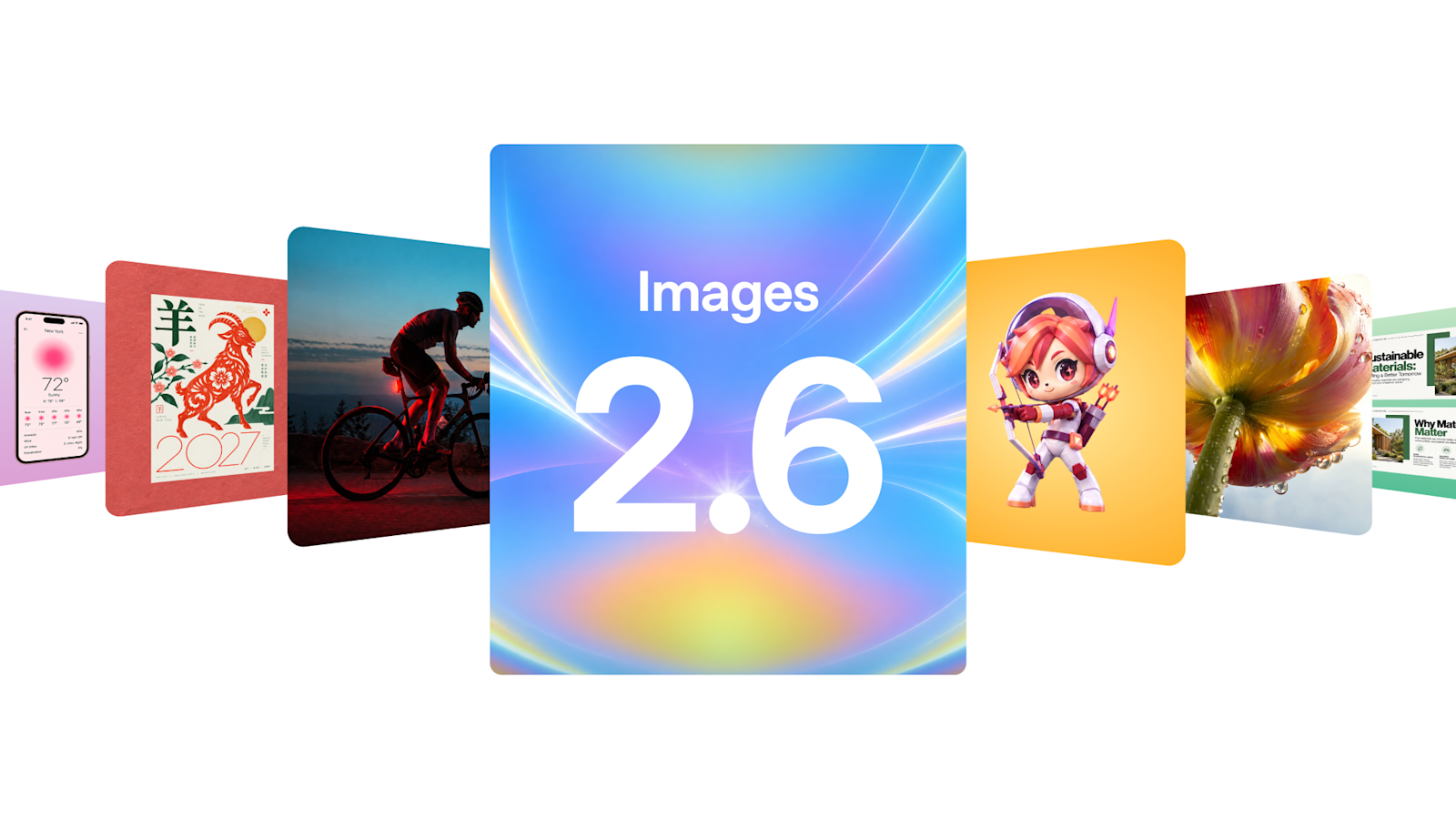
OpenAI Launches Images 2.6: GIFs and Saved Reference Images in ChatGPT, GPT-Image-2.6 Flare and Sunburst in the API, 50% Faster Generation

On November 4 OpenAI launched Images 2.6 across all ChatGPT and Codex tiers. Users can turn a prompt or image into a looping GIF and save reference images for reuse. The API gets two new models, GPT-Image-2.6 Flare and Sunburst, which generate images 50% faster than before; Flare can produce an image in about six seconds at low quality. The API also adds image markup edits, SVG export and a new complexity parameter.

OpenAI Launches Images 2.6: GIFs and Saved Reference Images in ChatGPT, GPT-Image-2.6 Flare and Sunburst in the API, 50% Faster Generation

Key Takeaways

  • Available today in ChatGPT and Codex on all subscription tiers across web, desktop and mobile
  • New GIF creation with adjustable speed and per-frame editing, even from a simple sketch
  • New API models: GPT-Image-2.6 Flare (as fast as about six seconds at low quality) and Sunburst (better consistency across edits at medium or high quality)
  • The API adds image markup edits, SVG export and a complexity parameter that controls how much the model plans
  • OpenAI says people create about 4 billion images per week across ChatGPT, Codex and the API
Read full story
Linked Models & Agents:
⚡ GPT-Image-2.6 Flare⚡ GPT-Image-2.6 Sunburst🤖 Codex🌐 OpenAI

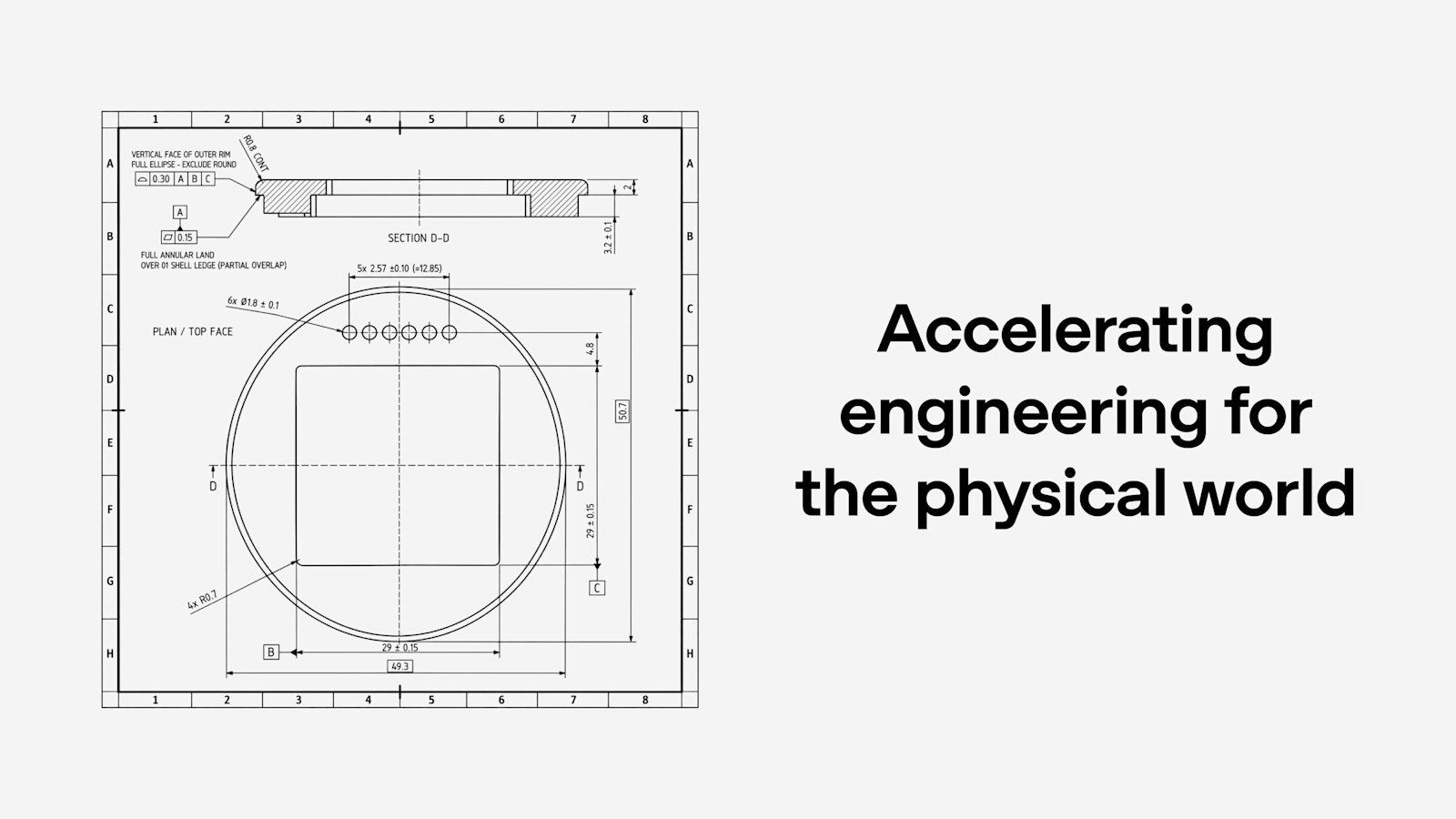
OpenAI Shares Progress on ChatGPT and Codex for Hardware Engineering: GPT-6 Astra Designs a Codex Device in Under a Week, Mazda Joins for Aerodynamics Research

On November 3, OpenAI published "Accelerating engineering for the physical world," describing how its models help with mechanical design, electrical design and simulation. Two employees used GPT-6 Astra to design a device for talking to Codex (enclosure, PCB, firmware and software) in under a week, and a contract manufacturer built a small prototype batch in under a month, though manufacturing readiness still took several rounds of human review. Token usage across OpenAI hardware teams has grown 23-fold since February. On BenchCAD 2.0, a newer internal model averaged 0.875 versus 0.594 for GPT-6 Astra at its highest reasoning setting (OpenAI-reported). OpenAI is also expanding its work with Chip Ganassi Racing and announced a new research collaboration with Mazda.

OpenAI Shares Progress on ChatGPT and Codex for Hardware Engineering: GPT-6 Astra Designs a Codex Device in Under a Week, Mazda Joins for Aerodynamics Research

Key Takeaways

  • In a test with no direct human edits, GPT-6 Astra handled the look, enclosure structure, component selection, PCB layout, UI and firmware; two employees finished the design in under a week as a side project, and prototypes came back in under a month, per the OpenAI blog.
  • OpenAI names the gaps: Astra did not consistently account for the manufacturer's production limits, tolerances or assembly details, so manufacturing readiness took several rounds of review.
  • OpenAI hardware and infrastructure teams use Codex and ChatGPT for CAD models, 2D manufacturing drawings, simulation and FEA setup, and design reviews; token usage has grown 23-fold since February (OpenAI-reported).
  • BenchCAD 2.0 (reconstructing 3D parts and assemblies, identifying circuit-board connections): a newer internal model scored 0.875 versus 0.594 for GPT-6 Astra at its highest reasoning setting (OpenAI-reported; the internal model is unnamed and unreleased).
  • Collaborators: Chip Ganassi Racing is testing 3D-scan-to-editable-CAD and 2D drawing workflows; Mazda is working with OpenAI researchers on airflow and structural simulations for vehicle design, with results promised "in the coming months."
Read full story

OpenAI's Tibo Says Dots Will Expand Its Model Family to Include GPT-6.1 Terra for Speed and Wider Reach

At 15:50 UTC on Nov 2, Tibo (@thsottiaux), whose X bio reads "Codex & ChatGPT @OpenAI", posted that OpenAI is working on expanding the family of frontier models that power dots, including GPT-6 Astra and GPT-6.1 Terra, with others to come. He said Terra brings speed and "a nice personality upgrade" and will help bring dots to more people. Dots are the always-on agents in ChatGPT with their own cloud computer, launched on GPT-6 Astra. This is a first-hand post by an OpenAI employee, not a formal company announcement; no timing or plan details have been published.

OpenAI's Tibo Says Dots Will Expand Its Model Family to Include GPT-6.1 Terra for Speed and Wider Reach

Key Takeaways

  • Source: an original post by Tibo (@thsottiaux, X bio "Codex & ChatGPT @OpenAI"), which drew about 2,475 likes, 622 replies and 127K views within roughly 20 minutes.
  • Key point: dots will no longer run only on GPT-6 Astra; GPT-6.1 Terra is being added, with more models later. It is described as work in progress with no launch date.
  • Terra per OpenAI: standard API pricing of $1 input and $5 output per million tokens, 50% below GPT-5.6 Terra and GPT-6.1 Sol, and over 3x faster task completion than GPT-6 Astra (OpenAI).
  • Current access: dots are rolling out to Pro users 18+ outside the EEA, Switzerland and the UK and to Business Premium; Enterprise needs an admin to enable the beta (Help Center).
Read full story
ADSponsored

Parameter discloses a ChatGPT share-link flaw that let one opened link read private chats; OpenAI fixed it Oct 26 and rated it P1

Security firm Parameter published an exploit chain in which an attacker publishes a malicious conversation through ChatGPT's normal sharing feature; when a signed-in victim opens the /share/ link, the payload runs as chatgpt.com in their session, lists conversations, reads a private chat that was never shared, and sends data out. Parameter reported it through OpenAI's bug bounty on October 18; OpenAI raised it from P2 to P1, fixed it on October 26 and paid a $5,000 bounty. Parameter reports no real-world use, and users do not need to do anything.

Parameter discloses a ChatGPT share-link flaw that let one opened link read private chats; OpenAI fixed it Oct 26 and rated it P1

Key Takeaways

  • Timeline: reported Oct 18; OpenAI reproduced it Oct 21 and raised it from P2 to P1; both web frontends fixed by Oct 26; published Oct 28 (Parameter writeup)
  • Very low bar: no app install, project join or pasted code; in the auto-preview variant, opening the link was the only action, firing after about 4.5 seconds (per Parameter)
  • Three root causes: MathLive did not check the message sender, the message could carry raw HTML as keyboard-layout data, and that HTML could create an unsandboxed iframe with the chatgpt.com identity; YouTube JSONP was only the final CSP bypass
  • Bounty was $5,000; Simon Willison called it "a bit cheap" for a flaw this serious (blog)
  • MathLive 0.111.2 (Oct 31) now defaults to same-origin validation and blocks cross-window custom HTML layouts (changelog)
Read full story

Codex 28-day run, day 27: OpenAI's Tibo posts "Banked 1/2" as the first of two saved usage resets lands

At 00:43 UTC on Nov 1, Tibo (@thsottiaux), who works on Codex and ChatGPT at OpenAI, posted "Banked 1/2" on X; the post has about 6,860 likes and 660K views. In his day 26 post the day before he had teased that "next two days will be resets… banked…", so this is day 27 of his 28-day run: the first of two Codex usage resets you can save and use when you choose. According to OpenAI's Help Center, a banked reset does not refresh usage on arrival; you redeem it in desktop Settings > Usage & billing, web Usage settings, or /usage in the CLI. Eligible plans and the expiry for this particular offer have not been published.

Key Takeaways

  • Source: Tibo's own X post "Banked 1/2" (00:43 UTC, Nov 1), with about 6,860 likes, 1,066 replies and 660K views as of 15:10 SGT
  • Context: his day 26 post (about 14K likes) teased "next two days will be resets… banked…", so a second one is expected on day 28
  • Where to redeem: desktop Settings > Usage & billing, web Usage settings, or /usage then Redeem reset in Codex CLI; not available in the mobile app (OpenAI Help Center)
  • Rule: at least one covered allowance must be below 80% remaining; Plus and Business Standard get the 5-hour and weekly allowances back, Pro 100/200/500 the weekly allowance, and Go the monthly allowance
  • Caveat: using one restarts the usage period from that day; eligible plans and the expiry for this offer have not been published, so check your account
Read full story
Linked Models & Agents:
O
OpenAIhelp.openai.com·
👀73
🔥83

OpenAI will pool ChatGPT and Codex into one token-based usage allowance starting in December for Plus, Pro, and Business; Instant chat is excluded

On Oct 31, OpenAI's Help Center added a page titled "Understanding ChatGPT and Codex usage limits": starting in December, the usage allowance on Plus, Pro, and Business plans will be shared across ChatGPT and Codex as OpenAI brings the agentic capabilities of Work into the main ChatGPT experience. Usage will be measured in tokens, so stronger models and more complex tasks use more; Instant chat will not draw from the allowance. Users will see combined remaining usage and reset times in Settings > Usage, and can wait for a reset, upgrade, or buy credits when they run out. OpenAI says it expects most users will not need to wait for resets more often than they do now, but it has not given an exact start date or per-plan allowances. The news drew strong concern from Plus users on X.

Key Takeaways

  • Timing: takes effect in December, exact date not announced; covers Plus, Pro, and Business plans (OpenAI Help Center)
  • Metering: everything is measured in tokens and Instant chat is excluded; the Business pricing page now also notes that plan usage will have a shared limit across ChatGPT and Codex starting in December (Business pricing)
  • Today's baseline: only Work and Codex share an allowance now; Plus is estimated at 5-45 local messages per 5 hours on GPT-6 Astra, 15-160 on GPT-6.1 Sol, and 350-3,000 on GPT-6 Luna (official estimates, help article)
  • Pro 100/200/500 currently have no 5-hour limit in Work and Codex; per-plan allowances after the merge have not been published
  • OpenAI's position: most users should not wait for resets more often than today; when out, wait, upgrade, or buy credits
Read full story

ChatGPT adds account switching: stay signed in to up to 2 accounts, rolling out on iOS and Android, desktop coming soon

On October 31, Tibo (@thsottiaux), who works on Codex and ChatGPT at OpenAI, announced on X, as day 26 of his daily shipping posts, that ChatGPT mobile now supports switching between accounts, with desktop coming soon. OpenAI's updated Help Center article says users can stay signed in to up to 2 accounts with one active at a time; chats, memory, files, subscriptions, billing and workspaces stay separate, and switching never moves or merges data. The post drew about 10,000 likes and 1.36M views.

ChatGPT adds account switching: stay signed in to up to 2 accounts, rolling out on iOS and Android, desktop coming soon

Key Takeaways

  • Limit: up to 2 signed-in accounts, one active at a time; with 2 signed in you must log out of one before adding another, per the OpenAI Help Center
  • Platforms: the Help Center says web plus the iOS and Android apps, with mobile rolling out gradually (Settings, then Switch account); Tibo says the desktop app is coming soon
  • Isolation: chats, memory, files, subscriptions, billing and workspaces are not shared, and switching never moves chats or merges accounts; a newly created second account starts on the Free plan
  • Notifications: mobile can show notifications for both accounts, and tapping one for the other account switches to it, so check the active account before pasting work context
  • Reach: Tibo's post had about 10,120 likes and 1.36M views (public X metrics as of Oct 31, 12:00 UTC); he also teased banked usage resets over the next two days
Read full story
Linked Models & Agents:

OpenAI says Daybreak Blue sessions on personal accounts may be used for training even with the training toggle off, drawing security researcher backlash on X

OpenAI's "Data controls in ChatGPT" Help Center page now has a "Trusted Access on personal accounts" section: during sessions in Trusted Access programs such as Daybreak Blue, OpenAI may use interaction content to improve its models even when "Improve the model for everyone" is off, to strengthen safeguards against cyber misuse, while other activity still follows the user's setting. Emails that several users shared on X say the change takes effect November 29, and researchers including Sean Heelan criticized it for pulling unreported vulnerabilities and research into training data.

Key Takeaways

  • Official wording: Trusted Access sessions such as Daybreak Blue on personal accounts may be used to improve models regardless of the "Improve the model for everyone" toggle
  • The exception covers only Trusted Access sessions; other chats on the account still follow the existing setting
  • Managed workspaces such as Business and Enterprise, and the API, are still not used for training by default
  • Emails users shared on X say it takes effect November 29, and some users say individuals lose Daybreak Blue API access on November 20 (the official pages do not state either date yet)
  • Sean Heelan's critical post drew 600+ likes and 100+ reposts, and several bug bounty hunters said they would reconsider using the program
Read full story

OpenAI rolls out GPT-6 Rosalind Research, a GPT-6 generation life sciences model for approved research orgs in Work, Codex and the API at $15/$75 per million tokens

In its October 30 ChatGPT Business release notes, OpenAI said GPT-6 Rosalind Research is rolling out to a limited set of customers with Research approval. It shows up in the model picker in ChatGPT Work and Codex, not in the Chat tab, and separately approved organizations can call it through the API as gpt-6-rosalind. OpenAI's token-based Enterprise rate card lists it at $15 per million input tokens, $1.50 cached input and $75 output, three times the price of GPT-5.5 Rosalind Research.

Key Takeaways

  • Approved orgs only: both the organization and the user need Rosalind Research approval, and Discovery approval does not include it
  • Where to use it: the model picker in ChatGPT Work and Codex, not the Chat tab; in Codex it pairs with the Life Sciences Research plugin
  • API model name gpt-6-rosalind needs separate approval and is limited to internal research tools, not customer-facing products
  • Priced at $15 input, $1.50 cached input and $75 output per million tokens, versus $5/$0.50/$25 for GPT-5.5 Rosalind Research
  • Enterprise workspaces start with a two-week Admin Preview that is off by default until an admin enables it for approved users
Read full story
Linked Models & Agents:
⚡ GPT-6 Rosalind Research⚡ GPT-5.5 Rosalind Research⚡ GPT-6 Astra🤖 Codex🤖 ChatGPT Work🌐 OpenAI
ADSponsored

OpenAI launches Private Intelligence for enterprises: Zero Data Retention, Private Inference preview and agent approval controls

On Oct 30 OpenAI introduced Private Intelligence, a business privacy offering that bundles Zero Data Retention, a Private Inference confidential-computing preview for the API, agent access and approval controls, encryption and compliance certifications across ChatGPT, Codex and the API, built with some of its largest customers.

OpenAI launches Private Intelligence for enterprises: Zero Data Retention, Private Inference preview and agent approval controls

Key Takeaways

  • Covers three product lines, ChatGPT, Codex and the API, with per-product controls documented by OpenAI
  • Private Inference ships as an API preview that OpenAI describes as confidential computing with strict, verifiable controls
  • Businesses set agent data access, available tools, permitted actions and required approvals before agents act
  • OpenAI lists SOC 2 Type 2, ISO certifications, HIPAA BAAs and FedRAMP support; no benchmarks or pricing were published
Read full story

OpenAI raises Work and Codex usage on ChatGPT Pro and Business Premium: Pro 100 and Pro 500 doubled, Pro 200 cut canceled

On Oct 29, OpenAI's Codex and ChatGPT lead Tibo announced on X that usage for Pro 100/200/500 and Business Premium doubles effective today. OpenAI's Help Center confirms that Pro 100 and Pro 500 now get twice their previous Work and Codex allowance, the Pro 200 reduction announced in a Sept 29 email is canceled, and Pro 200 subscribers on the lower allowance are doubled up to the higher one. Plus is unchanged.

Key Takeaways

  • Pro 100 ($100/mo) and Pro 500 ($500/mo) now get twice their previous Work and Codex allowance, applied automatically to existing subscriptions without waiting for renewal (Help Center)
  • The Pro 200 reduction announced in a Sept 29 email is canceled; Pro 200 users on the lower allowance are doubled to the higher one, still at $200/mo
  • Weekly GPT-6 Pro chat message limits stay the same on Pro 100 and Pro 500; Pro 200's lower weekly limit is raised to the higher one
  • Business Premium Work and Codex usage also goes up (the official release notes give no multiplier; Tibo's post says doubled); Plus is unchanged
  • Tibo says extended limits for dots continue and stay separate from default usage
Read full story

Shopify Fall ’26 Edition bets on agentic commerce: Shop.md shopping skill, Shop.dev single connection, and Shop Pay inside Muse, Claude Duet, Grok Bot and other personal agents

On Oct 28 Shopify shipped its 10th Edition (Fall ’26, theme Exponential, 150+ updates including 57 for developers), centered on opening its catalog, cart and checkout to any agent. Shop.dev gives one connection to Shopify Catalog (1B+ products), sign-in with Shop, cart, checkout and Shop Pay; Shop.md is a customizable skill that turns ChatGPT, Claude or other agents into personal shoppers; Shop Pay now works inside Meta’s Muse, Claude Duet and Instinct, and Claude Duet, Grok Bot and Instinct can also use it for brands not on Shopify. Every Liquid and Hydrogen storefront and checkout now exposes WebMCP tools.

Shopify Fall ’26 Edition bets on agentic commerce: Shop.md shopping skill, Shop.dev single connection, and Shop Pay inside Muse, Claude Duet, Grok Bot and other personal agents

Key Takeaways

  • Scale (vendor figures): Shopify Catalog has 1B+ products and Shop Pay 400M+ shoppers; the Edition has 150+ updates, 57 of them for developers
  • Shop.dev is one connection for Catalog, sign-in with Shop, cart, checkout and Shop Pay; the underlying Shop MCP server is mcp.shop.com and search needs no API key
  • Shop Pay in personal agents starts with Muse from Meta, Claude Duet and Instinct; Claude Duet, Grok Bot and Instinct can also buy from brands off Shopify, with the card never shared with the agent and tokens from Mastercard, Visa and Discover (Amex coming)
  • WebMCP tools ship on every Liquid and Hydrogen storefront and checkout so browser agents can search, update the cart and check out after buyer approval
  • For developers: a one-command app security check in the Shopify CLI AI Toolkit, and a rebuilt Hydrogen plus the open-source Next.js Vercel Shop template are now generally available
Read full story

X discussion: screenshots of ChatGPT merging Chat and Work go viral, and OpenAI's Tibo says it is not rolling out yet

This is an X discussion, not an official launch. On Oct 28, X user Angel (@Angaisb_) posted a screenshot saying ChatGPT is unifying Chat and Work and asked how that would change usage limits; the post drew about 440,000 views. About an hour and a half later, Tibo (@thsottiaux), whose X bio reads Codex & ChatGPT @OpenAI, quoted it: the team is working on this but it is not rolling out yet, the plan is to bring the best of Chat and Work together at some point this year, and they will proceed carefully and take their time. His reply drew about 2,800 likes and more than 900 replies.

X discussion: screenshots of ChatGPT merging Chat and Work go viral, and OpenAI's Tibo says it is not rolling out yet

Key Takeaways

  • The original screenshot post came from Angel (@Angaisb_) at 22:05 UTC on Oct 28, with about 1,400 likes and 440,000 views at crawl time
  • OpenAI's Tibo (@thsottiaux, bio Codex & ChatGPT @OpenAI) quoted it at 23:35 UTC: the team is working on it, but it is not rolling out yet
  • Tibo's stated direction: combine Chat and Work capabilities at some point this year, carefully and without rushing; timing and usage-limit rules have not been announced
  • Tibo's reply drew about 2,800 likes, 940+ replies and 390,000 views, with discussion centered on how usage limits would work after a merge
Read full story

OpenAI gives ChatGPT Pro and Business subscribers up to $500 a month in API credits to build apps and agents

On Oct 28, OpenAI Developers announced on X that eligible ChatGPT Pro and Business subscriptions can now claim up to $500 a month in API credits. Pro tiers get $100, $200 or $500 per month; Business workspaces get $20 per paid Standard seat and $100 per paid Premium seat, pooled and capped at $500 per workspace. Credits go to one linked API organization, expire at the end of each billing cycle, and do not add to ChatGPT or Codex usage limits.

Key Takeaways

  • Amounts: Pro $100, $200 and $500 tiers get $100, $200 and $500 per month; Business gets $20 per paid Standard seat and $100 per paid Premium seat, capped at $500 per workspace per month
  • Plus, free trials and complimentary subscriptions do not qualify; Enterprise, Edu and legacy Codex seats are not eligible for this offer; the paid subscription must be at least 7 days old
  • One subscription or workspace links to one API organization, and the person claiming must own both the subscription or workspace and the API organization, using the same email on both
  • The first grant is prorated, unused credits expire at the end of the billing cycle with no rollover, and no API payment method is needed while free credits are active
  • Business workspaces billed annually upfront receive the full year at once, capped at $6,000
Read full story