AI Coding Live News

Kaggle and IBM Research launch the ScarfBench Java migration leaderboard: Gemini 4 Argon with Antigravity leads at 75.2%, and about 72% of failures happen at runtime

Kaggle announced ScarfBench with IBM Research, a 204-task benchmark that tests whether coding agents can migrate enterprise Java apps between Jakarta EE, Quarkus and Spring without changing behavior. IBM's October 27 technical note shows Gemini 4 Argon with Antigravity first on the smoke score at 75.2%, Claude Opus 5.5 with Claude Code highest on all-tests-pass at 72.1%, and GPT-6.1 Sol with Codex cheapest at $1.25 per solved task.

Kaggle and IBM Research launch the ScarfBench Java migration leaderboard: Gemini 4 Argon with Antigravity leads at 75.2%, and about 72% of failures happen at runtime

Key Takeaways

  • 204 migration tasks and 10 model-plus-harness configurations; top smoke scores are Gemini 4 Argon + Antigravity 75.2%, Claude Opus 5.5 + Claude Code 70.5% and Claude Opus 5 + Claude Code 69.8% (IBM figures)
  • Claude Opus 5.5 + Claude Code has the highest all-tests-pass rate at 72.1%, just ahead of Gemini 4 Argon at 71.1%
  • Compiling is mostly solved: 8 of 10 configurations compiled at least 97% of solvable tasks, yet smoke scores spanned more than 50 points
  • 535 of 745 classified failing runs (about 72%) were runtime behavioral failures, including 210 lost-route/404 failures
  • Cost per solved task: $1.25 for GPT-6.1 Sol + Codex, $1.59 for Gemini 3.8 Flash + mini-swe and $10.10 for Claude Opus 5.5 + Claude Code; public submissions are not open yet
Read full story

OpenAI Solves Legacy Software Migration: MultiLangBench Lifts COBOL Pass Rate to 97.9%, Modernizing Enterprise Stacks

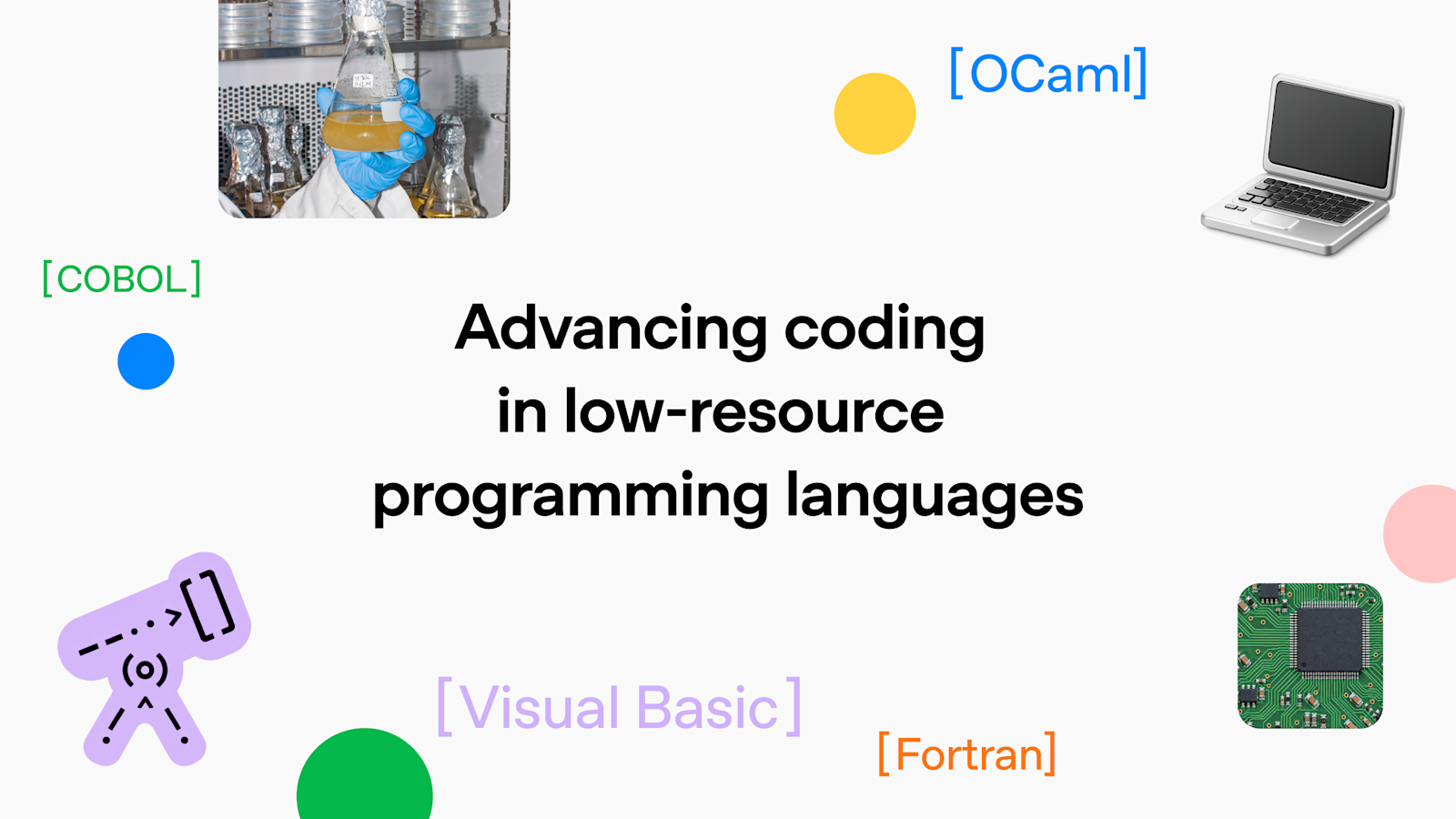
OpenAI officially announced breakthroughs in building and migrating software written in low-resource and legacy languages (COBOL, Fortran, Visual Basic, OCaml), introducing the MultiLangBench evaluation suite. Tackling the trillions of dollars in critical banking and enterprise mainframe infrastructure, the benchmark challenges models to synthesize a SQLite-compatible database engine across 20 distinct languages. GPT-6 Astra boosted average test pass rates from 26.8% to 87.4%, with COBOL soaring from 10.9% to 72.1%. In enterprise COBOL migration tasks, GPT-6.1 Sol achieved a 97.9% success rate while cutting inference costs by 39%.

OpenAI Solves Legacy Software Migration: MultiLangBench Lifts COBOL Pass Rate to 97.9%, Modernizing Enterprise Stacks

Key Takeaways

  • OpenAI unveiled breakthroughs in low-resource and legacy languages with MultiLangBench, challenging models to implement database engines across 20 languages
  • GPT-6 Astra raised the average pass rate from 26.8% to 87.4% (clearing >83% in 19 languages), with COBOL hitting 72.1% and Fortran 83.5%
  • In enterprise COBOL migration benchmarks, GPT-6.1 Sol scored 97.9% (vs 5.4% for GPT-5.6 Sol) while reducing execution costs by 39%
  • OpenAI confirmed open-sourcing the MultiLangBench test suite on GitHub to accelerate automated modernization of mainframe software
Read full story
Linked Models & Agents:

OpenAI open-sources MultiLangBench and reports low-resource language gains: GPT-6 Astra averages 87.4% building SQLite across 20 languages, GPT-6.1 Sol reaches up to 97.9% on COBOL migration

On October 19 OpenAI said its latest models are much better at low-resource languages such as COBOL, Fortran, Visual Basic and OCaml, and open-sourced MultiLangBench, which asks a model to build a SQLite-compatible database engine from scratch in each of 20 languages. GPT-6 Astra averages an 87.4% test pass rate (GPT-5.6 Sol: 26.8%), above 83% in 19 of 20 languages, with COBOL hardest at 72.1%. On a separate COBOL migration eval requiring byte-for-byte output parity after porting to C++, Java, Kotlin, Python or Rust, GPT-6.1 Sol scores 86.6% at low effort (GPT-5.6 Sol: 5.4%) and 97.9% at higher effort. All figures are OpenAI's own.

OpenAI open-sources MultiLangBench and reports low-resource language gains: GPT-6 Astra averages 87.4% building SQLite across 20 languages, GPT-6.1 Sol reaches up to 97.9% on COBOL migration

Key Takeaways

  • MultiLangBench: GPT-6 Astra (max) averages 87.4% across 20 languages vs 26.8% for GPT-5.6 Sol, above 83% in 19 of them (OpenAI-reported).
  • Per language: COBOL 10.9% to 72.1%, OCaml 25.6% to 85.8%, Fortran 21.4% to 83.5%, Visual Basic 27.5% to 89.4%.
  • Budget tier: GPT-6 Luna averages 40.3% at about $0.77 per sample vs $3.48 for GPT-5.6 Sol, roughly 78% cheaper.
  • COBOL migration: GPT-6.1 Sol scores 86.6% at low effort (GPT-5.6 Sol 5.4%) at about 61% of the API cost; 97.9% at higher effort, near saturation.
  • The eval setup, test suite and per-language results are on GitHub openai/multilangbench; the COBOL migration eval is not public.
Read full story

OpenCode 1.19.0 opens the upgrade path to OpenCode 2: new plugin and server APIs, auto-updates now manual

OpenCode v1.19.0 (Oct 11) adds opencode upgrade --major and a TUI /update command to move 1.x installs to OpenCode 2 (tagged up to v2.0.26), stops auto-installing updates, and hardens PTY connection validation. The official V2 migration guide lists three intentional breaking changes: plugin API, server API/clients, and terminal client config.

Key Takeaways

  • v1.19.0 shipped 2026-10-11: opencode upgrade --major or TUI /update moves to OpenCode 2; updates are no longer auto-installed
  • OpenCode 2 tags run from v2.0.0 (2026-09-11) to v2.0.26 (2026-10-08); the repo has ~212K GitHub stars
  • Three intentional breaking changes: new plugin API, new server API and clients (@opencode/client), and layered tui.json replaced by one global cli.json
  • V1 plugin implementations do not run on V2 and must be ported; existing agents, commands, skills and opencode.json keep working
  • V2 accepts lsp config but no longer runs language servers or LSP diagnostics; use lint/typecheck/compile commands instead
Read full story
Linked Models & Agents:
ADSponsored

Deno team joins Cloudflare: Deno runtime gets one more year of fixes, Deno Deploy shuts down in six months, celld folds into workerd for self-hosted agent infra

On Oct 9 Ryan Dahl announced the whole Deno team is joining Cloudflare. Deno runtime gets one more year of monthly bugfix/security releases, then official development ends (it stays open source); Deno Deploy runs six more months before shutting down, with migration help to Workers; JSR continues. Focus shifts to the Workers/Durable Objects model and merging self-hosted celld into workerd, pitched explicitly at agent harnesses.

Deno team joins Cloudflare: Deno runtime gets one more year of fixes, Deno Deploy shuts down in six months, celld folds into workerd for self-hosted agent infra

Key Takeaways

  • Timeline: Deno runtime gets 12 months of monthly fixes then official development ends; Deno Deploy shuts down in 6 months with migration support for paying customers
  • JSR keeps running on Cloudflare infra; rusty_v8 stays supported and heads into workerd
  • celld (Apache-2.0, ~5.3k stars, v0.6.2 beta): a 58 MB static binary for self-hosted distributed Durable Objects backed by one S3-compatible bucket
  • Vendor-reported celld numbers: 0.47 MB RAM per resident cell, 2,500 cells per 8 GB node, 0.2/0.3 ms p50/p99 stateless requests, ~20 s failover with zero lost acknowledged writes
  • 1,234 points on the Hacker News front page; Deno's announcement post drew 6.3k likes
Read full story
Linked Models & Agents:

Claude Managed Agents dynamic workflows hit public beta: the lead agent writes an orchestration program running up to 64 concurrent threads and 1,000 agents per run

Anthropic expanded dynamic workflows in Claude Managed Agents to public beta. With workflows enabled in an agent's multiagent block, Claude writes a workflow program that runs many agents in background phases and combines their results, aimed at audits, migrations, deep research and cross-checking.

Key Takeaways

  • Enable with multiagent.type: "multiagent_20261001" and workflows: {"type":"enabled"} under the managed-agents-2026-04-01 beta header
  • Up to 64 threads working at once per run and 1,000 agents over a run's life (thread_limit_error beyond)
  • Runs last 24h by default; 10 open runs per session by default; runs don't nest
  • No separate run price: thread tokens bill at model rates and count toward the session budget, which pauses runs when reached
Read full story
Linked Models & Agents:

Firecrawl SDKs ship agent_hints: Python 4.45.0 / JS 4.42.0 preserve deterministic next-step guidance for agents

Firecrawl published firecrawl-py 4.45.0 and @mendable/firecrawl-js 4.42.0 on 2026-09-28, shipping agent_hints preservation from #4641: with X-Firecrawl-Agent-Hints: true, Search/Scrape/Parse/Map responses can include deterministic next-step suggestions. Also includes Hangar browser/interact migration and exchange.onTermsRequired fields.

Firecrawl SDKs ship agent_hints: Python 4.45.0 / JS 4.42.0 preserve deterministic next-step guidance for agents

Key Takeaways

  • Shipped firecrawl-py 4.45.0 + JS 4.42.0 with agent_hints preservation
  • Opt-in via X-Firecrawl-Agent-Hints: true (off by default)
  • Deterministic next-step rules for Search/Scrape/Parse/Map
  • MCP pin still on 4.40.0 — bump needed for full hint survival
Read full story
Linked Models & Agents:

Agno 3.0.11: knowledge-level retrieval pipeline, MMR/Recency rerankers, page migration, cancellation_stage

agno-agi shipped Agno v3.0.11 on 2026-09-23 (PyPI agno 3.0.11). Knowledge.search() now runs a knowledge-level retrieval pipeline that can widen candidates before reranking, with new MMRReranker (relevance vs diversity) and pgvector-focused RecencyReranker (score × exponential time decay); adds hostname migration for indexed page sources (dry-run by default), typed PageCommandResult with truncation/completeness metadata, and machine-readable cancellation_stage on Run/Team/Workflow outputs. Per-vector-db reranker is deprecated in favor of Knowledge-level rerankers.

Agno 3.0.11: knowledge-level retrieval pipeline, MMR/Recency rerankers, page migration, cancellation_stage

Key Takeaways

  • Shipped: v3.0.11 / PyPI 3.0.11
  • Retrieval: knowledge-level pipeline + MMRReranker (#10115)
  • Recency: RecencyReranker with exponential time decay; page-source migrate dry-run by default
  • Observability: cancellation_stage enum + typed PageCommandResult metadata
  • Migration: deprecate vector-db reranker → Knowledge-level; see Knowledge overview docs
Read full story
Linked Models & Agents:
⚡ DeepSeek⚡ Y-API🤖 Agno🤖 AgentOS🌐 agno

@ai-sdk/perplexity 5.0.0: breaking migrate from Sonar Chat Completions to Perplexity Agent API

Vercel AI SDK shipped @ai-sdk/[email protected] (2026-09-26), a breaking migration from Sonar Chat Completions to Perplexity Agent API. Replace Sonar model IDs and provider options with Agent API presets, models, and tools; request/response metadata, raw stream events, and usage/cost shapes change; Sonar PDF input and image/video results are unsupported. Follow-up fixes recover terminal text, accept native tool traces (e.g. finance), and dedupe URL citation sources while preserving search-result IDs.

@ai-sdk/perplexity 5.0.0: breaking migrate from Sonar Chat Completions to Perplexity Agent API

Key Takeaways

  • Shipped: @ai-sdk/[email protected] on GitHub Releases / npm 5.0.0
  • Breaking: language generation moves to Perplexity Agent API; rewrite Sonar model IDs and provider options to presets/models/tools
  • Dropped: Sonar PDF input and image/video results; usage/cost and raw stream metadata shapes change
  • Streaming: recover missing text from terminal events/output items (incl. incomplete) without duplicating deltas
  • Citations: emit each source URL once while keeping search-result IDs; accept native Agent API tool traces (e.g. finance) without web-search validation
Read full story
Linked Models & Agents:

DSPy 3.4.0: Jev via TypeSafe (Noul/Choice/Score), ReAnchor calibration, native lm15 engines

DSPy 3.4.0 (2026-09-25) integrates Jev through TypeSafe with experimental Noul/Choice/Score decision types and ReAnchor calibration; the LM layer prefers native lm15 engines, adds LocalInterpreter and async ReActV2. 3.4 is the LM transition release; 3.5 is the migration deadline.

DSPy 3.4.0: Jev via TypeSafe (Noul/Choice/Score), ReAnchor calibration, native lm15 engines

Key Takeaways

  • Jev via TypeSafe: Noul/Choice/Score with probability evidence (#10463)
  • ReAnchor fits thresholds/cuts/weights against your metric (#10475)
  • engine=auto prefers native lm15; register_provider for compatible HTTP
  • LocalInterpreter for trusted CPython (not a security sandbox); RLM interpreter_factory= kw-only
  • 3.4 transition → 3.5 migration deadline; see LM migration guide
Read full story
Linked Models & Agents:
ADSponsored

huggingface_hub 2.0.0: HTTP stack moves to httpx2; all 1.x deprecated APIs removed

Hugging Face released huggingface_hub v2.0.0 on 2026-09-24: the HTTP stack switches from httpx/httpcore to httpx2/httpcore2, so custom client factories and transport except clauses must use the new types; all 1.x deprecated APIs (upload_large_folder, huggingface-cli, etc.) are removed with an official migration guide.

huggingface_hub 2.0.0: HTTP stack moves to httpx2; all 1.x deprecated APIs removed

Key Takeaways

  • Breaking: clients/exceptions come from httpx2/httpcore2 (release v2.0.0)
  • Compat import: from huggingface_hub.utils import get_session, httpx (works from v1.30.0)
  • OS trust store by default; loggers httpx2/httpcore2; oauth needs authlib>=1.8.0
  • Removed APIs: upload_large_folder→upload_folder, huggingface-cli→hf, etc.
  • Upgrade: pip install -U "huggingface_hub>=2.0.0" + migration guide
Read full story
Linked Models & Agents:

Factory launches Teams self-serve: $60/mo per team + $40/mo per seat (up to 10), centralized billing for Droids

On 2026-09-23 Factory announced Teams: multi-user self-serve with centralized billing so Droids take bugfixes/tests/migrations. Price: $60/mo per team + $40/mo per seat, max 10 seats, each user keeping Pro rate limits. Teams page offers a selective $500 voucher.

Factory launches Teams self-serve: $60/mo per team + $40/mo per seat (up to 10), centralized billing for Droids

Key Takeaways

  • $60/mo team + $40/mo seat, max 10 (Pricing)
  • Per-user Pro rate limits preserved
  • Delegate fixes/tests/migrations to Droids (Teams)
  • Selective $500 voucher via Teams application
  • Keep Private/VPC for air-gap/compliance needs
Read full story
Linked Models & Agents:

Android Bench 2.0 Released: Shifting Evaluation to Multi-Day Long-Horizon Tasks

Researchers released Android Bench 2.0, moving benchmarks from single-function bug fixes to complex multi-day Long-Horizon Tasks (LHT). The suite evaluates coding agents on building apps from scratch, complex multi-library version migrations, and cross-platform verification.

Key Takeaways

  • Deprecates trivial unit bug benchmarks in favor of multi-day full-system app synthesis
  • Tests real-world architectural scaffolding, breaking library upgrades, and UI regression
  • Top frontier agents currently achieve only 31.4% success, exposing long-horizon bottlenecks
Read full story
Linked Models & Agents:

Vals: Tencent Hy4 Preview ranks #4 open-weight on Vals Index with standout Code Migration value

Vals benchmarked Tencent Hy4 Preview at #21 of 58 on the Vals Index (55.4%) and #4 among open-weight models at about $1.28 per test. It is the cheapest top-ten model on Code Migration (47.4%) versus much costlier Muse Spark and Opus 4.8 runs, leads open-weight models on three agentic benches, and ships with a 1M context window and 64k max output tokens.

Key Takeaways

  • #21 of 58 on Vals Index (55.4%) and #4 open-weight at roughly $1.28 per test, below median cost on most benches.
  • Code Migration 47.4% lands in the top ten at about $3.41 per test versus ~$14.21 Muse Spark and ~$30.51 Opus 4.8.
  • Top open-weight on three agentic benchmarks; 1M context and 64k max output; weaker on terminal work (~55% Terminal-Bench 2.1).
Read full story
Linked Models & Agents:

Together cuts Dedicated Inference on H100s to $3.99/hr for September

Together AI is cutting Dedicated Inference on H100s from $5.49/hr to $3.99/hr for September, with the lower rate applied automatically to new and existing deployments. Supported options include Gemma 4, Qwen3/3.5, gpt-oss, Llama, Nemotron 3.5 Lightning, or a bring-your-own LoRA. For teams that pin coding agents or fine-tunes to dedicated GPUs, the change is a straight cut in 24/7 serving cost without a migration.

Key Takeaways

  • H100 Dedicated Inference drops from $5.49/hr to $3.99/hr in September, auto-applied to all deployments.
  • Catalog includes Gemma 4, Qwen3/3.5, gpt-oss, Llama, Nemotron 3.5 Lightning, and BYO LoRA.
  • Existing dedicated endpoints get the cut with no migration.
Read full story