AI Coding Live News

Anthropic Open-Sources FlashProve: zkSNARK Proofs That a Reply Came From the Committed Model, About 110 Tokens/s for 400B Llama 4 Maverick on One H100

Anthropic's Frontier Red Team published a research post on November 2 and open-sourced FlashProve under Apache 2.0. A model provider commits to hidden weights once, then attaches a zero-knowledge proof to each reply, so a user without the weights can check on an ordinary CPU that the reply really came from that model. That targets routing services that quietly swap in cheaper models and tampered token streams. Anthropic reports about 110 tokens/s on one H100 for Llama 4 Maverick (400B MoE, 4-bit), proofs of about 19 MB per 1,024-token request, and roughly 70-95x the GPU time of vLLM inference. It is an unmaintained research prototype limited to 1,024-token contexts and greedy decoding of an integer version of the model. Anthropic engineer Steve Weis shared the release on X.

Anthropic Open-Sources FlashProve: zkSNARK Proofs That a Reply Came From the Committed Model, About 110 Tokens/s for 400B Llama 4 Maverick on One H100

Key Takeaways

  • Anthropic-reported: on Llama 4 Maverick (400B MoE, 4-bit) one H100 proves about 110 tokens/s (prefill, 24 requests per batch), with proofs of about 19 MB per 1,024-token request.
  • It is costly: roughly 70-95x the GPU time of vLLM inference; the performance page lists about 270 GB of host memory for serving and about 39 minutes to commit to a set of weights.
  • Verification needs no GPU: the C++ verifier checks a proof in about 21 seconds on one thread, and a slower Lean verifier plus Lean 4 proofs of the security theorem are included.
  • Against prior work: VerInf proved the same model at about 0.02 tokens/s; the commercial Attestable reached 53-77 tokens/s on Gemma 4 31B but has no open-source release.
  • Limits: v0.16.0 is an unmaintained research prototype with 1,024-token contexts, greedy decoding of an integer model only, and no architecture hiding.
Read full story
Linked Models & Agents:
O
OpenAI / Google / Microsoft / Anthropic@AICoder·
👀37
🔥83

OpenAI, Google, Microsoft and Anthropic back one robots.txt AI-training opt-out token, __usage_ai-training; Anthropic has started, Microsoft honors it from Feb 1, 2027

On October 30, OpenAI, Google, Microsoft and Anthropic each published posts committing to one shared robots.txt training-preference signal: a site writes a single Disallow group for the policy token __usage_ai-training to tell every participating provider not to use its content for generative AI training. The mechanism comes from an IETF individual Internet-Draft filed that day by Anthropic standards lead Kevin Kelley and is not yet a formal standard. Timelines differ: The Verge and CNA report Anthropic has already started implementing it, OpenAI says "in the coming months", Microsoft honors it from February 1, 2027, and Google plans support during 2027.

Key Takeaways

  • Syntax: in robots.txt, User-Agent: __usage_ai-training plus Disallow: / states a site-wide preference against AI training, and Allow rules can carve out paths such as /press-kit/; omitting the group means no preference is expressed
  • Draft: draft-kelley-aipref-training-preference-signal-00 by Kevin Kelley (Anthropic), filed 2026-10-30 and expiring 2027-05-03, an individual IETF draft with no formal standing yet
  • Timeline: Anthropic has reportedly started; OpenAI says "in the coming months"; Microsoft honors it from 2027-02-01 and sites relying on NoArchive/NoCache should migrate by 2027-03-01; Google plans support in 2027
  • Training only, not crawling: the draft says the token is not a crawl directive, wildcard User-Agent: * groups do not match it, and existing GPTBot, ClaudeBot and Google-Extended rules keep working
  • Microsoft also adds a page-level AI Grounding preference whose new DisallowExtended value limits grounding to Microsoft's own products (Copilot, AI Overview and others) and excludes third-party grounding services such as Foundry API access
Read full story
Linked Models & Agents:

OpenCode 2.2.3 adds a built-in Claude Agent provider that runs Claude models through your own Claude Code login, subscriptions included

OpenCode, the open-source coding agent, shipped v2.2.3 at 09:55 UTC on Oct 30 with a built-in "Claude Agent" provider. After installing Claude Code and running claude auth login, users pick Claude Agent in /connect and can call Claude models through their own Claude Code login, whether that is a subscription, an API key or a cloud account. It runs the user's local claude program through Anthropic's public Claude Agent SDK, but turns off Claude Code's built-in tools and uses OpenCode's own tools and permission system instead. Hours earlier, OpenCode team member dax (@thdxr) teased on X "what if you could use your claude subscription in opencode", drawing about 2,300 likes.

Key Takeaways

  • v2.2.3 shipped at 09:55 UTC on Oct 30; its first highlight is "Use Claude Code in OpenCode", from PR #58782 (release notes)
  • Setup is three steps: install Claude Code, run claude auth login, and pick Claude Agent in /connect; OPENCODE_CLAUDE_PATH overrides the claude binary
  • The design spec says it uses only the public SDK, never reads Claude Code's saved login and never intercepts or changes its requests; subscription, API key and cloud logins all work (spec)
  • Claude Code's built-in tools, CLAUDE.md, hooks, MCP servers, skills, auto compaction and auto memory are all off; OpenCode's tools, permissions and compaction apply, with one claude process per session that stops after 5 idle minutes
  • dax's (@thdxr) teaser post drew about 2,300 likes and 280 replies (post); no performance comparison has been published
Read full story

Google Gemini Notebook adds hundreds of free textbooks from OpenStax, S Chand and more as cited sources

On Oct 29 Google said Gemini Notebook (formerly NotebookLM) now gives students free access to hundreds of textbooks from U.S. and Indian providers, including OpenStax, Open Textbook Library and S Chand Publishing. Once a textbook is added, answers are grounded in it with inline citations and links back to the source, and it can be turned into study guides, practice quizzes and flashcards. The catalog sits under Add sources, then Textbooks.

Google Gemini Notebook adds hundreds of free textbooks from OpenStax, S Chand and more as cited sources

Key Takeaways

  • Google's blog says hundreds of textbooks from U.S. and Indian providers are available at no charge; Google VP Josh Woodward put the number at over 700 in his own X post
  • Launch providers include OpenStax, Open Textbook Library and S Chand Publishing
  • Once a textbook is added, every answer is grounded in it, with inline citations and direct links back to the source
  • It extends Expert Intelligence, launched Aug 27 with more than 100,000 purchasable Google Play Books titles
  • The official @Gemini_Notebook post had about 185K views, over 5,000 likes and over 2,800 bookmarks when this was written
Read full story
Linked Models & Agents:
⚡ Gemini🌐 Google
ADSponsored

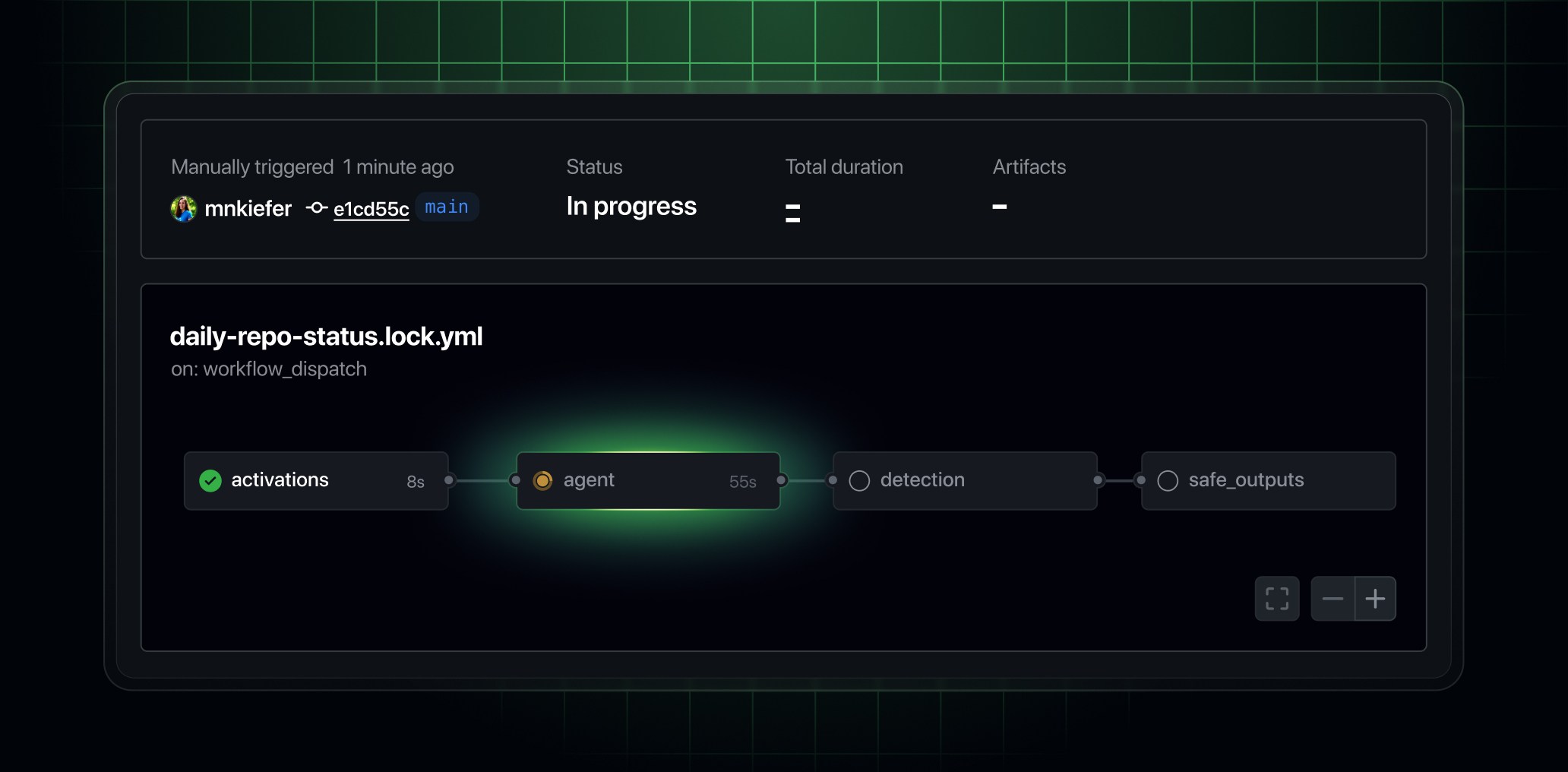
GitHub Agentic Workflows is generally available: write automation in Markdown, compile it to Actions YAML, run Copilot or your own coding agent, now with ARC self-hosting and micro-VM isolation

At Universe 2026 on Oct 28, GitHub made GitHub Agentic Workflows, an open source GitHub Next project, generally available on GitHub Free, Team and Enterprise. Developers describe tasks such as issue triage, CI failure analysis, documentation updates and test writing in natural-language Markdown, and gh aw compiles them into standard Actions YAML run by Copilot or a coding agent of their choice. GA adds self-hosted ARC runners with Docker-in-Docker, a non-experimental gh aw forecast cost estimate, per-workflow model providers and model routing, and Cloud Hypervisor or NVX micro-VM isolation.

GitHub Agentic Workflows is generally available: write automation in Markdown, compile it to Actions YAML, run Copilot or your own coding agent, now with ARC self-hosting and micro-VM isolation

Key Takeaways

  • Availability: GitHub Free, Team and Enterprise on github.com; using the default Copilot CLI engine requires a Copilot license
  • How it works: requirements in Markdown, compiled to standard Actions YAML that reuses existing runner groups and policies; run with Copilot or your own coding agent
  • Safe defaults: read-only permissions, a sandboxed container behind the Agent Workflow Firewall, safe-outputs validation, and a threat detection job before changes are applied
  • New at GA: self-hosted ARC runners with Docker-in-Docker, gh aw forecast out of experimental (with threat detection credits and monthly ranges), per-workflow model providers, model routing, micro-VM isolation and cross-repo enclaves
  • Customer story (Accenture's figures): one lead saved about 29 hours a week, AI authors 91% of the team's commits, and production errors fell from about 11,000 a day to under 1,000
Read full story

ChatGPT dots add texting: US Pro users can message their dot over iMessage or RCS, and the dot texts back with proactive updates

On Oct 28 OpenAI announced through @ChatGPT that users can now text their dot, the always-on agent inside ChatGPT. You can hand it a task or something to watch using text, photos or voice notes, and it texts you proactively when there is a relevant update. Texting runs over iMessage or RCS, not plain SMS; only you can text your dot and it can only text you. It is rolling out in beta to a limited number of US Pro users and is not supported in Business or Enterprise workspaces. Texts pass through the third-party provider Linq, and OpenAI says the conversation is not end-to-end encrypted.

ChatGPT dots add texting: US Pro users can message their dot over iMessage or RCS, and the dot texts back with proactive updates

Key Takeaways

  • Scope: a limited beta for US Pro users; not supported in Business or Enterprise workspaces (OpenAI Help Center)
  • Channels: iMessage on iPhone and RCS on Android only; a plain SMS gets an automatic reply asking you to use iMessage, RCS or the app
  • Setup in 3 steps: open the dot's profile and choose Texting, enter your number to get a confirmation text, then enter the code
  • Privacy: texts route through third-party provider Linq, so they are not end-to-end encrypted; Linq keeps no message content after delivery, only metadata such as timestamps and delivery status
  • Context: texting shares the same memory and plugins as the dot in the app; reply STOP or turn it off under Texting to stop
Read full story

Anthropic expands GSA partnership: new OneGov deal gives all levels of US government 40% off Claude Enterprise, Claude for Government and the API

On Oct 27 Anthropic announced a new OneGov agreement with the US General Services Administration (GSA): government customers get 40% off Claude Enterprise, Claude for Government and the Claude API. For the first time the discount covers every product surface (direct purchases today, cloud-provider channels in the coming months) and extends to state, local, tribal and territorial governments. Anthropic estimates about $1 billion in savings, with no minimum spend and pay-as-you-go usage.

Anthropic expands GSA partnership: new OneGov deal gives all levels of US government 40% off Claude Enterprise, Claude for Government and the API

Key Takeaways

  • 40% off Claude Enterprise, Claude for Government and the Claude API; direct purchases today, cloud-provider channels in the coming months (vendor-stated)
  • Anthropic estimates about $1 billion in government savings, with no minimum spend commitment and pay-for-what-you-use billing
  • About 500 US federal, state and local organizations use Claude; weekly Claude for Government active users are up about 8x since February and federal civilian usage is up about 20x in a year (vendor-stated)
  • Utah gave Claude Code to 34 developers across 10 agencies: 80% had a working environment within 30 minutes and 71% reported saving 20+ hours over a four-week pilot (vendor-stated)
  • Claude for Government went GA on Sep 30 at FedRAMP High; select Bedrock models hold DoD IL4/IL5, and Claude Enterprise is pursuing FedRAMP Moderate via FedRAMP 20x
Read full story

OpenCode confirms breach: distillation-linked incident hit ~1.4% of Console users; remediating with OpenAI, Anthropic, Google

On 2026-10-17 OpenCode disclosed an overnight breach tied to a large-scale distillation attack affecting about 1.4% of Console users. Affected accounts were emailed; no email means not impacted; only users with external providers linked. Remediation is ongoing with Anthropic, OpenAI and Google. No official blog or GitHub advisory yet; the status page listed no dedicated security incident.

Key Takeaways

  • Official: ~1.4% of Console users; no email means not impacted
  • Scope: subset with external providers linked
  • Remediating with Anthropic, OpenAI, Google; details limited
  • If keys were saved in Console, rotate at each vendor and review usage
  • No official key count, root cause, or confirmed abuse published
Read full story

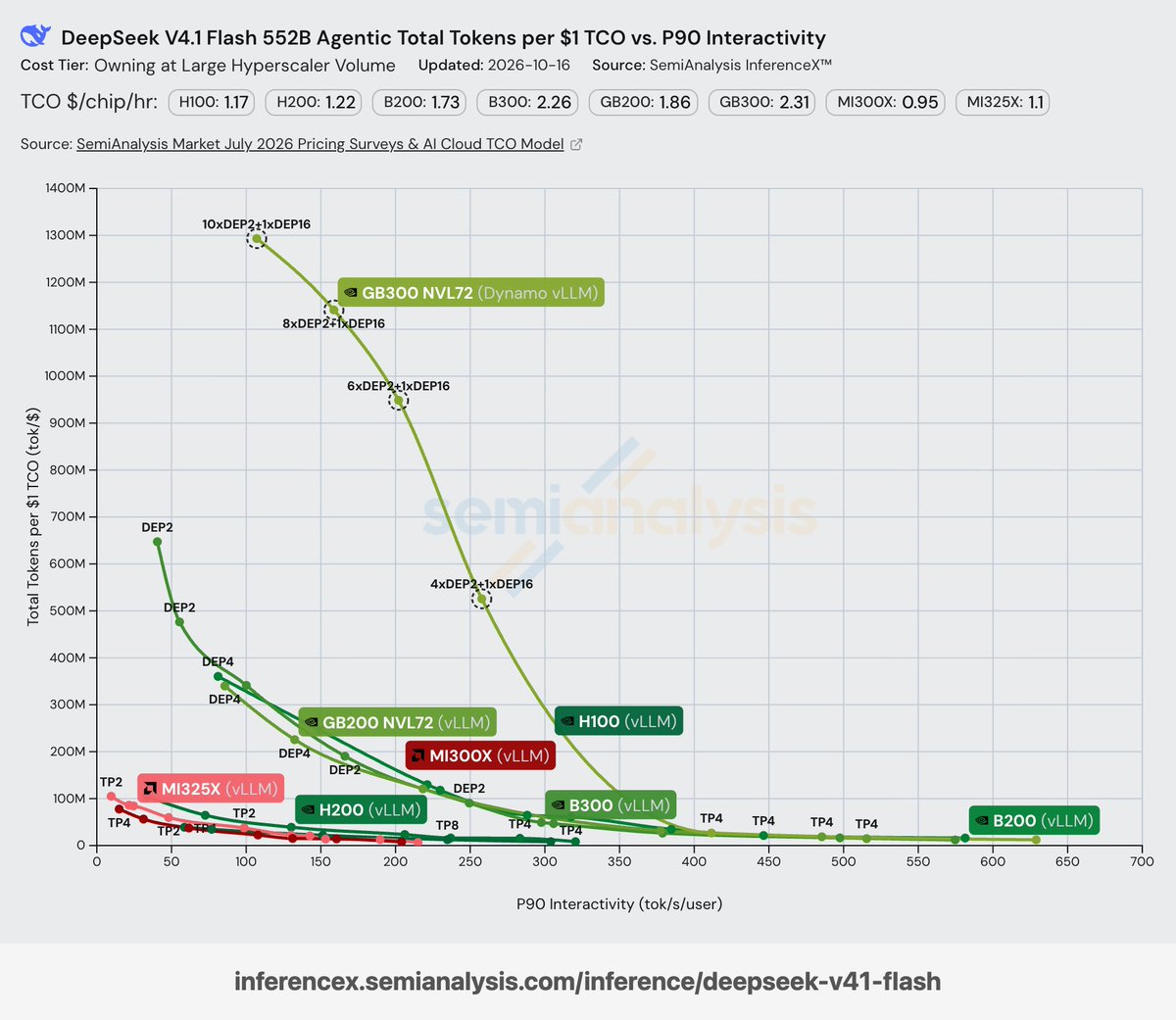
vLLM and OpenRouter Launch Day-0 Serving for DeepSeek-V4.1-Flash-1017: 830K tok/s per GPU and 1.3B Tokens/$ TCO on SemiAnalysis AgentX

Following the release of DeepSeek-V4.1-Flash-1017, vLLM announced Day-0 serving optimization delivering 1.3B tokens per dollar TCO and 830K tok/s per GPU at 100 tok/s/user on SemiAnalysis AgentX (5x agentic throughput gain since Day 0), while OpenRouter launched live multi-provider routing starting at $0.10/M input and $0.50/M output tokens.

vLLM and OpenRouter Launch Day-0 Serving for DeepSeek-V4.1-Flash-1017: 830K tok/s per GPU and 1.3B Tokens/$ TCO on SemiAnalysis AgentX

Key Takeaways

  • vLLM delivers 830K tok/s per GPU (cached + input + output) at 100 tok/s per user and 1.3B tokens/$ TCO on SemiAnalysis AgentX for DeepSeek-V4.1-Flash-1017 (5x faster since Day 0)
  • DeepSeek-V4.1-Flash-1017 reaches 77.0% on DeepSWE v1.1 (beating Claude Opus 5 at 74.0%), 68.2% on NL2Repo-Bench, and 72.1% on Apex Bench with shorter agentic outputs
  • Live on OpenRouter from $0.10/M input and $0.50/M output tokens, while DeepSeek's official API alias deepseek-flash remains at $0.15/M input and $0.60/M output
Read full story
Linked Models & Agents:
A
Anthropicgithub.com·
👀137
🔥87

Claude Code 2.1.302 turns on fork subagents by default across claude -p, Agent SDK, desktop and VS Code; standalone Claude Design closes Dec 14

Claude Code v2.1.302 (Oct 16) makes fork subagents the default in claude -p, the Agent SDK, desktop and VS Code, starts permission-mode-less headless sessions on third-party providers in default mode, and adds CLAUDE_CODE_AUTO_MODE_MODEL. It also flags that standalone Claude Design (claude.ai/design) closes on Dec 14, 2026; design systems must be migrated to Claude Artifacts, while chats and comments are not carried over.

Key Takeaways

  • Fork subagents now default-on in claude -p, Agent SDK, desktop and VS Code; disable with CLAUDE_CODE_FORK_SUBAGENT=0
  • Headless sessions with no permission mode on third-party providers start in default mode (telemetry off or fresh install); --permission-mode auto keeps auto
  • New CLAUDE_CODE_AUTO_MODE_MODEL picks the client-side auto mode classifier model; prompt/agent hooks capped at 12 concurrent per event
  • Read tool refuses image sources over 128 MB; MCP servers on protocol 2026-07-28 that omit resultType/ttlMs/cacheScope no longer break
  • Standalone claude.ai/design closes Dec 14, 2026; chats, comments and public links are not migrated and originals are deleted afterward
Read full story
ADSponsored

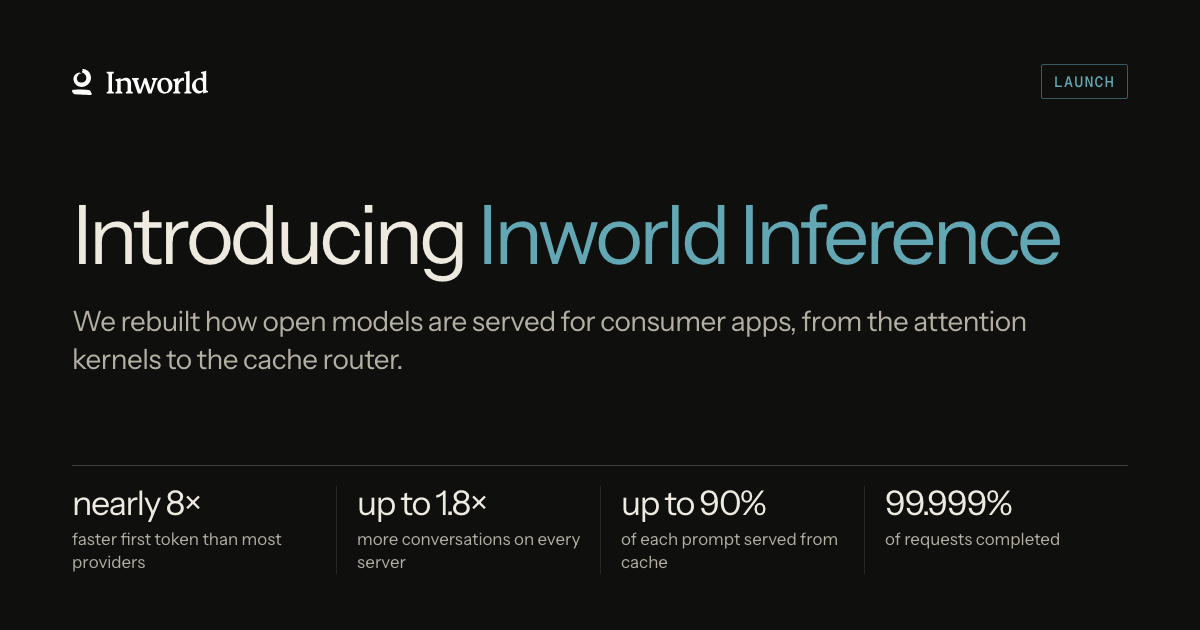
Inworld Inference opens to all developers: an open-model inference API built for consumer AI, with Gemma 4 26B p95 first token 7.8x faster than the median OpenRouter provider

On 2026-10-14 Inworld AI opened Inworld Inference to every developer, positioning it as an inference service for consumer apps (companions, tutors, voice, interactive fiction). Instead of listing thousands of models it builds a per-model serving stack for open models such as Gemma 4, GLM 5.3 Flash, DeepSeek and MiMo: draft-and-verify (speculative) decoding, a rewritten split-KV verify attention kernel, KV-aware routing and eval-gated low precision. Vendor-reported: Gemma 4 26B p95 first token of 0.31 s, 7.8x faster than the median OpenRouter provider; up to 90% of prompts from cache; 99.999% success over 20M+ GLM 5.3 Flash requests in 30 days. The API is OpenAI-compatible with Flex/Default/Priority/Fast tiers per request.

Inworld Inference opens to all developers: an open-model inference API built for consumer AI, with Gemma 4 26B p95 first token 7.8x faster than the median OpenRouter provider

Key Takeaways

  • Gemma 4 26B first token: p50 0.17 s / p95 0.31 s, 3.6x / 7.8x faster than the median OpenRouter provider (blog, vendor-reported snapshot, not a matched workload)
  • Pricing: Gemma 4 26B at $0.07 input, $0.035 cached, $0.34 output per 1M tokens, nearly 40% below the median no-training provider
  • Rewritten verify attention: 3.4–7.5x faster per layer, attention share of a decode step 27.5%→16.5%, p50 TTFT 154→117 ms at equal eval scores
  • KV-aware routing: GLM 5.3 Flash cache hits 25%→47%, DeepSeek V4.1 Flash 11%→33%; cached MiMo 2.6 Pro input costs 99% less
  • Reliability: 98 failures across 20M+ GLM 5.3 Flash requests in 30 days (~4.8 per million); per-request service_tier of Flex/Default/Priority/Fast
Read full story

Cline launches Cloud Agents: assign tasks in the browser, cloud sandboxes code/test and open PRs, up to 10 in parallel

Cline moved its open coding agent into the browser: connect GitHub, pick a repo and model, and each task runs in an isolated cloud sandbox that commits to a cline/ branch and can open a PR—even with your laptop closed. Limits: 10 concurrent sessions and 50 new sessions/day. Providers: ClineFree, ClinePass ($9.99), and usage-billing. Cloud sessions do not yet load Rules, Skills, MCP, or Connectors.

Key Takeaways

  • Surface: no install; assign work from app.cline.bot Agents; each session gets its own sandbox and repo copy (docs)
  • Delivery: continuous commits on a dedicated cline/ branch, then optional PR; idle 15 minutes pauses the sandbox, resume keeps the workspace
  • Scale: up to 10 concurrent sessions and 50 new sessions/day; mobile browser for approvals/follow-ups
  • Models: ClineFree trials, ClinePass $9.99/mo (~2–5× open-model usage), usage-billing; switch mid-session
  • Security / gaps: GitHub token scoped to the single chosen repo; cloud does not load Rules/Skills/MCP/Connectors yet (local IDE/CLI/Desktop remain full-featured)
Read full story

OpenAI quietly re-ships Codex Cloud: cloud agents reach private services over Tailscale, with MagicDNS and OIDC short-lived credentials

Codex lead Tibo said on day 3 (encore) of OpenAI's ship weeks that Codex Cloud was silently re-shipped. Official cloud-environment docs now let an environment join a tailnet via Advanced > VPN (Tailscale is the only supported provider), so cloud tasks can reach private HTTP/HTTPS services, with IPv4 subnet routes, MagicDNS and split DNS; Enterprise workspaces can request OIDC for short-lived cloud credentials. Tailscale says it had no idea and published hardening advice such as tagging agent nodes tag:codex.

OpenAI quietly re-ships Codex Cloud: cloud agents reach private services over Tailscale, with MagicDNS and OIDC short-lived credentials

Key Takeaways

  • Traction: Tibo's re-ship post hit 2,300+ likes and ~179K views in ~1.5h; Tailscale's announcement has 3,900+ likes and 2,100+ bookmarks
  • Setup: Advanced > VPN > Tailscale with an auth key marked both Reusable and Ephemeral so task VMs join and are cleaned up automatically (docs)
  • Scope: HTTP/HTTPS only, private IPv4 subnet routes supported; destinations must be allowed in both Tailscale ACLs and the environment's internet-access policy
  • DNS: docs now list MagicDNS and split DNS support, while Tailscale's Oct 6 post said they did not work, so the re-ship changed behavior (Tailscale blog)
  • Identity: Enterprise can request OIDC so tasks get short-lived cloud credentials scoped to that identity, not the user's own permissions
Read full story

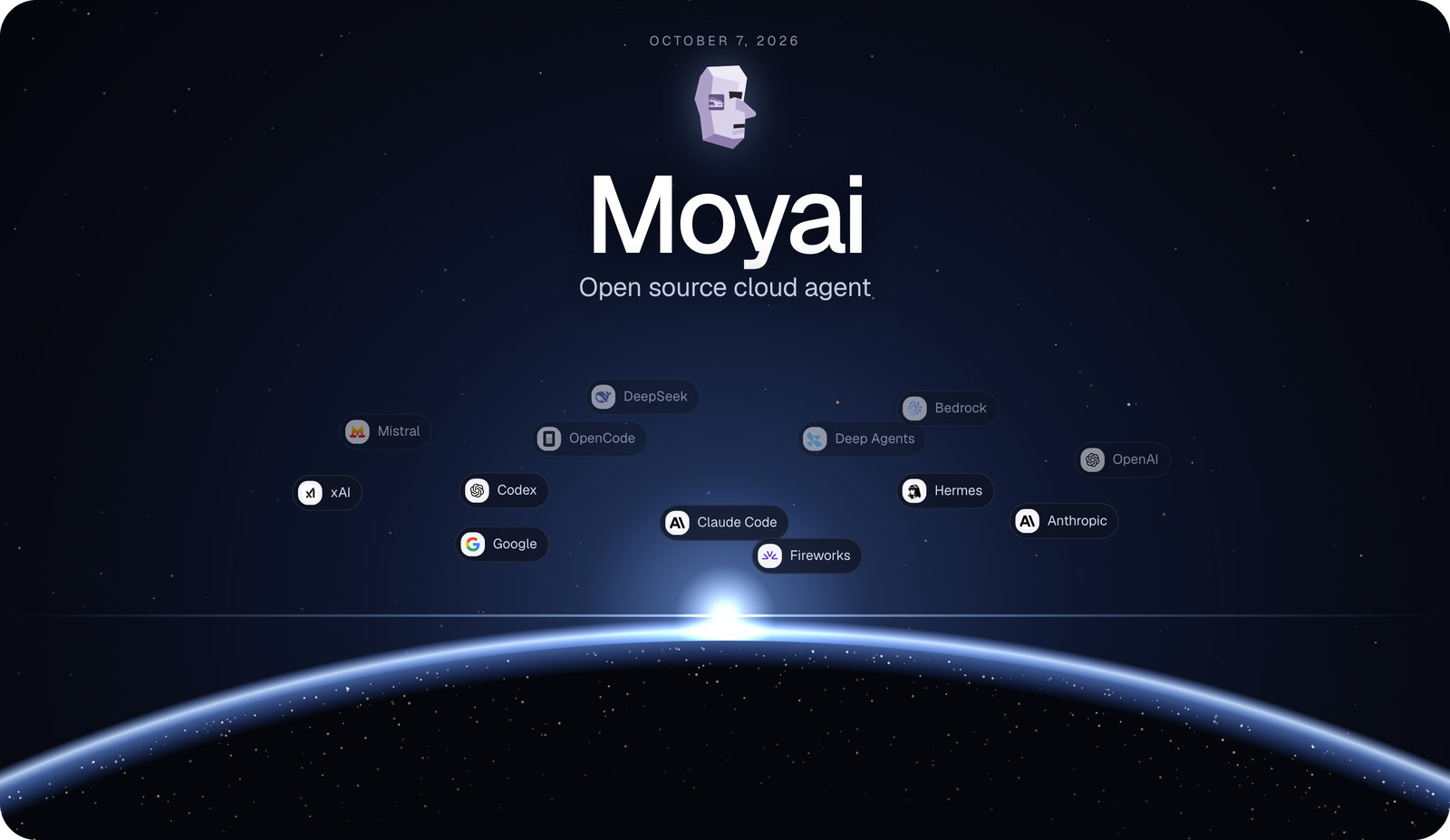
LiteLLM open-sources Moyai, a self-hosted cloud coding agent: $101,872 on Devin vs ~$21,700 on Moyai over 31 days (79% cheaper)

On Oct 7 LiteLLM open-sourced Moyai (BerriAI/moyai), the self-hosted background coding agent its team runs daily: tasks from Slack or the browser run in isolated cloud workspaces that edit code, run tests and open PRs. Harnesses (Claude Agent SDK, Codex, Hermes, OpenCode, Deep Agents, Tool Loop) are switchable per session and inference routes through LiteLLM's 100+ providers. LiteLLM says replacing Devin cut a 31-day bill from $101,872 to about $21,700.

LiteLLM open-sources Moyai, a self-hosted cloud coding agent: $101,872 on Devin vs ~$21,700 on Moyai over 31 days (79% cheaper)

Key Takeaways

  • Cost: $101,872 on Devin vs ~$21,700 on Moyai (~$700/day) over the same 31 days, a claimed 79% / ~$80,172 saving (launch post)
  • Pluggable harnesses: Claude Agent SDK by default (prompt caching on), plus Hermes, Codex, OpenCode, Deep Agents and Tool Loop (docs)
  • Inference via LiteLLM across 100+ providers; switch GPT-6 Astra / Claude Opus 5.5 / GLM-5.3 mid-session with per-teammate spend attribution
  • Provider keys stay server-side and never reach the sandbox; each session gets its own terminal, filesystem and browser
  • Caveat: ~58 stars at publish time and no LICENSE file detected by GitHub; confirm terms before commercial use
Read full story

T3 Code Orchestrator V2 first nightly: cross-provider delegate_task, durable server queue; Pi 1.0 & OpenCode 2

pingdotgg/t3code shipped nightly v0.0.46-nightly.20261003.2610 at 2026-10-03T01:10:51Z — the first Orchestrator V2 build. It rebuilds turn lifecycle, queues/resume, subagent lineage, cross-provider threads, and history. Headline: delegate_task (spawn child agents on any provider/model and await results — the recommended multi-harness path, e.g. Claude plans / Codex implements), plus T3 Code MCP, ACP Registry, Cursor official SDK, restart-durable server queue, usage-limit auto-resume, scheduled tasks. At ingest: 24355★. Caveats: one-way DB copy from V1; mobile needs V2 beta; OpenCode 2.0.18+.

Key Takeaways

  • Release v0.0.46-nightly.20261003.2610 at 2026-10-03T01:10:51Z; site t3.codes
  • At ingest: 24355★; migration notes in issue #14871
  • V2: delegate_task, T3 Code MCP, ACP Registry, Cursor SDK, durable server queue, usage-limit auto-resume, scheduled tasks
  • New: Pi (incl. 1.0) + OpenCode 2 (≥2.0.18); mins Codex 0.159+ / Claude Code 2.1.280+ / Grok 1.0.13+ / Pi 0.80.5+
  • Caveats: one-way V1→V2 DB copy; V2 clients only on mobile beta; prefer delegate_task over lossy mid-thread provider switches
Read full story