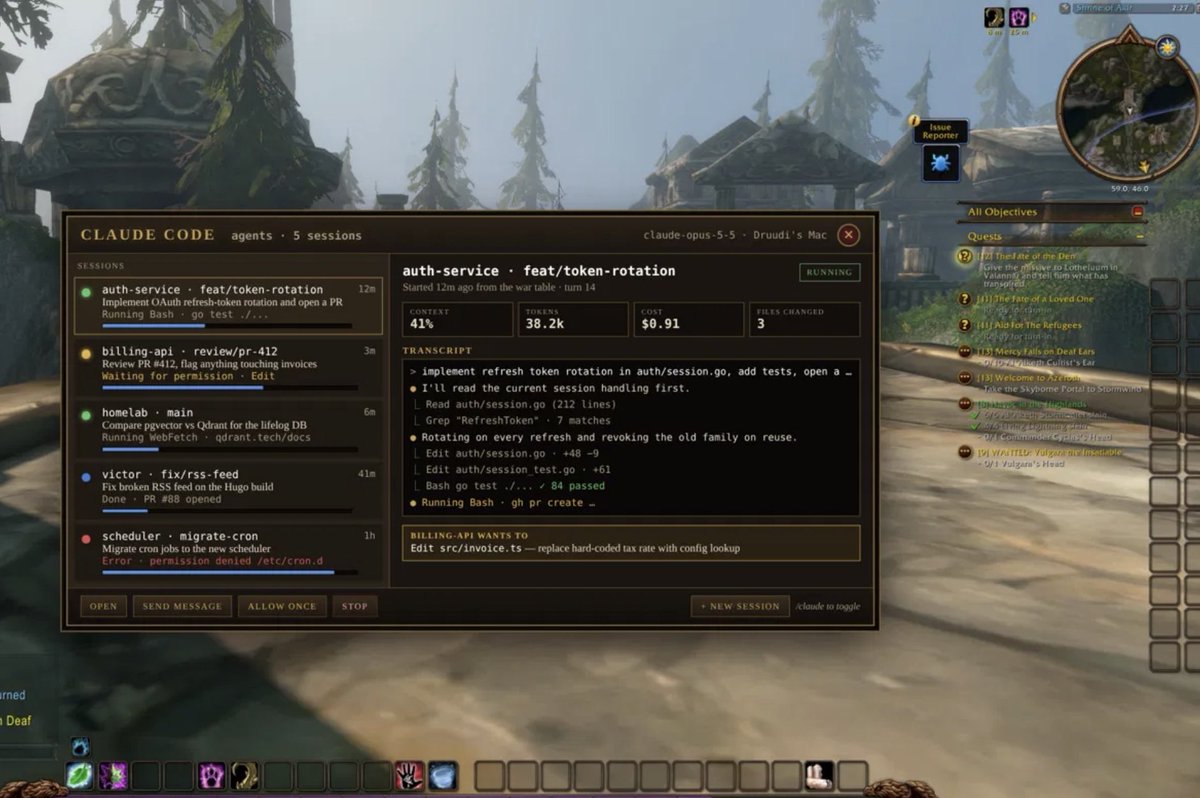
On 2026-11-06, Anthropic Claude Code community lead Ado (@adocomplete; bio: Community, Claude, Code at @AnthropicAI) posted a custom World of Warcraft UI addon that shows Claude agent progress and can kick off new tasks from inside the game (~979 likes, ~102k impressions). Ado later noted Blizzard blocks disk/I/O so players must /reload. Personal demo/discussion—not a company product launch.
Zoom
Key Takeaways
Source: first-hand post by Anthropic Claude Code community lead Ado (@adocomplete) on 2026-11-06—not a company product announcement
Demo: custom WoW UI addon overlays Claude agent status and can start new tasks from in-game
On 2026-11-06 Anthropic published The components of agent memory, covering in-session memory notes plus offline dreaming (fix notes against transcripts, build wikis, promote hierarchy). It reports CL-Bench, Pokemon, and internal-corpus wiki evals; @AnthropicAI amplified. Engineering methods post, not a product GA.
Zoom
Key Takeaways
Source: Anthropic Engineering The components of agent memory (2026-11-06) + @AnthropicAI
Core: memory notes in-session plus dreaming offline to fix notes, build wikis, and preload top-layer memory
Evals: on CL-Bench DB tasks Opus 5+ closes the learning loop; in Pokemon Fable 5's 9 files beat Sonnet 3.7's 413-file archive
Wiki: on ~350k internal docs, dreaming 2 to 128 sessions lifted 25-question scores ~13% to ~48%; search+wiki ~61% vs search-only ~53%
Practice: Claude Code auto memory injects only first 200 lines or 25KB of MEMORY.md; methods post, no new public API announced
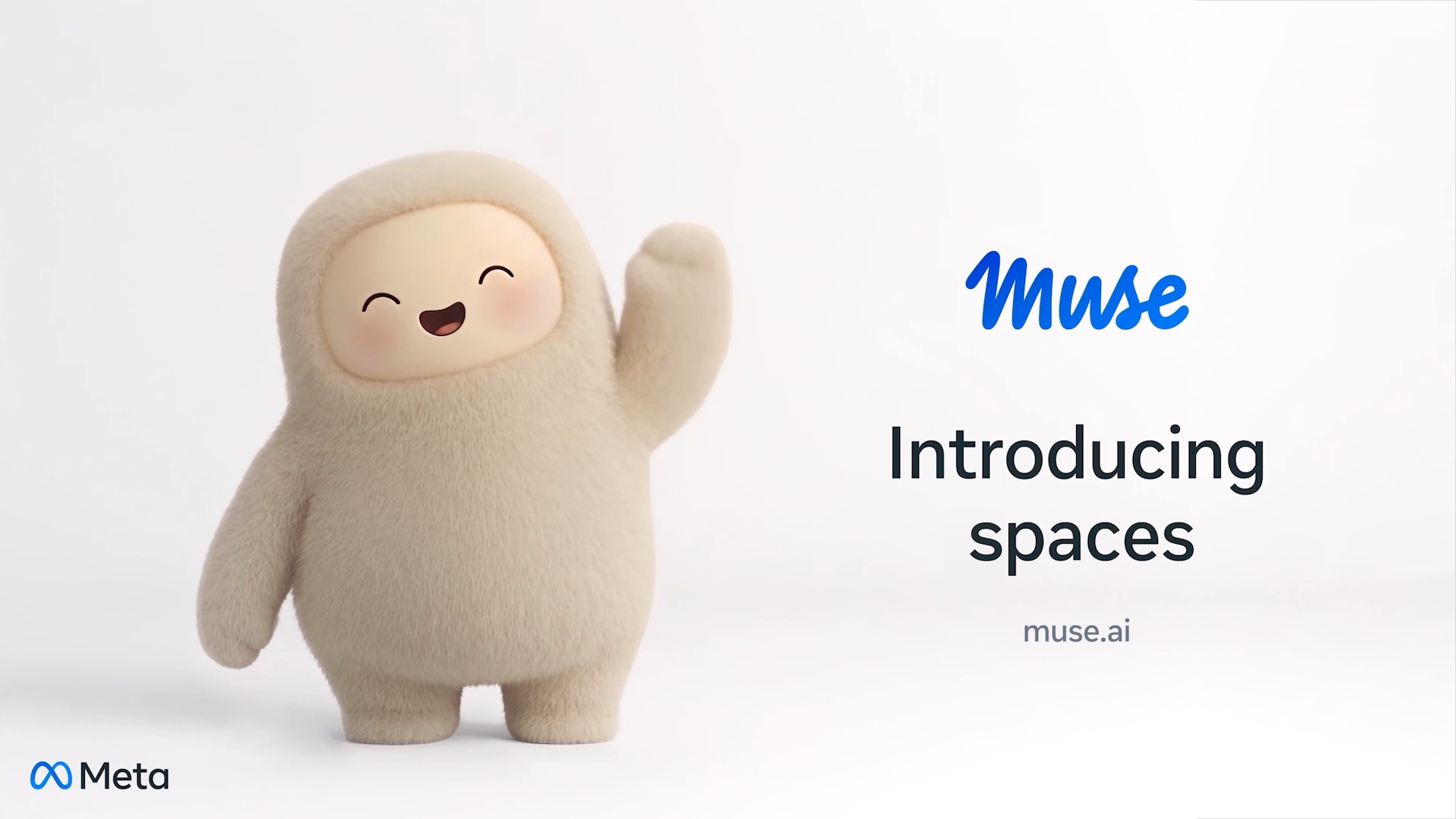
On 2026-11-06 Meta introduced Spaces in Muse: describe an idea and Muse builds a custom experience (trackers, planners, games), pinnable to sidebar/main tabs and schedulable; connected apps can keep spaces updated. Available today where Muse is offered; multi-user sharing still exploratory.
Zoom
Key Takeaways
Source: Meta Newsroom 'Design the Muse App, Just for You' (2026-11-06) + official @Muse post
Capability: describe an idea; Muse builds a persistent editable space, pinnable to sidebar/main tabs, schedulable show/hide
Sync: with connected apps, vendor says spaces can update in the background
Scope: available today wherever Muse is offered; multi-user sharing still exploratory
Related: Muse Wonder specialized models covered separately; this item is Spaces UX only
On 2026-11-06, Google DeepMind (@GoogleDeepMind) and VP Science Pushmeet Kohli published research: under human supervision, AI agents found two weaknesses in legacy 1024-bit RSA—signature padding adds no extra protection once an attacker controls about half the signed block (sandbox replay ~3.5× less CPU than prior), and a batch-factoring algorithm cuts average cost per additional same-size key by about 30×. Official caveat: modern 2048-bit and larger protocols remain unaffected.
Zoom
Key Takeaways
Source: @GoogleDeepMind post on 2026-11-06 + Pushmeet Kohli X Article; two technical PDFs (signatures / Batch NFS)
Scope: legacy 1024-bit RSA only; official statement that 2048-bit and larger remain secure
Signatures: once an attacker controls ~half the signed block, padding adds no protection; sandbox on a known 1024-bit benchmark key used ~3.5× less CPU and under 1/1000 of full break cost
Short fingerprints (e.g. 32-byte): theoretical estimate ~1600× better than prior best for 1024-bit keys
Batch factoring: for many same-size keys, average cost per additional key ~30× lower vs prior batch methods
On 2026-11-06, Cua (@trycua) and Scale AI AgentEnv launched Cua Driver Bench (Bench v2): same Claude Sonnet 5.5, tasks, and limits with only the computer-use driver swapped, scoring task done, GUI-only, and eight undisturbed-user criteria. Scale macOS background full-pass: cua-driver ~58% (23/40), agent-desktop ~20%, browser-use ~3%; Cua-run Codex Computer Use ~33%. Tasks and trajectories are public to rerun.
Zoom
Key Takeaways
Source: Cua official blog + @trycua thread on 2026-11-06; Scale ran macOS/Linux; Cua ran Windows and some controls
Method: 10 Bench v2 tasks; background keeps a simulated user typing; full pass = done + GUI-only + 8 undisturbed criteria
On 2026-11-05 Hugging Face said its open-source ML Intern is available as a Slack bot you can install in your own workspace. Mention @ML Intern to evaluate models, build datasets, and fine-tune using your own Hugging Face account; each thread is a session with an approved compute budget and optional HuggingChat MCP servers.
Zoom
Key Takeaways
Official: @huggingface 2026-11-05; docs ML Intern in Slack; install at huggingface.co/chat/slack/install
Form: Slack bot running the same agent as HuggingChat, billed and publishing under each user's HF account
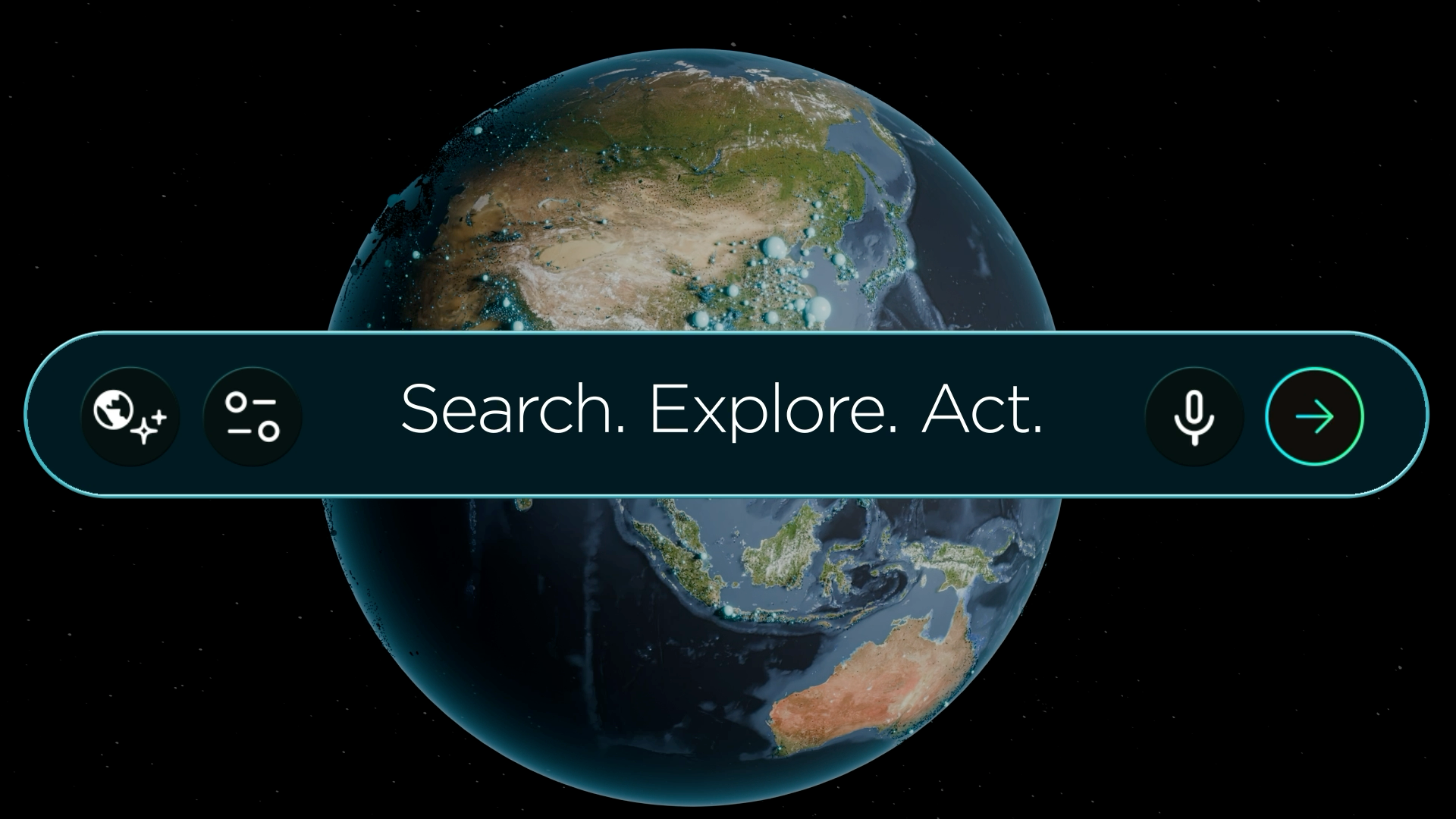
On 2026-11-05 Planet Labs announced the Planet AI App is generally available: a map-based chat UI to search a 10+ year, 3,000+ layer daily satellite archive with natural-language place finding, change-over-time views, and Deep Research agents. Entry point: ai.planet.com.
Zoom
Key Takeaways
Official: @planet / CEO @Will4Planet on 2026-11-05; blog Introducing the Planet AI App
Capabilities: natural-language place search, decade change/timelapse, file upload + scheduled reports, Deep Research agents
Data: vendor claim 10+ years of daily imagery and 3,000+ layers; results grounded in inspectable Planet imagery
Entry: ai.planet.com; aimed at discovery for non-GIS users, not a full GIS replacement
No standalone model benchmarks or detailed pricing published; summer beta with hundreds of users shaped discovery features
On 2026-11-05 DigitalOcean launched Cuttlefish, a native iPhone app for Managed Agents (Public Preview): follow live sessions and tool calls, approve or deny full commands or diffs, require Face ID/passcode for high-risk actions, and steer, pause, checkpoint, or roll back. Sessions run in cloud microVMs that keep going when the phone is locked or offline. With Box as launch partner, Box Mount (Private Preview) syncs a Box folder into the agent sandbox under Box permissions and version history.
Zoom
Key Takeaways
Official: @digitalocean post 2026-11-05 14:11 UTC; blog introducing-cuttlefish; App Store, Public Preview
Live sessions/reasoning/tool calls; approve full command, path, or diff; Face ID/passcode for high-risk; steer, pause, resume, stop
In-app previews of sites/docs; browse workspace files; checkpoints with fork/rollback
Supervises harnesses including Claude Code, Codex CLI, OpenCode, OpenHands, Hermes, LangGraph, CrewAI
Box Mount (Private Preview): sync a Box folder into the sandbox; edits/deletes write back with Box permissions and version history
On 2026-11-05 Hugging Face released the free Ultimate MoE Training Handbook. Co-founder Thomas Wolf cited ~800k GPU-hours, ~70k words and 55 interactive figures; author Nouamane Tazi separately cited ~500k GPU-hours. The Megatron-LM guide covers routing, expert sizing, communication and debugging via the official Space.
Zoom
Key Takeaways
Official: Hugging Face Space “The Ultimate MoE Training Handbook” (2026-11-05)
Thomas Wolf (HF co-founder) on X: ~800k GPU-hours, ~70k words, 55 interactive figures
Author Nouamane Tazi separately cited ~500k GPU-hours; prefer the Space body over a reconciled figure
Covers Megatron-LM: routing, expert sizing, all-to-all, aux vs loss-free bias, upcycling and serving
Free and open; small teams can follow the runbook flag-by-flag against logs
On 2026-11-05 Nous Research released Hermes Agent v0.23.0 (The Hearth). Your gateway can serve the full Desktop in a browser; CLI/TUI/Desktop/editors/bots/cron share one session authority; the plugin catalog grew from ~600 to 1,050+; plus conversation rewind, inline terminal images, and paid-MCP spend limits. Official: ~1,950 merged PRs and 666 contributors.
Zoom
Key Takeaways
Official GitHub release: Hermes Agent v0.23.0 (2026-11-05), codename The Hearth
Webapp: gateway serves full Desktop in a browser (off by default; webapp.enabled)
Unified sessions: one gateway owns chats so surfaces stop double-writing
Plugin catalog ~600→1,050+ with a Verified tier; paid MCP tools can declare cost + chat spend caps
On 2026-11-06 Kakao open-sourced Kanana-2-v-decide-3b-2611 on Hugging Face (~3.67B), built on Kanana-2-v-3b: no text generation, only choice / noul / score with probabilities. Vendor: 72.50 on Kanana Decision Bench; 61.23 avg on Decision Index + Vision; mean <0.04s on one H200, claimed ~43x vs GPT-6 Luna. Commercial Kanana Open License.
Zoom
Key Takeaways
Official: HF open weights kakaocorp/kanana-2-v-decide-3b-2611 (~3.67B), commercial Kanana Open License
Form: embedding similarity + softmax; choice / noul / score — no text generation
Vendor: 72.50 on Kanana Decision Bench; 61.23 avg on Decision Index + Vision
Vendor: mean <0.04s on one H200; claimed ~43x vs GPT-6 Luna
Try: transformers system_one / pipeline("decision") or HTTP System One server
On November 5 Julius Research CEO rahul (@0interestrates; Julius AI) released DeepFinance: 21 ultra long-horizon PE/IB tasks built from anonymized real deal data rooms (~20–30 human hours each, mean ~27.1h; ~84 rubric criteria). Official leaderboard: Opus 5.5 (max) ~54.8%, Sonnet 5.5 ~54.6%, GPT-6 Astra ~54.2%. Focus is auditable trajectories, not final-number checks alone.
Zoom
Key Takeaways
Primary source: Julius Research CEO @0interestrates post + official leaderboard/blog (first-hand lab lead release, not a separate corporate PR account)
Scale: 21 tasks; mean ~27.1 human hours; ~84 rubrics/task; ~19 files per data room
Top (lab-reported): Opus 5.5 max ~54.8%; Sonnet 5.5 ~54.6%; GPT-6 Astra xhigh ~54.2%
Cost (official table): Opus ~$8.63/task; Astra ~$4.55; GPT-6.1 Sol ~$0.81 at ~52.9%
Gap filled: moves beyond doc QA / final-number checks toward auditable trajectories under conflicting evidence
On November 5 Ant Group’s Ant Ling (@AntLingAGI) launched Ling-3.2-flash: a 560B-total / 25B-active native multimodal MoE with a 1M context window and native image, text and video input. The official changelog targets complex visual understanding, multimodal long-horizon agents, 3D understanding and interaction, and medical multimodal work; APIs are OpenAI- and Anthropic-compatible and free for the first two weeks. The launch post cites vendor evals versus Claude Opus 5 (max): OmniDocBench1.5 92.21 vs 90.56, ZEROBench(Sub) 43.71 vs 39.52, Vision2Web 85.86 vs 80.20. DesignArena placed it about #10 on Image-to-Frontend with Elo 1238.
Zoom
Key Takeaways
Specs (official docs): 560B total / 25B active; 1M context; native image/text/video; four focuses: complex vision, multimodal long-horizon agents, 3D, medical multimodal
Availability: chat UI plus OpenAI/Anthropic-compatible APIs; changelog says free for first 2 weeks, then original pricing resumes
Vendor evals (official X): OmniDocBench1.5 92.21 vs Opus 5 90.56; ZEROBench(Sub) 43.71 vs 39.52; Vision2Web 85.86 vs 80.20
Third party: DesignArena Image-to-Frontend ~#10, Elo 1238; official price page stresses 2-week free promo and has not listed 3.2 USD rates yet
Hands-on: model id Ling-3.2-flash; use image_url / video_url blocks; weights not on Hugging Face (API-first)
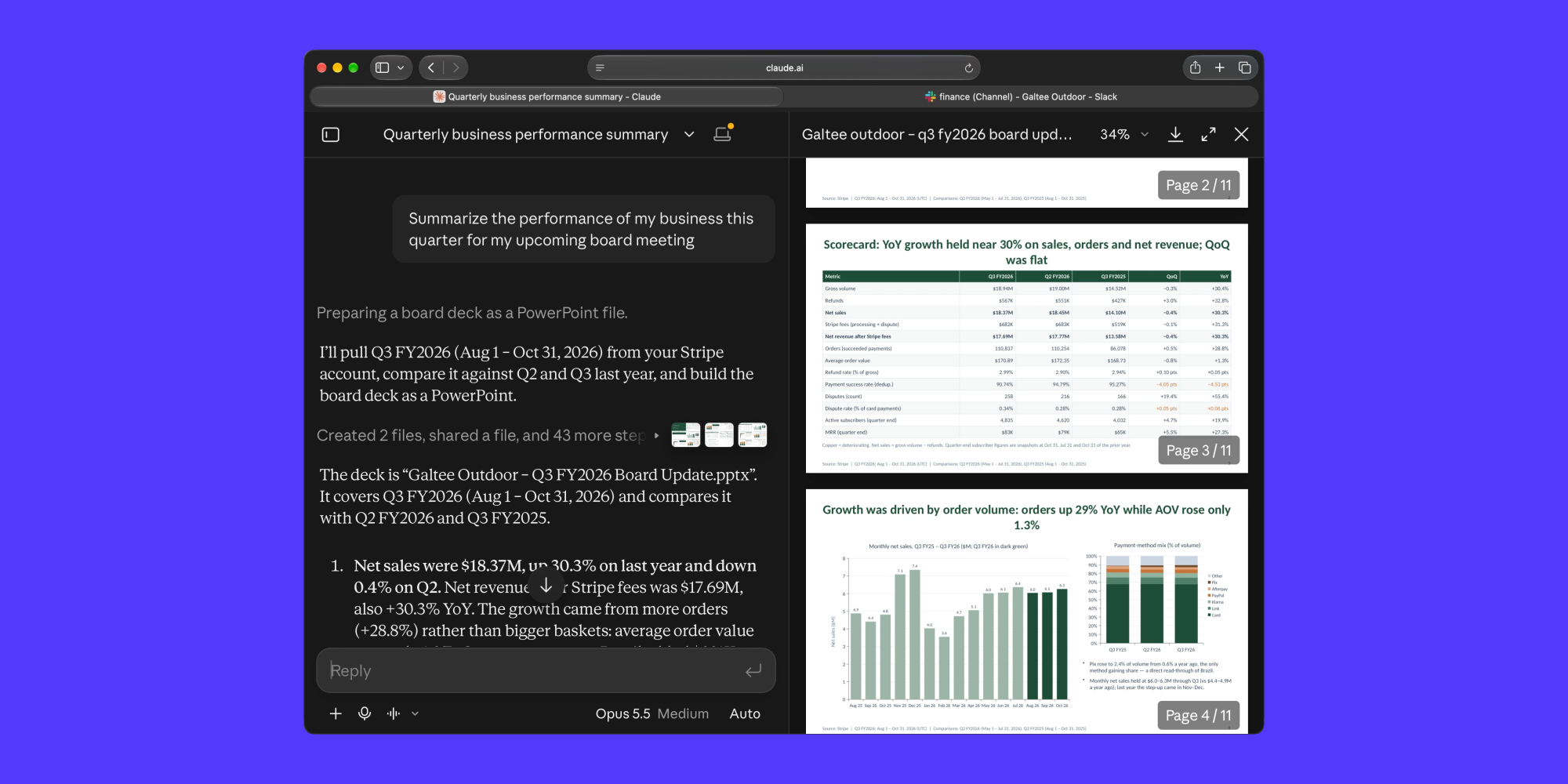
On November 5 Stripe made agent access to Stripe analytics available to all users via the Stripe MCP or the Queries and Reports APIs directly. Compatible agents such as Claude and Cursor can answer natural-language questions about MRR, churn, fraud and reconciliation. The Reports API ships a modeled schema of 300+ tables with built-in guidance; Queries API is free through January 31, 2027 then usage-based, while Reports API stays free. Every analysis exposes the underlying SQL for verification.
Zoom
Key Takeaways
Availability: all Stripe users; connect via Stripe MCP or Queries/Reports APIs to Claude, Cursor and other compatible agents
Capabilities: natural-language MRR, expansion/contraction/churn, fraud, reconciliation and payments performance; can combine with tools like PostHog
Data model: Reports API includes 300+ modeled tables with usage guidance; every analysis exposes editable underlying SQL
Pricing (vendor): Queries API free through Jan 31, 2027 then per-credit with no monthly fee; Reports API remains free
Safety: read-only Data Metrics/Queries/Reports; do not paste secret keys into chat—use agent API keys or OAuth
On November 5, Solid founder Trevor Keith launched Glasshand: dedicated real iPhones and Macs hosted in a data center—not emulators—so agents can see the screen and tap or type via API. Works with Claude Code, Codex, Cursor and others; agents can install apps, sign into iCloud, add eSIM for SMS codes, run social workflows or build/test in Xcode. Official pricing is $60/mo for an iPhone and $90/mo for a Mac, month to month with cancel anytime and factory wipe on release. It ranked #1 on Product Hunt that day.
Zoom
Key Takeaways
Form factor: real iPhones/Macs in a data center, not VMs or emulators; agents see the screen and tap via Glasshand API/controller
Compatibility: Claude Code, Codex, Cursor, OpenClaw, Hermes or any agent; start with “Tell your agent to rent”
Capabilities: App Store installs, iCloud sign-in, eSIM SMS verification and iMessage; Macs for Xcode build/test
Pricing (official site): iPhone $60/mo, Mac $90/mo (USD + tax), month-to-month cancel anytime; no hourly/daily rental