AI Coding Live News

BoxWorks 2026: Box and NVIDIA Unveil Box Context Retrieval, Permission-Aware Retrieval for Enterprise Agents Built on Nemotron Retriever, Plus Box Architect and Box Mount

At BoxWorks 2026 on November 5, Box announced an expanded NVIDIA collaboration: Box Context Retrieval, a new engine built on NVIDIA Nemotron Retriever embedding models, combines keyword and semantic search to return the most relevant passages to AI agents while honoring existing file permissions, with general availability for Enterprise Advanced customers planned for early next year. Box's press release claims 20% better search accuracy (Recall@5), 90% fewer tokens and 4x faster answers. Open-weight Nemotron models, starting with Nemotron 3 Ultra, are available in Box AI now. Box also unveiled Box Architect, which designs workflows from a stated goal; Box Mount, which mounts Box folders inside agent sandboxes and works with NVIDIA OpenShell; and agent security controls including MCP Guardrails.
BoxWorks 2026: Box and NVIDIA Unveil Box Context Retrieval, Permission-Aware Retrieval for Enterprise Agents Built on Nemotron Retriever, Plus Box Architect and Box Mount

Key Takeaways

  • Box Context Retrieval uses NVIDIA Nemotron Retriever with hybrid keyword and semantic search, honoring existing file permissions
  • Vendor claims: +20% Recall@5 accuracy, 90% fewer tokens, 4x faster answers; GA for Enterprise Advanced early next year
  • Open-weight Nemotron models, starting with Nemotron 3 Ultra, are available in Box AI now
  • Box Mount puts Box folders inside agent sandboxes and works with the NVIDIA OpenShell secure runtime
  • New agent security controls include MCP Guardrails, classification-based access policies and audit trails

Read full story
Linked Models & Agents:
⚡ Nemotron 3 Ultra⚡ Nemotron Retriever🌐 box🌐 Nvidia (NIM)

Anthropic: Claude Helps Map the First Prokaryotic Vault Particle Structure; Purification in ~90 Minutes, First Model in ~34 Hours

On November 4 Anthropic's biology team reported that Claude helped determine the first 3D vault structure from a prokaryotic/phage system (protein L05). Vendor-reported timing: ~90-minute purification and a first model in ~34 hours, plus an open discussion of mistakes and the multi-agent research workflow.

Anthropic: Claude Helps Map the First Prokaryotic Vault Particle Structure; Purification in ~90 Minutes, First Model in ~34 Hours

Key Takeaways

  • Official Anthropic research: Claude helped determine the first 3D prokaryotic/phage vault structure (protein L05)
  • Vendor-reported timing: purification cut from ~3 days to ~90 minutes; first model ready in ~34 hours
  • L05 forms a ~9.5 MDa shell of 96 chains with ~25% more volume than mammalian vaults
  • Anthropic also discloses failures: a medium additive cost ~2 weeks; an early cryo-EM map was mirrored
  • For developers: a concrete case of a science multi-agent harness with human oversight, not biology trivia
Read full story
Linked Models & Agents:
⚡ Anthropic Claude🤖 claude🌐 Anthropic

X Discussion: Greg Isenberg Says He Talks to His Agents More Than His Human Teammates, Shares a Full Agent-Run Company Stack

On November 3, founder and Late Checkout CEO Greg Isenberg (@gregisenberg) posted a long thread on X saying his team has 50+ people in 12 countries, yet he "talks to my agents more than my human teammates." He listed an agent-driven stack covering ideation, design, build, user testing, bug fixing and data review. Within hours it drew about 1,050 likes, 2,300 bookmarks and 183 replies. This is a personal workflow and opinion, not verified productivity data.

Key Takeaways

  • Engagement: about 1,050 likes, 2,300 bookmarks, 183 replies and 75K views within hours (per the X API); bookmarks far exceed likes, so readers are saving it as a checklist
  • Coverage: ideation, design, build, user testing, bug fixing and data review are all handed to agents; humans handle "creative feedback, relationships and telling the agents what they got wrong"
  • Build: pingdotgg/t3code as the control surface and stablyai/orca to run parallel agents, each in its own git worktree
  • Quality control: every output is scored 1-10 by an LLM judge and anything under 8 goes back; every agent mistake becomes a new skill
  • All of this is self-reported; no verifiable productivity or cost figures were published
Read full story

Epic Confirms Unreal Engine 5.9: Preview Next Week With Improved AI Workflows and Web Back as a Target Platform

On November 3, the official Unreal Engine account said UE 5.9 is happening, with a Preview build next week that includes improved AI workflows, web as a target platform, and rendering and animation updates; changes are already landing in the 5.9 branch on GitHub, with more details to come. This reverses Epic's June State of Unreal stance that 5.8 was the last planned major UE5 release, with 5.9 kept only as an option. UE 5.8 shipped the Experimental Unreal MCP plugin, which lets MCP clients such as Claude Code and Cursor drive the editor; the 5.9 AI workflow changes likely build on it, but Epic has not published a feature list yet.

Key Takeaways

  • Timing: the official post went out at 13:05 UTC on November 3 and says the 5.9 Preview arrives next week; the exact date and the final release date are not announced
  • Scope (per Epic): improved AI workflows, web as a target platform, and rendering and animation updates; changes are already landing in the 5.9 branch on GitHub
  • Context: in June, State of Unreal called 5.8 the last planned major UE5 release; UE6 targets Early Access at the end of 2027, with the full release 12 to 18 months later
  • AI groundwork: the Experimental Unreal MCP plugin in 5.8 embeds an MCP server in the editor at http://127.0.0.1:8000/mcp by default, loopback only and with no authentication
  • Reach: about 2,552 likes, 251 reposts, 114 quotes and 215K views at fetch time
Read full story
ADSponsored

Sarvam Releases Prism, an Open-Weight Decision Model Built on Sarvam 105B That Returns Calibrated Option Probabilities in About 44 ms, Apache 2.0

Indian AI company Sarvam released Sarvam Prism on November 3, a "System One" decision model for enterprise workflows: given a context and questions with fixed answer options, it returns a probability for every option in a single forward pass instead of generating text. Sarvam says that across the 25 decision models it tested, Prism averages 71.8 over three indices with a median response time of 44 ms on one B200, the highest score under 100 ms, and scores 82.5 on its Indian-language benchmark. Weights are on Hugging Face under Apache 2.0, with a hosted API as well. All scores are Sarvam's own measurements.

Sarvam Releases Prism, an Open-Weight Decision Model Built on Sarvam 105B That Returns Calibrated Option Probabilities in About 44 ms, Apache 2.0

Key Takeaways

  • Trained on the Sarvam 105B (105B-10B MoE) base; it only outputs option probabilities, so the answer is always one of the given options.
  • Vendor-reported indices: Jev Decision Index 67.0, Sarvam's recreation of the Artificial Analysis decision index 65.9, internal Indian-language benchmark 82.5, average 71.8; Perplexity Decider v1.2 averages 68.0 at about 117 ms.
  • Calibration: on English answers at 90%+ confidence it expects 3.3% errors and makes 2.2%; in Indian languages 5.4% expected vs 4.4% actual, while rivals underestimate errors by 1.5x to 4.8x.
  • By sorting options into a fixed order before scoring, it changed 0 of 2,000 answers across four shuffled option orders.
  • On 700 recorded agent runs it judges correctly 78.5% of the time overall, vs 70.7% for Claude Haiku 5.5.
  • Self-hosting needs one FP8-capable GPU with about 120 GB free memory (such as B200 or H200) and about 106 GB of disk for weights.
Read full story
Linked Models & Agents:
⚡ Sarvam Prism⚡ Sarvam 105B⚡ Perplexity Decider v1.2⚡ Jev 1.14⚡ Microsoft-Decision-1⚡ Claude Haiku 5.5🌐 Sarvam
g
guregodevo (Memdoor author)github.com·
👀30
🔥81

Memdoor reproduces GVS5H: a team of five Qwen3.8-27B agents averages 9.8/10 on the first 10 LiveCodeBench Hard problems, against 8.0 for a single Fable 5 call

On Oct 31 the open-source coding agent Memdoor (GitHub guregodevo/memdoor, Apache 2.0) published its team-solve workflow: using the GVS5H paper authors' exact prompts and loop, five Qwen3.8-27B instances act as planner, two ideators, solver and manager, talk only through files on disk, and a script that runs the tests decides success. Over five passes on the first 10 LiveCodeBench Hard problems from the GVS5H list it averaged 9.8/10, against 9.6 for the authors' own harness and 8.0 for a single Fable 5 call; 49 of 50 runs solved the problem for $35.79 in total, and every request and reply is public. The Hacker News post has about 200 points. This is a community reproduction on only 10 problems, and the author notes that training-data contamination cannot be ruled out.

Key Takeaways

  • Score: a mean of 9.8/10 over five passes (10, 10, 10, 10, 9), against 9.6 for the GVS5H authors' own harness and 8.0 for a single Fable 5 call (team-solve README, project-reported)
  • Cost: 49 of 50 runs solved, $35.79 and 15.3M output tokens in total; a median run took about 40 minutes of model time and $0.39, the longest 4 hours
  • Method: five roles (planner, two ideators, solver, manager) plus a repair worker each start from a fresh context, talk only through files on disk, and a shell script that runs the tests decides success instead of a model
  • Limits: only 10 problems rather than the paper's 100; the contests date from March and April 2025 and may be in training data; Fable 5's column comes from the GVS5H authors' result files and was not rerun in this harness
  • Reach: the HN post has about 200 points as of Nov 1, 16:10 SGT; the original GVS5H paper is arXiv 2608.26480, which reached #1 on HN on Oct 25
Read full story

Karpathy builds HackerTube in about 2 hours with Claude Code and Opus 5.5: a YouTube clone of 6,454 videos recommended on Hacker News

On Oct 31 Andrej Karpathy published HackerTube (hackertube.org) on his personal blog: a YouTube-style site that only lists the 6,454 YouTube videos recommended in Hacker News comments from 2007 to 2026, grouped into 150 topics. He says Opus 5.5 in Claude Code did the work: it downloaded every HN comment, ran Sonnet over them in a Workflow to narrow things down to about 40K comments recommending a video, wrapped the result in a YouTube UI, then deployed and hardened it on a VPS, all in about 2 hours. His only manual steps were creating a YouTube API key, booting the VPS and buying the domain. His HN submission reached the front page with about 1,005 points and 308 comments.

Key Takeaways

  • Source: Karpathy's personal blog post HackerTube (Oct 31), with the site live at hackertube.org
  • Scale: from every HN comment it narrowed things down to about 40K comments recommending a YouTube video, giving 6,454 videos across 150 topics from 2007 to 2026 (author-reported)
  • Method: Opus 5.5 ran the download and overall pipeline, used Claude Code's Workflow feature to have Sonnet filter comments and drop spam in bulk, then built a YouTube-style front end and deployed and hardened it on a VPS
  • Product details: it uses the frame at the 50% mark instead of the uploaded thumbnail, offers account-free For You picks with state kept only in the local browser, supports keyboard shortcuts, and exports the site's data so you can hand it to your own agent to build a variant
  • Workflow: Karpathy says Opus 5.5 on Medium effort is his default and he no longer reads or writes code or runs terminal commands himself; the HN post has about 1,005 points and 308 comments (public HN data as of Nov 1, 14:10 SGT)
Read full story
Linked Models & Agents:

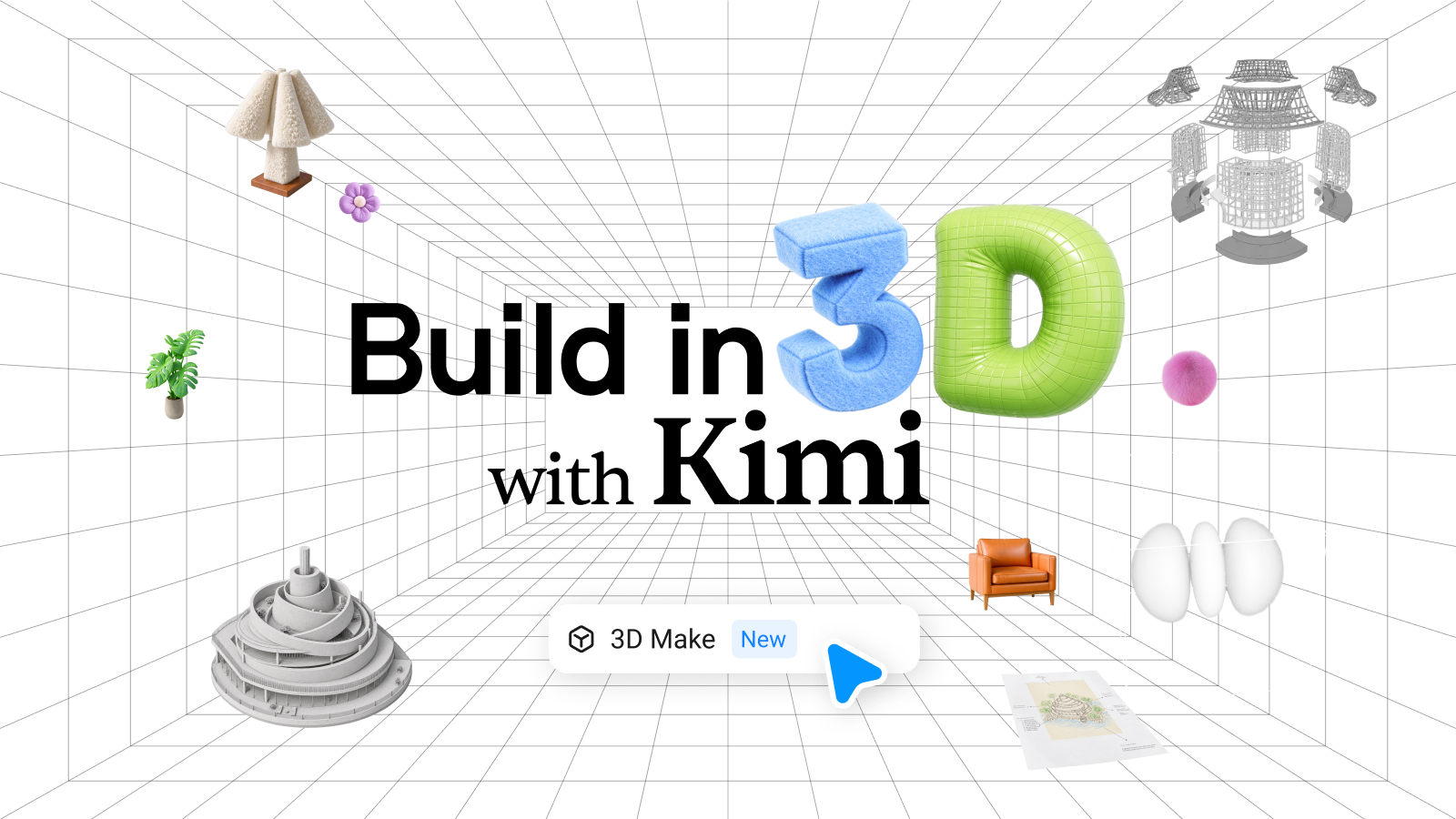
Kimi launches 3D Make: K3.1 Pro drives Blender, CAD tools and Unreal, Unity and Godot to build models, scenes and games

Moonshot AI's official Kimi account announced 3D Make at 03:14 UTC on Oct 30, saying Kimi connects to tools such as Blender and CAD software to create models, assemble scenes and develop games, available now on kimi.ai and Kimi Work. The companion 3D guide says K3.1 Pro was specifically trained to drive 3D software through Python scripts, so specialized tools without MCP support can join the workflow, while meshes such as people and animals are handed to diffusion services like Tripo. Plugins that need locally installed software work only in Kimi Work.

Kimi launches 3D Make: K3.1 Pro drives Blender, CAD tools and Unreal, Unity and Godot to build models, scenes and games

Key Takeaways

  • Availability: 3D Make is live on kimi.ai and Kimi Work; plugins that need locally installed software are Kimi Work only
  • Two modeling routes: parametric models (furniture, mechanical parts, buildings) via Python scripts written by K3.1 Pro, and meshes via services such as Tripo, Meshy and Hyper3D
  • Engines: Kimi says it is adapted to Unreal Engine, Unity and Godot to import models, assemble scenes and build gameplay step by step
  • Showcase: the celestial palace in the K3.1 Pro launch video was built in Unreal Engine 5.8 from source models totaling 36 million triangles, rendered with Nanite and Lumen
  • Benchmarks: no 3D benchmarks were published; the guide admits some tasks need several rounds, and rigging and complex materials remain weak spots
Read full story

Claude Code lead Boris Cherny on faster usage drain: every shared session reviewed, no regression found, fixes for a few smaller issues rolling out

Since Oct 21 many developers on X have complained that Claude Code was draining usage limits much faster. On Oct 28 (UTC) Boris Cherny, who leads Claude Code at Anthropic, replied on X that the team reviewed every session ID users shared, found no single root cause and no regression in Claude Code, and is rolling out fixes for a few smaller issues that made some sessions burn tokens faster. Most fast-drain cases traced back to one or two heavy sessions using xhigh effort, /goal, Workflows, Agent Teams or long SDK jobs.

Key Takeaways

  • The complaint post that started it said usage was draining 5x faster and drew about 1,660 likes and 240+ replies (a user claim, not official data)
  • Boris Cherny: the team checked every shared session ID, found no single root cause or Claude Code regression, and is rolling out fixes for a few smaller issues
  • Heavy features were the main driver: xhigh effort, /goal, Workflows, Agent Teams and long SDK jobs
  • Subagents inherit the session effort level by default, which adds up fast; /usage shows where tokens went
  • The official docs say Agent Teams use about 7x more tokens than standard sessions when teammates run in plan mode
Read full story
Linked Models & Agents:

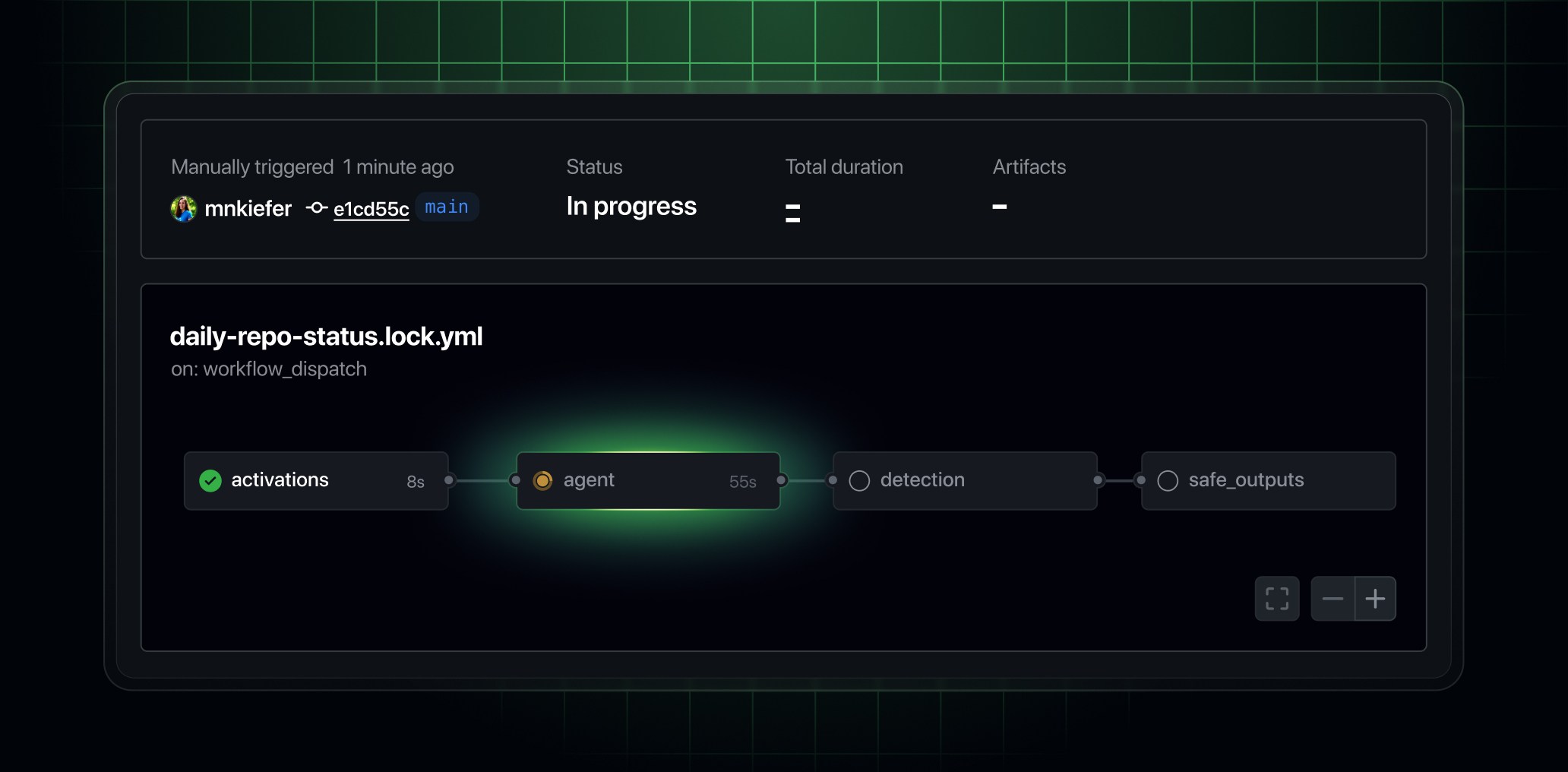
GitHub Agentic Workflows is generally available: write automation in Markdown, compile it to Actions YAML, run Copilot or your own coding agent, now with ARC self-hosting and micro-VM isolation

At Universe 2026 on Oct 28, GitHub made GitHub Agentic Workflows, an open source GitHub Next project, generally available on GitHub Free, Team and Enterprise. Developers describe tasks such as issue triage, CI failure analysis, documentation updates and test writing in natural-language Markdown, and gh aw compiles them into standard Actions YAML run by Copilot or a coding agent of their choice. GA adds self-hosted ARC runners with Docker-in-Docker, a non-experimental gh aw forecast cost estimate, per-workflow model providers and model routing, and Cloud Hypervisor or NVX micro-VM isolation.

GitHub Agentic Workflows is generally available: write automation in Markdown, compile it to Actions YAML, run Copilot or your own coding agent, now with ARC self-hosting and micro-VM isolation

Key Takeaways

  • Availability: GitHub Free, Team and Enterprise on github.com; using the default Copilot CLI engine requires a Copilot license
  • How it works: requirements in Markdown, compiled to standard Actions YAML that reuses existing runner groups and policies; run with Copilot or your own coding agent
  • Safe defaults: read-only permissions, a sandboxed container behind the Agent Workflow Firewall, safe-outputs validation, and a threat detection job before changes are applied
  • New at GA: self-hosted ARC runners with Docker-in-Docker, gh aw forecast out of experimental (with threat detection credits and monthly ranges), per-workflow model providers, model routing, micro-VM isolation and cross-repo enclaves
  • Customer story (Accenture's figures): one lead saved about 29 hours a week, AI authors 91% of the team's commits, and production errors fell from about 11,000 a day to under 1,000
Read full story
ADSponsored

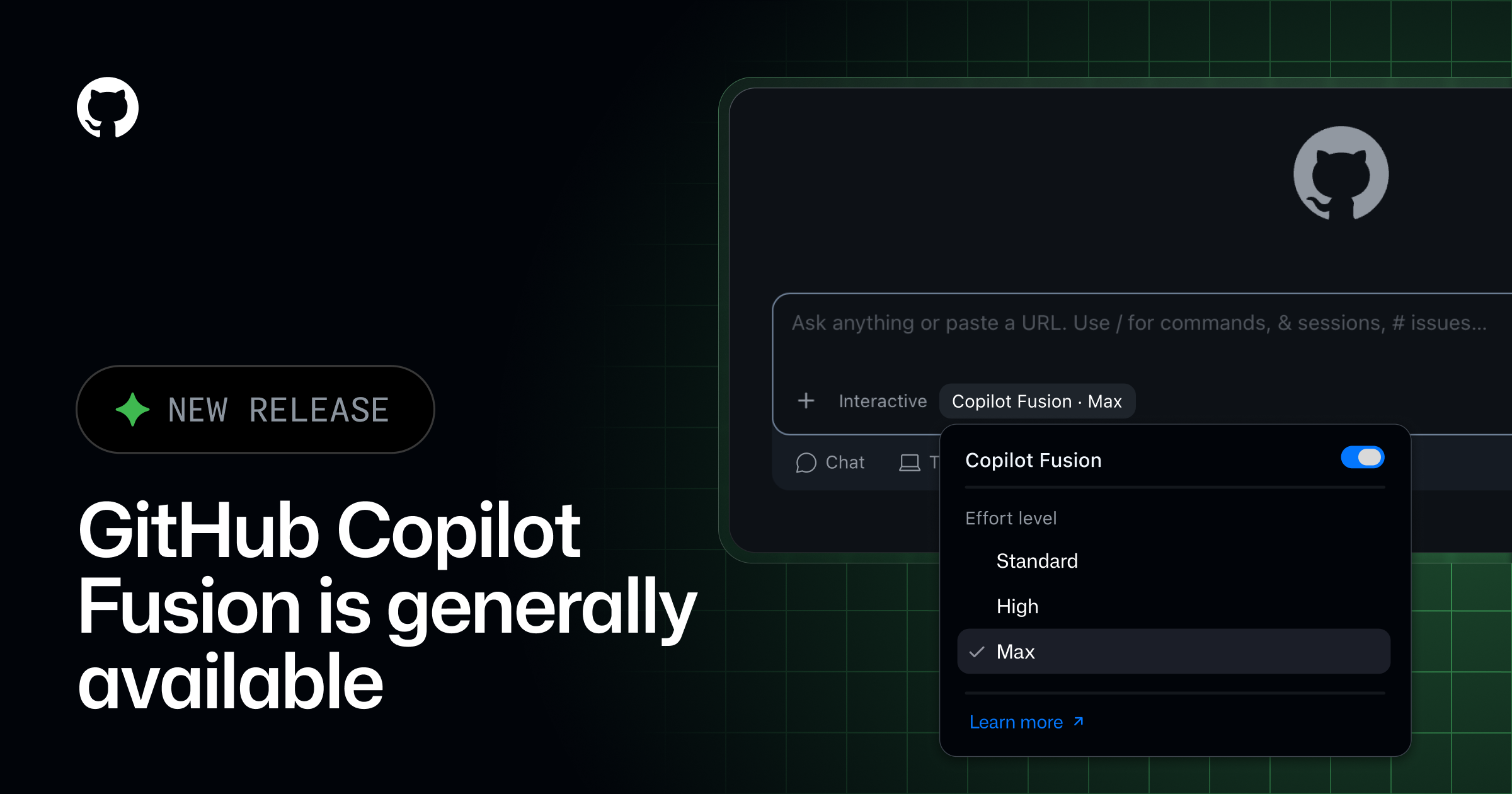
GitHub Universe 2026: Copilot Fusion is generally available, routing and orchestrating models automatically, with Fusion Max scoring 60 on the Artificial Analysis Coding Agent Index at about half the cost of Claude Code with Opus 5.5 Max

At GitHub Universe 2026 on Oct 28, GitHub made Copilot Fusion generally available. It merges the multi-model orchestration of the Project HydraFusion research preview with Copilot auto model selection: users pick Copilot Fusion and an effort level (Standard, High or Max) in the model picker, and the system decides which models to use and whether to run a Single, Cascade or Critique workflow. GitHub says Fusion Max scored 60 on the Artificial Analysis Coding Agent Index, two points below Claude Code with Opus 5.5 Max, at about half the API cost per task, about half the tokens and about 40% less time. Each underlying model is billed at its standard rate, and paid plans get 30% off through Nov 30.

GitHub Universe 2026: Copilot Fusion is generally available, routing and orchestrating models automatically, with Fusion Max scoring 60 on the Artificial Analysis Coding Agent Index at about half the cost of Claude Code with Opus 5.5 Max

Key Takeaways

  • Scores (Artificial Analysis Coding Agent Index v2.0): Fusion Max 60 versus 62 for Claude Code with Opus 5.5 Max; $5.59 per task versus $11.42, while the Devin Fusion pairing scores 62 at $8.00
  • Breakdown: a slight lead on Terminal-Bench 4.0 at 71, third on FrontierCode at 51 (Claude Code 56, Devin Fusion 54), and a weaker 57 on SWE-Atlas-QnA-AA
  • Efficiency: about 7.2M tokens per task, roughly half of Claude Code with Opus 5.5 and 30% fewer than Devin Fusion; GitHub reports about 40% less time per task
  • The pool includes Claude Opus 5.5, Claude Sonnet 5.5, GPT-6 Astra and GPT-6 Sol; admins can disable individual models for Fusion only and set Fusion as the default
  • Availability: all Copilot plans in VS Code, the Copilot app, Copilot CLI and JetBrains IDEs; existing auto, HydraFusion and HydraFusion Max selections migrate to matching effort levels
Read full story

X discussion: Box CEO Aaron Levie says under 1% of enterprise workflows really use AI agents, echoing Sarah Guo's "early Claude Code era" take

Conviction founder Sarah Guo posted on Oct 27 that enterprise workflow automation is "in the autocomplete / early claude code era", "but not for long", drawing about 80K views and nearly 500 likes. Box CEO Aaron Levie quoted it the next day and argued that most enterprise workflows have not had agents applied in any meaningful way, putting deployment at probably under 1%, mainly because of AI capability itself; he says computer use, long-running agents and agent swarms are changing that. His post has about 635 likes, 486 bookmarks, 63K views and 150+ replies. These are opinions and rough estimates, not measured statistics.

Key Takeaways

  • Sarah Guo (Conviction founder): enterprise workflow automation is still in the "autocomplete / early claude code era", but not for long
  • Aaron Levie (Box CEO): most enterprise workflows have not had agents applied meaningfully, and deployment across the economy is "probably < 1%", which is his estimate
  • Levie says the main bottleneck is AI capability itself, with enterprise adoption speed a smaller factor
  • He points to computer use, long-running agents, harness improvements and agent swarms as what now makes more complex workflows workable for agents
  • His view: the shift is less about users prompting agents and more about organizations re-engineering workflows, with the biggest impact in finance, life sciences, healthcare and other information-heavy fields
Read full story

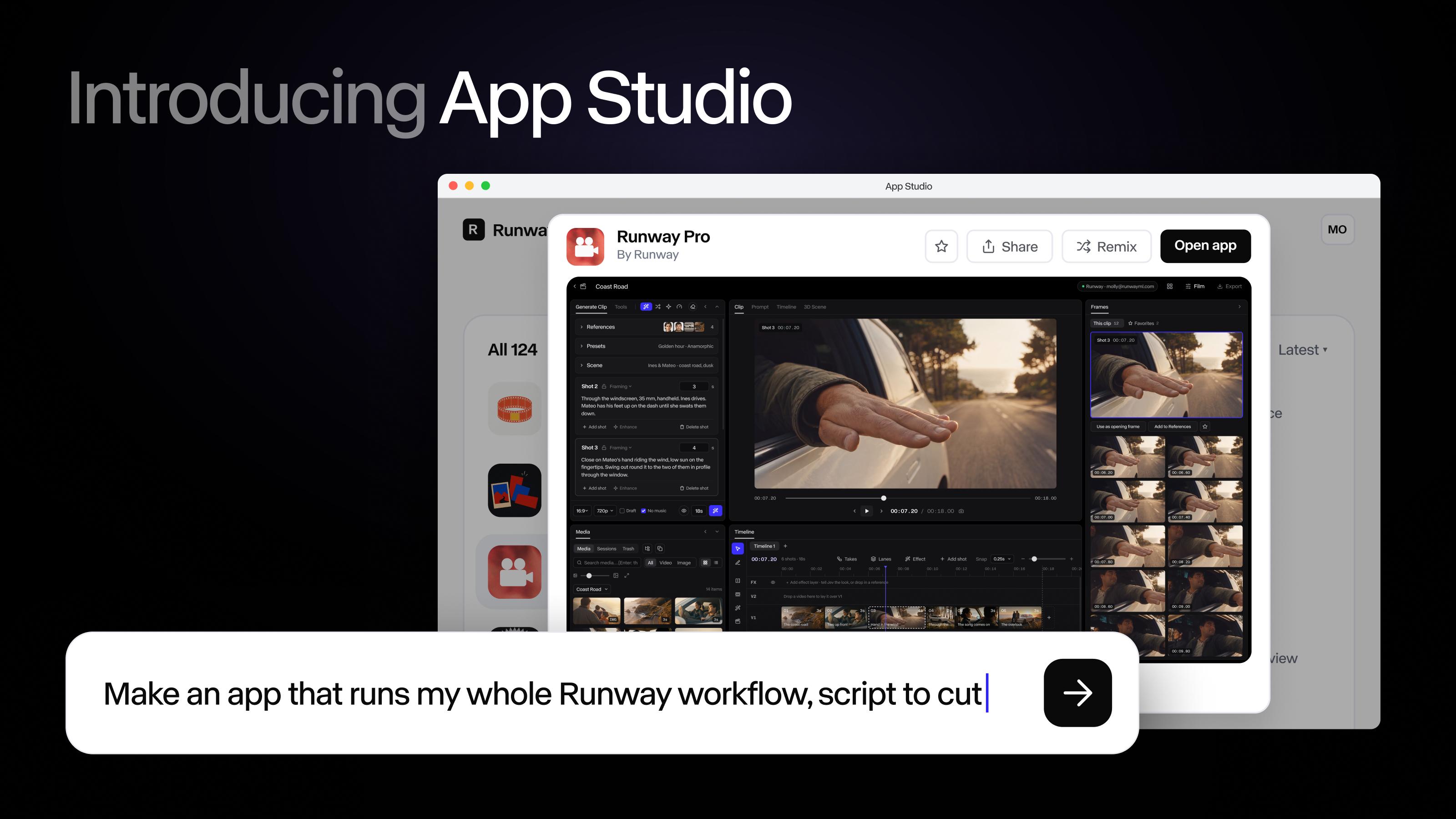
Runway launches App Studio: describe a creative tool in plain language and get a custom app that runs Runway's image, video and audio models on your Brand Kits

In an Oct 26 post on its blog, Runway launched App Studio: describe the tool you want in plain language and App Studio writes, tests and deploys an app with its own interface that generates images, video and audio with Runway's models, using your team's Brand Kits, Workflows and Assets. An existing Agent session or Workflow can be turned into an app in one click. Apps are private by default and can be shared with a team or published as a public link that visitors run on their own credits. Built-in apps at launch include Character Swap, AutoComp and 3D Camera Control. It is available now on every paid plan at no extra charge, drawing on existing Runway credits.

Runway launches App Studio: describe a creative tool in plain language and get a custom app that runs Runway's image, video and audio models on your Brand Kits

Key Takeaways

  • Pricing: available now on every paid plan with no add-on; building, running and hosting draw on existing Runway credits, and visitors to a public link pay for their own generations
  • Six built-in apps at launch: Character Swap, AutoComp (swap a product into footage while keeping packaging accurate), Product Portfolio, 3D Camera Control, Precise Edit and a customizable Runway Pro, each usable as is or remixable
  • One-click conversion: an existing Agent session or Workflow can lock in its prompt, model chain and settings and become an app that exposes only the inputs teammates need; the code stays visible, with preview and rollback
  • Enterprise controls: apps inherit the account's model controls, admins can turn App Studio off per workspace, block public links and see usage across all apps; Enterprise app links require a Runway sign-in
  • Early access (per Runway): architecture firm KPF built an app that turns design renderings into directed camera-move video, and design partners built dozens of custom apps
Read full story
Linked Models & Agents:

Oracle unveils the Fusion Claw runtime with 25 agentic apps at AI World, and Fusion Companion lets employees run ERP and HCM work from ChatGPT

At Oracle AI World in Las Vegas on Oct 26, Oracle announced Oracle Fusion Claw, a new execution runtime for agents, and 25 Claw-powered Agentic Applications now available across ERP, HCM, supply chain (SCM) and customer experience (CX). It also introduced Fusion Companion and Fusion Agentic Home: employees describe a goal in natural language in supported AI tools such as ChatGPT or in the native Fusion interface, and the system picks and coordinates the transactions, workflows, approvals and AI agents needed, within existing identity, permission and approval controls. Oracle has not published pricing, benchmarks or a detailed rollout schedule.

Oracle unveils the Fusion Claw runtime with 25 agentic apps at AI World, and Fusion Companion lets employees run ERP and HCM work from ChatGPT

Key Takeaways

  • Runtime: Fusion Claw is a new agent execution runtime that Oracle says supports larger-scale and longer-running work, continuous replanning, deterministic execution and governed autonomy (press release)
  • Scale: 25 Claw-powered Agentic Applications are available now across the ERP, HCM, SCM and CX suites, including Ledger, Workforce Orchestration, Payroll Activity Workspace and Procurement Spend
  • Access: Fusion Companion works through supported AI tools such as ChatGPT and customer- or partner-built interfaces, with Fusion Agentic Home as the native entry point (Fusion Companion release)
  • Governance: all execution stays within existing identity, permissions, policies and approval controls, and decisions needing human judgment are escalated
  • Not disclosed: Oracle has not published pricing, benchmarks or a per-app rollout schedule
Read full story

Anthropic Officially Releases Claude Duet Research Preview: Proactive Autonomous Workflow Agent Application

Anthropic (@claudeai) officially announced Claude Duet, a research-preview application that represents a generational leap in agentic user interfaces. Accumulating over 40K likes and 4.7M views within hours, Claude Duet shifts the AI paradigm from passive query-response chatbots to a proactive autonomous partner: it surfaces what requires user attention, autonomously executes delegated long-horizon tasks, works uninterrupted in the background while users step away, and explicitly requests confirmation before executing high-impact actions on the user's behalf.

Anthropic Officially Releases Claude Duet Research Preview: Proactive Autonomous Workflow Agent Application

Key Takeaways

  • @claudeai officially launched Claude Duet as a research preview app, rapidly amassing 40K+ likes and 4.7M views
  • Transcends reactive chat interfaces via a proactive architecture that continuously surfaces priorities requiring human attention
  • Executes multi-step background tasks asynchronously through persistent 'keeps working when you step away' autonomy
  • Integrates rigorous safety guardrails, mandating explicit confirmation before executing irreversible external actions
Read full story