AI Coding Live News

Anthropic: Claude Enterprise Inference Hooks Generally Available for Prompt and Pre-Tool-Call DLP Checks

Anthropic updated Claude Enterprise security and admin features: Inference Hooks (prompt hooks and pre-tool-call hooks) are generally available so prompts and tool calls can hit the organization's existing DLP/security stack for allow/deny before the model or tool runs. The same post also introduces a Security Center, centralized management, and additional access controls (mostly beta).

Anthropic: Claude Enterprise Inference Hooks Generally Available for Prompt and Pre-Tool-Call DLP Checks

Key Takeaways

  • Official: claude.com article More visibility and control over Claude Enterprise for security teams
  • GA: Prompt hooks and pre-tool-call hooks into existing enterprise DLP/security tools
  • Coverage: prompts and tools/skills/plugins/MCP on supported products; one org setup
  • Same post, mostly beta: Security Center, centralized management, Admin API sign-out, self-serve IP allowlist, Desktop shadow-IT block, Cowork EDR
  • Limits: Enterprise; hooks see transcript/tool-call text, not raw file bytes; configure timeout fail policy
Read full story

World Labs Ships Frameboy: Optimized Atlas Streams at up to ~15 fps for Real-Time Browser World Exploration

On 2026-11-05 World Labs released research preview Frameboy: a highly optimized Atlas variant streamed from cloud GPUs to the browser at up to ~15 fps (vendor claim) with live camera control. A public demo and a Viewfinder closed-beta overlay shipped together; CEO Fei-Fei Li amplified “Real time Atlas” on X.

World Labs Ships Frameboy: Optimized Atlas Streams at up to ~15 fps for Real-Time Browser World Exploration

Key Takeaways

  • Official: World Labs shipped Frameboy research preview on 2026-11-05 (blog + X)
  • Vendor claim: optimized Atlas streams from cloud GPUs at up to ~15 fps with live camera control
  • Public demo: frameboy.worldlabs.ai; Viewfinder closed beta builds scenes then overlays live explore
  • Capabilities: single-image/text scene seeding + multiview novel-view synthesis; RTFM form factor at Atlas scale
  • Vendor notes powerful cloud GPUs required and cost vs local rendering; no independent quality/latency board
Read full story
Linked Models & Agents:
⚡ Atlas⚡ RTFM🌐 World Labs

Julius Research Releases DeepFinance: 21 PE/IB Long-Horizon Tasks; Claude Opus 5.5 ~54.8% Mean Rubric

On November 5 Julius Research CEO rahul (@0interestrates; Julius AI) released DeepFinance: 21 ultra long-horizon PE/IB tasks built from anonymized real deal data rooms (~20–30 human hours each, mean ~27.1h; ~84 rubric criteria). Official leaderboard: Opus 5.5 (max) ~54.8%, Sonnet 5.5 ~54.6%, GPT-6 Astra ~54.2%. Focus is auditable trajectories, not final-number checks alone.

Julius Research Releases DeepFinance: 21 PE/IB Long-Horizon Tasks; Claude Opus 5.5 ~54.8% Mean Rubric

Key Takeaways

  • Primary source: Julius Research CEO @0interestrates post + official leaderboard/blog (first-hand lab lead release, not a separate corporate PR account)
  • Scale: 21 tasks; mean ~27.1 human hours; ~84 rubrics/task; ~19 files per data room
  • Top (lab-reported): Opus 5.5 max ~54.8%; Sonnet 5.5 ~54.6%; GPT-6 Astra xhigh ~54.2%
  • Cost (official table): Opus ~$8.63/task; Astra ~$4.55; GPT-6.1 Sol ~$0.81 at ~52.9%
  • Gap filled: moves beyond doc QA / final-number checks toward auditable trajectories under conflicting evidence
Read full story

Meta Rolls Out Muse Realtime Avatar in the US Muse App: Speech-Driven Expression and Gesture at ~870ms First-Byte Latency

On November 5 Meta AI (@AIatMeta) said Muse Realtime Avatar, previewed at Connect, is rolling out in the US Muse app, turning Muse Realtime Voice into interactive live avatars. The research blog describes an audio-driven Diffusion Transformer that shares the speech-token stream with voice for lip-sync and expression; a single GB200 session streams 448×768 at 25 fps with about 870 ms from end of user turn to first synchronized audio-video byte, with Meta Video Seal invisible watermarking. Muse is for users 18+; no global schedule or developer API was announced.

Meta Rolls Out Muse Realtime Avatar in the US Muse App: Speech-Driven Expression and Gesture at ~870ms First-Byte Latency

Key Takeaways

  • US Muse app rollout of Realtime Avatar after the Connect preview (@AIatMeta)
  • Shared speech VQ tokens drive audio decode and avatar video; causal chunks with self-forcing distillation cut ~120 teacher NFEs to 2 student NFEs (~60x)
  • Vendor perf: 448×768@25fps, ~870ms first-byte latency; ~8x serving capacity vs BF16 baseline, up to 12 concurrent sessions on one GB200
  • Vendor preference study favored Muse over Runway Characters and HeyGen LiveAvatar on overall and most axes
  • Safety: Video Seal invisible watermark; blog demos are not the full in-app avatar set; no public developer API stated
Read full story
Linked Models & Agents:
⚡ Muse Spark⚡ Muse Presence🤖 Muse🌐 Meta
ADSponsored

OpenAI Launches GPT-6 Cyber: ExploitGym 48.5%, Out-of-Scope Rate Down to 0.07%, Daybreak Red Select Access, Critical Preparedness

On November 5 OpenAI launched GPT-6 Cyber for authorized security research: ExploitGym rose from GPT-5.6 Cyber's 32.1% to 48.5% (about 51% relative), out-of-scope exploitation fell to 0.07% without deployment prompts and 0% with them. The model helped find 81 novel high-severity Firefox bugs and develop exploits for 948 Linux privilege-escalation cases, and OpenAI raised its Preparedness Framework cyber rating from High to Critical. It is initially available via API and Codex to select Daybreak Red customers, with expansion to all Red customers planned.

OpenAI Launches GPT-6 Cyber: ExploitGym 48.5%, Out-of-Scope Rate Down to 0.07%, Daybreak Red Select Access, Critical Preparedness

Key Takeaways

  • ExploitGym 48.5% vs GPT-5.6 Cyber 32.1% (~51% relative gain; vendor figures)
  • Scope alignment: 99.93% avoided out-of-scope services without deployment prompts; 100% with them
  • Real-world: 81 novel high-severity Firefox vulns; 1,724 Linux vulns reproduced, 948 exploits developed
  • Preparedness raised to Critical; RemoteExploitBench 95% completion (Astra refused 100%)
  • Select Daybreak Red via API/Codex first; Daybreak Blue alpha for Astra defensive use expanding
Read full story
Linked Models & Agents:

RoboColosseum Opens Real-Robot Evaluation: 100+ Robots at 124 Sites, Claude Opus 5.5 and GPT-6 Astra Rival Specialized VLA Policies Zero-Shot

Hugging Face, BitRobot, the Singapore Embodied AI Centre, NUS and others launched RoboColosseum on November 4, a distributed real-robot evaluation framework covering four embodiments: SO-101, Franka, Bimanual-YAM and the Unitree G1 humanoid. The first study ran 5,699 blinded pairwise comparisons at 124 sites across 5 VLA policies and 3 frontier models. Claude Opus 5.5 and GPT-6 Astra beat their VLA counterparts on average task progress by 12.1 and 11.0 points, while Grok 4.7 trailed by 7.5. All rollouts are open on Hugging Face, and the project pledges 10,000 free evaluation hours to academic labs.

RoboColosseum Opens Real-Robot Evaluation: 100+ Robots at 124 Sites, Claude Opus 5.5 and GPT-6 Astra Rival Specialized VLA Policies Zero-Shot

Key Takeaways

  • Two tracks: the Open Track runs blinded zero-shot pairwise comparisons, and the Fine-tune Track gives each VLA the same 100 demonstrations per task across 20 tasks.
  • The VLAs tested are GR00T N1.7, pi0.5, MolmoAct2, G0.5 and LingBot-VLA v2; the frontier models are GPT-6 Astra, Claude Opus 5.5 and Grok 4.7.
  • After fine-tuning, GR00T N1.7 leads on SO-101 and pi0.5 leads on Franka and Bimanual-YAM; on the G1 humanoid no policy completes any task, with average progress of 13.3% to 23.2%.
  • Rankings agree only weakly across robots (Kendall W = 0.24), and zero-shot rankings poorly predict rankings after fine-tuning.
Read full story

OpenAI Plans Its Next Internal Security Sprint With Cathedral, More Than Quadruples Critical Bug Bounty Rewards to Up to $172,000

On November 2 (US time) OpenAI said it is planning its next internal security sprint and partnering with security firm Cathedral, whose researchers will use OpenAI models alongside OpenAI teams to challenge its defenses. It is also changing its Security Bug Bounty program, more than quadrupling rewards for critical findings; OpenAI's X post says exceptional findings can earn up to $172,000 including bonuses. Per OpenAI, the last sprint dedicated 25% of its product engineers to finding and fixing weaknesses, using Codex to reproduce vulnerabilities and prepare patches, and it has committed $1 billion in subsidized access over six months for frontline defenders.

OpenAI Plans Its Next Internal Security Sprint With Cathedral, More Than Quadruples Critical Bug Bounty Rewards to Up to $172,000

Key Takeaways

  • Critical bug bounty rewards are more than quadrupled; per OpenAI's X post, exceptional findings can earn up to $172,000 including bonuses.
  • Researchers from partner Cathedral will use OpenAI models alongside OpenAI teams to test its defenses.
  • Per OpenAI, the last sprint dedicated 25% of product engineers and used Codex to reproduce vulnerabilities in isolated environments and prepare patches.
  • OpenAI has committed $1 billion in subsidized access over six months for defenders of essential services and digital infrastructure.
  • Timing, scope and finding counts for the next sprint were not disclosed.
Read full story
Linked Models & Agents:

Altman at ADIPEC: The Internal Model Behind the 10,000-Agent Navier-Stokes Proof Is "the Next GPT," Coming Soon

Speaking at the ADIPEC energy conference in Abu Dhabi on November 2, OpenAI CEO Sam Altman said the September run in which 10,000 agents collaborated for about four days used "the model that is going to be released soon, the next GPT," stressing that the agents had no hierarchy and were fully decentralized. It is the first public statement tying the internal model behind OpenAI's September Navier-Stokes proof to its next flagship, though OpenAI has given no name, release date or price.

Altman at ADIPEC: The Internal Model Behind the 10,000-Agent Navier-Stokes Proof Is "the Next GPT," Coming Soon

Key Takeaways

  • Quote (ADIPEC keynote video): "It was 10,000 agents of the model that is going to be released soon, the next GPT, working for about four days, nonstop."
  • OpenAI's September 8 blog post: about 10,000 concurrent agents reached the result in about 88 hours, and GPT-6 Astra took another 17 hours for Lean formalization and verification.
  • Scale (OpenAI figures): 2.7 million agent messages and about 130 billion output tokens for Navier-Stokes alone; 4.9 million messages and about 300 billion output tokens across all attempted problems.
  • The Lean proof is public at openai/NavierStokesAndEuler and establishes statements C and D of the official Clay formulation (breakdown with smooth forcing).
  • Not disclosed: the next GPT's name, release date, price or benchmarks; names like "GPT-6.2 Astra" circulating on X are speculation.
Read full story
Linked Models & Agents:

X Discussion: DHH Says the Age of Agents Will Be Great for Most Programmers but Hard on Cantankerous Ones Who Relied on Rare Skills

Ruby on Rails creator and 37signals CTO DHH (David Heinemeier Hansson) posted two related takes on X on November 2. First: "The great gift of agents is how they allow you to route around every insufferable gatekeeper in software." Then: the age of agents will be amazing for most programmers but hard on the cantankerous ones, because specialized knowledge and rare skills will no longer offer immunity to people who are a pain to work with, so they should learn basic people skills. The second post drew about 3,600 likes, 106K views and 280+ replies in roughly four hours. This is a personal opinion, not an announcement from any company.

Key Takeaways

  • This is a personal opinion post by DHH, not an official statement from 37signals or any AI company, and it cites no data or study.
  • The main post (2026-11-02 13:03 UTC) had about 3,609 likes, 180 reposts, 282 replies, 60 quotes, 106K views and 400 bookmarks at fetch time.
  • His earlier post about 1.5 hours before, saying agents let you route around every insufferable gatekeeper in software (11:41 UTC), had about 2,831 likes, 131 reposts and 80K views.
  • Supporters: tech analyst Ben Dickson (@bendee983) quoted it saying great engineers used to get a free pass for being difficult, and AI is leveling the field, though solid engineering knowledge is still required.
  • Pushback and additions: one reply joked that cantankerous people just found a coworker who never complains back; another argued an agent will do the work but will not make you nicer, so being easy to work with becomes more valuable.
Read full story
Linked Models & Agents:

X Discussion: Elon Musk Says Grok Bot Serving Costs Were Unsustainably High Relative to Revenue; Replit CEO Amjad Masad Warns Subsidized AI Subscriptions Face a Rug Pull

After users on X complained that their Grok Bot usage ran out early this cycle, Elon Musk replied that "the cost of serving Grok Bot was unsustainably high relative to revenue", a reply with about 13K likes and 5.5M views. Replit CEO Amjad Masad then quoted the news, saying people enjoying subsidized AI subscriptions should "get ready to get rug pulled", sparking a debate over whether flat-rate AI plans can last. This is an X discussion with personal views; xAI has not published a formal pricing or limit announcement.

Key Takeaways

  • Trigger: user @DogecoinNorway said their Grok Bot usage hit 100% with 4 days left until reset, a post with about 1.24M views.
  • Musk replied that the cost of serving Grok Bot was unsustainably high relative to revenue, with about 13.2K likes, 5.51M views and 1,900+ quotes.
  • Amjad Masad (Replit CEO) quoted it, warning subsidized AI subscriptions are about to get rug pulled, with about 2,347 likes and 146K views; in replies he said Replit never subsidized.
  • xAI has not published a formal limit or pricing change; rely on official notices for specifics.
Read full story
ADSponsored

X discussion: is GPT-6 Astra robotics' "GPT-3 moment"? Ex-OpenAI researcher Will Depue says specialized ML got "bitter lessoned"

Over the past day, X has been debating whether GPT-6 Astra can work directly as a robot policy. Former OpenAI researcher Will Depue (whose bio lists Sora 1 and 2 and o3/4o post-training) called Astra beating specialized robotics models "deeply surprising", then described it as "the final death of specialized ML". Investor Freda Duan posted that "Astra IS robotics' GPT-3 moment", drawing about 84K views. Third-party evaluations point both ways: in a RoboDojo paper, Astra averages 22.48% success and ranks above all 40 public policies, while an EBench report puts it at 46.7%, third of nine models. This is a discussion of opinions, not an official OpenAI conclusion.

X discussion: is GPT-6 Astra robotics' "GPT-3 moment"? Ex-OpenAI researcher Will Depue says specialized ML got "bitter lessoned"

Key Takeaways

  • Reach: Will Depue's two posts have about 597 and 566 likes and 59K and 37K views; Freda Duan's "10 takes" has about 455 likes, 559 bookmarks and 84K views (as of 19:10 SGT)
  • RoboDojo: over 42 tasks and 2,100 trials, Astra averages 22.48% success (Score 28.97), ranking above all 40 public policies; GPT-5.5 gets 0.88% in the same setup (arXiv 2609.24170, as reported by the paper's authors)
  • Counterpoint: in the EBench report, Astra with single-shot in-context learning scores 46.7%, behind OpenWAM-alpha at 55.3% and AMapbot 1 at 48.9% (EBench tech report)
  • Real arms: Robocurve measured 19 of 20 successes on a block-into-bowl task on YAM arms at about $0.94 per run, but only 2 of 20 on a puzzle insertion task (Robocurve)
  • Weak spots: several evaluations find Astra clearly weaker on high-precision control, dynamic control and bimanual coordination
Read full story

YC Labs pits AI agent swarms in Minecraft and Mindustry: GPT swarms win 12 of 16 head-to-head games against Claude, while a 50-agent colony slides into bureaucracy

YC Labs, a research project at Y Combinator, and multi-agent environment startup Olam Labs published "Agents in Games" on Oct 29. Fifty GPT-6.1 Sol agents told to "build a thriving civilization" in survival Minecraft spent three hours huddled in shelters rationing food, sending about 5,900 messages and inventing ration ledgers, permits and job titles. In nine Bed Wars games, 10 GPT-6.1 Sol agents beat 10 Claude Opus 5.5 agents 6–3; in seven 50-vs-50 Mindustry matches lasting about 9.5 hours, GPT won 6–1. The leader was almost always whichever agent was listed first in the directory, and stuck GPT agents fetched the game's public source code on their own. The Minecraft harness is open source. These are one lab's experimental observations, not a standardized benchmark.

YC Labs pits AI agent swarms in Minecraft and Mindustry: GPT swarms win 12 of 16 head-to-head games against Claude, while a 50-agent colony slides into bureaucracy

Key Takeaways

  • Head-to-head: GPT-6.1 Sol won Bed Wars 6–3 over nine games and Mindustry 6–1 over seven, 12 of 16 overall (see the YC Labs report)
  • Civ50: 50 GPT agents sent about 5,900 messages in three hours; 22 of 34 deaths came on the first night, after which the colony turned cautious
  • No election: 46 of the other 49 agents first messaged Ada, first on the roster, who received 616 DMs and became leader
  • Communication: in one Bed Wars game GPT players sent 1,147 DMs versus Claude's 82; GPT drifted into compressed shorthand while Claude voted with "+1"
  • Open source: the long-running Minecraft agent harness is public at yc-software/minecraft-agent-harness
Read full story
T
Tsinghua University & Z.AI (HarnessPro, arXiv 2610.26770)arxiv.org·
👀27
🔥80

Tsinghua and Z.AI open-source HarnessPro: agents rewrite their own harness, reaching 80.8% on Terminal-Bench 2 at 34% lower cost per task

HarnessPro (arXiv 2610.26770, submitted Oct 19 and revised Oct 20), from Tsinghua University, Z.AI (Zhipu) and collaborators, is a label-free way to improve an agent harness: specialized agents diagnose execution traces, rewrite instructions and runtime policies, score candidates with LLM-generated tests, and keep Lite, Medium and Heavy harnesses along the performance-cost frontier. Per the paper, with GPT-5.5 and Codex the Heavy mode reaches 80.8% on Terminal-Bench 2, 4.5 points above the prior RHO method, while cost per task drops from $1.09 to $0.72. The code is MIT-licensed and drew wider media coverage this week, including from Pandaily.

Tsinghua and Z.AI open-source HarnessPro: agents rewrite their own harness, reaching 80.8% on Terminal-Bench 2 at 34% lower cost per task

Key Takeaways

  • Terminal-Bench 2 (GPT-5.5 with Codex, mean of 3 runs): Heavy reaches 80.8% at $0.72 per task, versus RHO at 76.3% and $1.09, a 33.9% cost cut (paper figures, arXiv)
  • Averaged over three benchmarks: +2.0 points pass rate and -26.1% cost per task versus RHO, across Terminal-Bench 2, SWE-Bench Pro and ProgramBench
  • Holds across models: with GLM-5.2 and Claude Code on Terminal-Bench 2, Heavy hits 81.4% at $0.62, versus vanilla at 74.6% and $0.92 and RHO at 78.0% and $1.00
  • Budget modes: Medium matches RHO at 76.3% on Terminal-Bench 2 for only $0.56 per task; Lite gets 72.9% at $0.43
  • Cheap to train: only 10 training tasks per benchmark and 3 to 4 evolution epochs, tested on 59, 100 and 100 held-out tasks; the three harness tiers are MIT-licensed on GitHub
Read full story

OpenAI says Daybreak Blue sessions on personal accounts may be used for training even with the training toggle off, drawing security researcher backlash on X

OpenAI's "Data controls in ChatGPT" Help Center page now has a "Trusted Access on personal accounts" section: during sessions in Trusted Access programs such as Daybreak Blue, OpenAI may use interaction content to improve its models even when "Improve the model for everyone" is off, to strengthen safeguards against cyber misuse, while other activity still follows the user's setting. Emails that several users shared on X say the change takes effect November 29, and researchers including Sean Heelan criticized it for pulling unreported vulnerabilities and research into training data.

Key Takeaways

  • Official wording: Trusted Access sessions such as Daybreak Blue on personal accounts may be used to improve models regardless of the "Improve the model for everyone" toggle
  • The exception covers only Trusted Access sessions; other chats on the account still follow the existing setting
  • Managed workspaces such as Business and Enterprise, and the API, are still not used for training by default
  • Emails users shared on X say it takes effect November 29, and some users say individuals lose Daybreak Blue API access on November 20 (the official pages do not state either date yet)
  • Sean Heelan's critical post drew 600+ likes and 100+ reposts, and several bug bounty hunters said they would reconsider using the program
Read full story

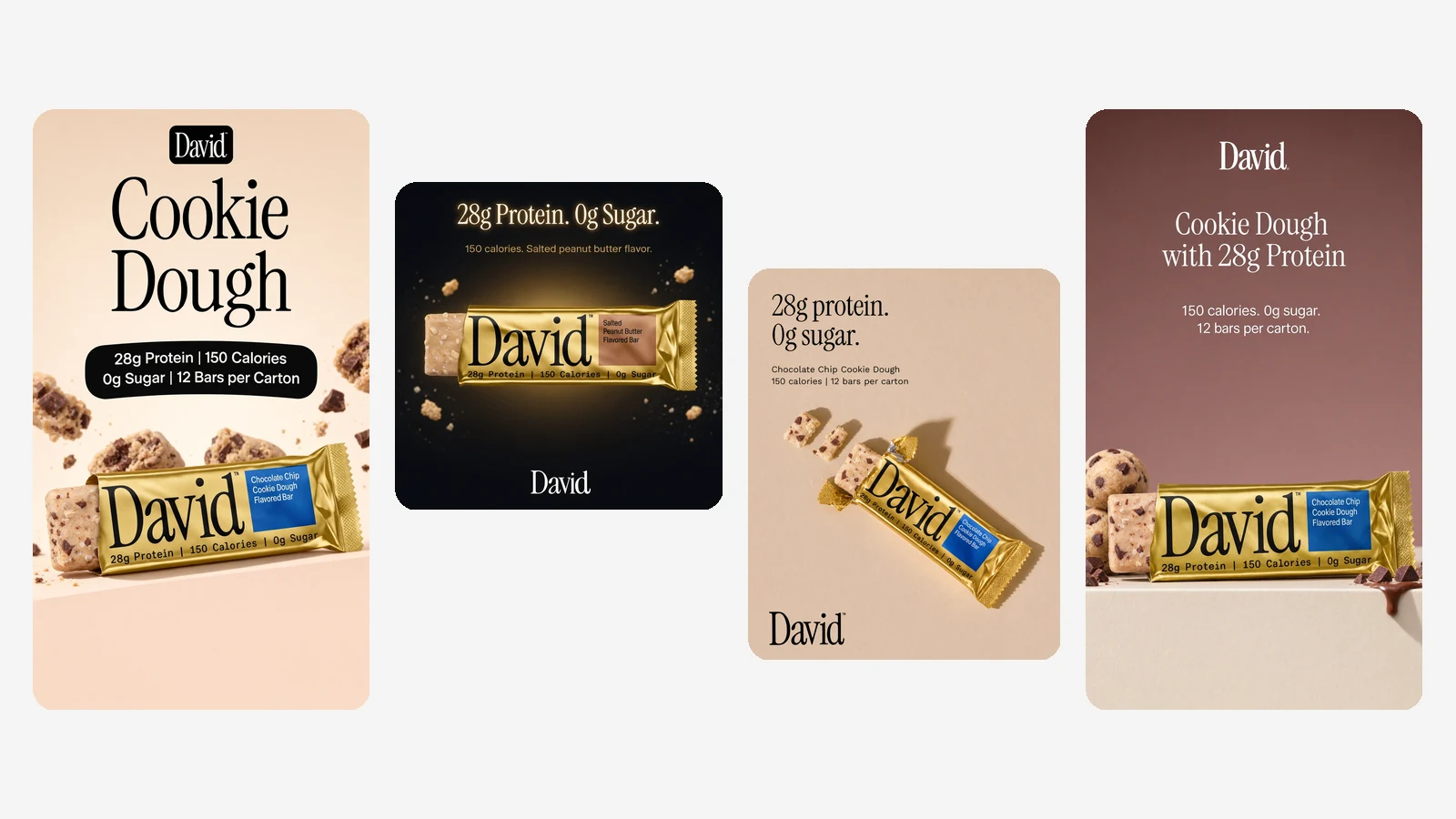
Krea launches Ad Studio, its first Krea 3 Expert model, turning a website URL into on-brand ads

On Oct 29 Krea released Ad Studio, the first Krea 3 Expert, a version of Krea 3 specialized for one job. Paste a brand URL and it builds an editable brand kit and product catalog, then generates up to 12 ads per batch for chosen placements; it also works in Claude through the Krea MCP server.

Krea launches Ad Studio, its first Krea 3 Expert model, turning a website URL into on-brand ads

Key Takeaways

  • Ad Studio is the first Krea 3 Expert, and Krea says more Experts are on the way
  • From a URL it extracts logo, colors, fonts, tone, selling points and products (Shopify catalogs supported), with up to 20 products per kit
  • Outputs 4:5, 1:1, 9:16 and 16:9 placements, up to 12 ads per batch, with conversational edits through Krea Agent
  • Krea's own timed run: brand kit in 49 seconds and six Story ads in 2 min 28 s; available on paid plans from Basic, no benchmarks published
Read full story
Linked Models & Agents: