AI Coding Live News

GitHub Universe 2026: Copilot Fusion is generally available, routing and orchestrating models automatically, with Fusion Max scoring 60 on the Artificial Analysis Coding Agent Index at about half the cost of Claude Code with Opus 5.5 Max

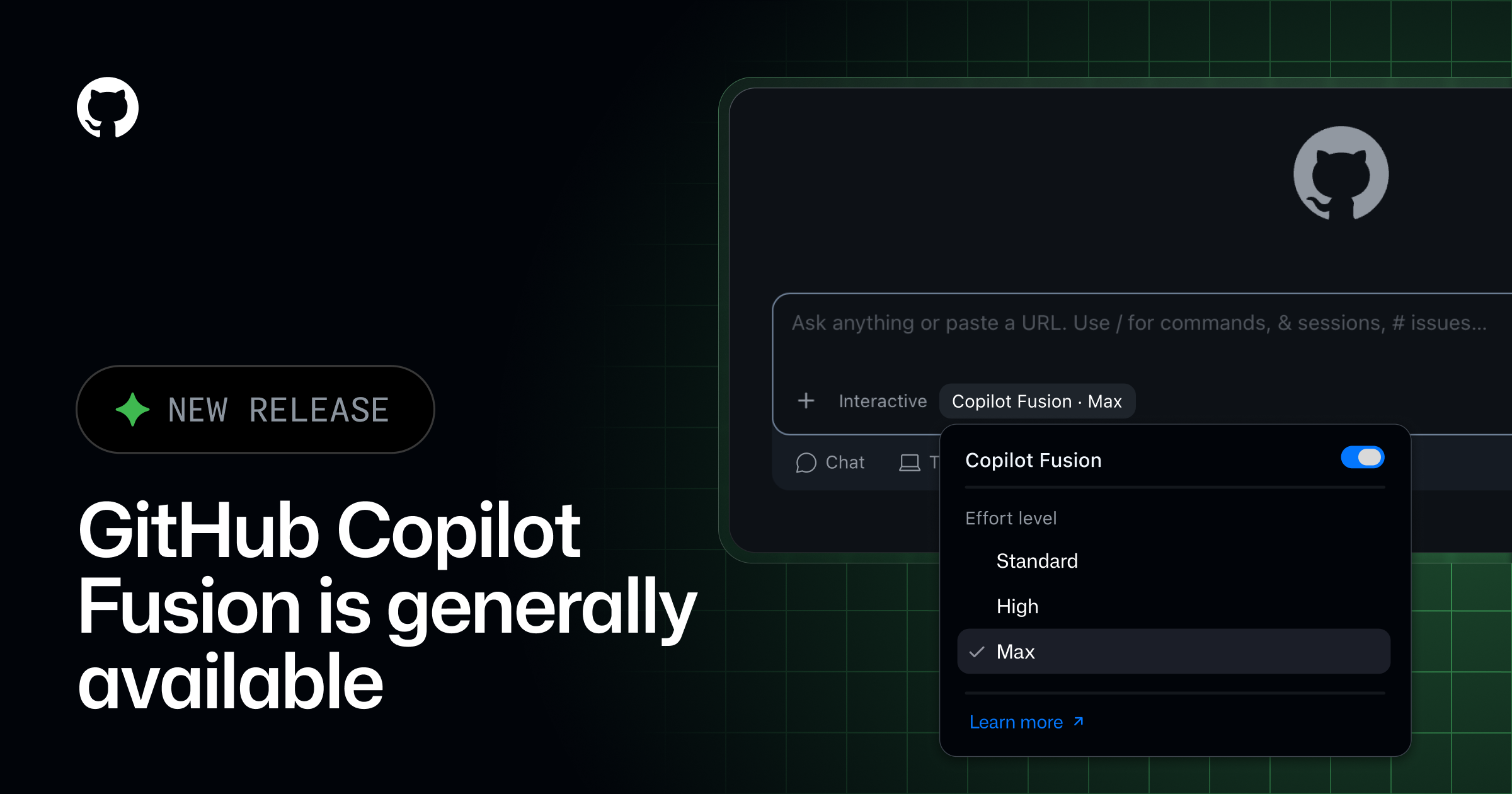
At GitHub Universe 2026 on Oct 28, GitHub made Copilot Fusion generally available. It merges the multi-model orchestration of the Project HydraFusion research preview with Copilot auto model selection: users pick Copilot Fusion and an effort level (Standard, High or Max) in the model picker, and the system decides which models to use and whether to run a Single, Cascade or Critique workflow. GitHub says Fusion Max scored 60 on the Artificial Analysis Coding Agent Index, two points below Claude Code with Opus 5.5 Max, at about half the API cost per task, about half the tokens and about 40% less time. Each underlying model is billed at its standard rate, and paid plans get 30% off through Nov 30.
GitHub Universe 2026: Copilot Fusion is generally available, routing and orchestrating models automatically, with Fusion Max scoring 60 on the Artificial Analysis Coding Agent Index at about half the cost of Claude Code with Opus 5.5 Max

Key Takeaways

  • Scores (Artificial Analysis Coding Agent Index v2.0): Fusion Max 60 versus 62 for Claude Code with Opus 5.5 Max; $5.59 per task versus $11.42, while the Devin Fusion pairing scores 62 at $8.00
  • Breakdown: a slight lead on Terminal-Bench 4.0 at 71, third on FrontierCode at 51 (Claude Code 56, Devin Fusion 54), and a weaker 57 on SWE-Atlas-QnA-AA
  • Efficiency: about 7.2M tokens per task, roughly half of Claude Code with Opus 5.5 and 30% fewer than Devin Fusion; GitHub reports about 40% less time per task
  • The pool includes Claude Opus 5.5, Claude Sonnet 5.5, GPT-6 Astra and GPT-6 Sol; admins can disable individual models for Fusion only and set Fusion as the default
  • Availability: all Copilot plans in VS Code, the Copilot app, Copilot CLI and JetBrains IDEs; existing auto, HydraFusion and HydraFusion Max selections migrate to matching effort levels
Read full story

Google DeepMind unveils Genie 4 world model: built on Gemini Omni, first with native real-time audio and dialogue, in research preview for trusted testers

Google DeepMind announced Genie 4 on Oct 27, calling it its most realistic and interactive world model yet. Built on Gemini Omni, it improves physics and human motion, natively generates ambient audio and interactive character dialogue for the first time, and uses Gemini 3.8 Flash in the loop to plan complex events. It is a research preview for trusted testers for now, coming soon to Google AI Ultra (Project Genie) and early access partners in the Gemini API and AI Studio; no quantitative benchmarks were published.

Google DeepMind unveils Genie 4 world model: built on Gemini Omni, first with native real-time audio and dialogue, in research preview for trusted testers

Key Takeaways

  • Per Google DeepMind, Genie 4 is its most realistic and interactive world model yet, with Gemini Omni anchoring real-world appearance and behavior
  • It is DeepMind's first real-time world model with native audio: ambient sound, music and character dialogue are generated with the world, and characters respond live
  • Gemini 3.8 Flash acts as a guiding agent in the loop, splitting goals into steps and checking frames; a demo pairs Gemini 4 Argon with Genie 4 to simulate an Apollo humanoid
  • Official limitations: only a few minutes of continuous interaction and drift over longer sessions; no quantitative benchmarks were published
  • Trusted testers only for now; coming soon to Google AI Ultra (Project Genie) and Gemini API / AI Studio early access partners, with SynthID on all outputs
Read full story
Linked Models & Agents:

Anthropic Officially Releases Claude Duet Research Preview: Proactive Autonomous Workflow Agent Application

Anthropic (@claudeai) officially announced Claude Duet, a research-preview application that represents a generational leap in agentic user interfaces. Accumulating over 40K likes and 4.7M views within hours, Claude Duet shifts the AI paradigm from passive query-response chatbots to a proactive autonomous partner: it surfaces what requires user attention, autonomously executes delegated long-horizon tasks, works uninterrupted in the background while users step away, and explicitly requests confirmation before executing high-impact actions on the user's behalf.

Anthropic Officially Releases Claude Duet Research Preview: Proactive Autonomous Workflow Agent Application

Key Takeaways

  • @claudeai officially launched Claude Duet as a research preview app, rapidly amassing 40K+ likes and 4.7M views
  • Transcends reactive chat interfaces via a proactive architecture that continuously surfaces priorities requiring human attention
  • Executes multi-step background tasks asynchronously through persistent 'keeps working when you step away' autonomy
  • Integrates rigorous safety guardrails, mandating explicit confirmation before executing irreversible external actions
Read full story

Anthropic opens Claude Duet research preview: a proactive personal agent app built on Opus 5.5, waitlist for US Pro and Max

On Oct 21, Anthropic opened a research preview of Claude Duet, a standalone app (iOS, Android and claude.ai) built around Claude Opus 5.5 that proactively surfaces what needs your attention, keeps working when you step away, and checks with you before acting on your behalf. It starts with a waitlist for US Pro and Max subscribers and shares the same usage limits as the rest of Claude.

Anthropic opens Claude Duet research preview: a proactive personal agent app built on Opus 5.5, waitlist for US Pro and Max

Key Takeaways

  • Positioning: a proactive agent that sends a morning brief and then messages you only when something needs you; it checks connected accounts every few hours
  • Model: designed around Claude Opus 5.5; carries over memory, skills and connected apps from your Claude account, with 6,000+ connectors and plugins per the product page
  • Execution: runs in its own virtual machine with a browser, so tasks continue with your laptop or phone off
  • Safety: credential handling follows the Managed Agents design so it never sees passwords; a new classifier blocks sharing card numbers and government IDs
  • Access: waitlist, US Pro and Max first, counted against existing plan limits
Read full story
ADSponsored

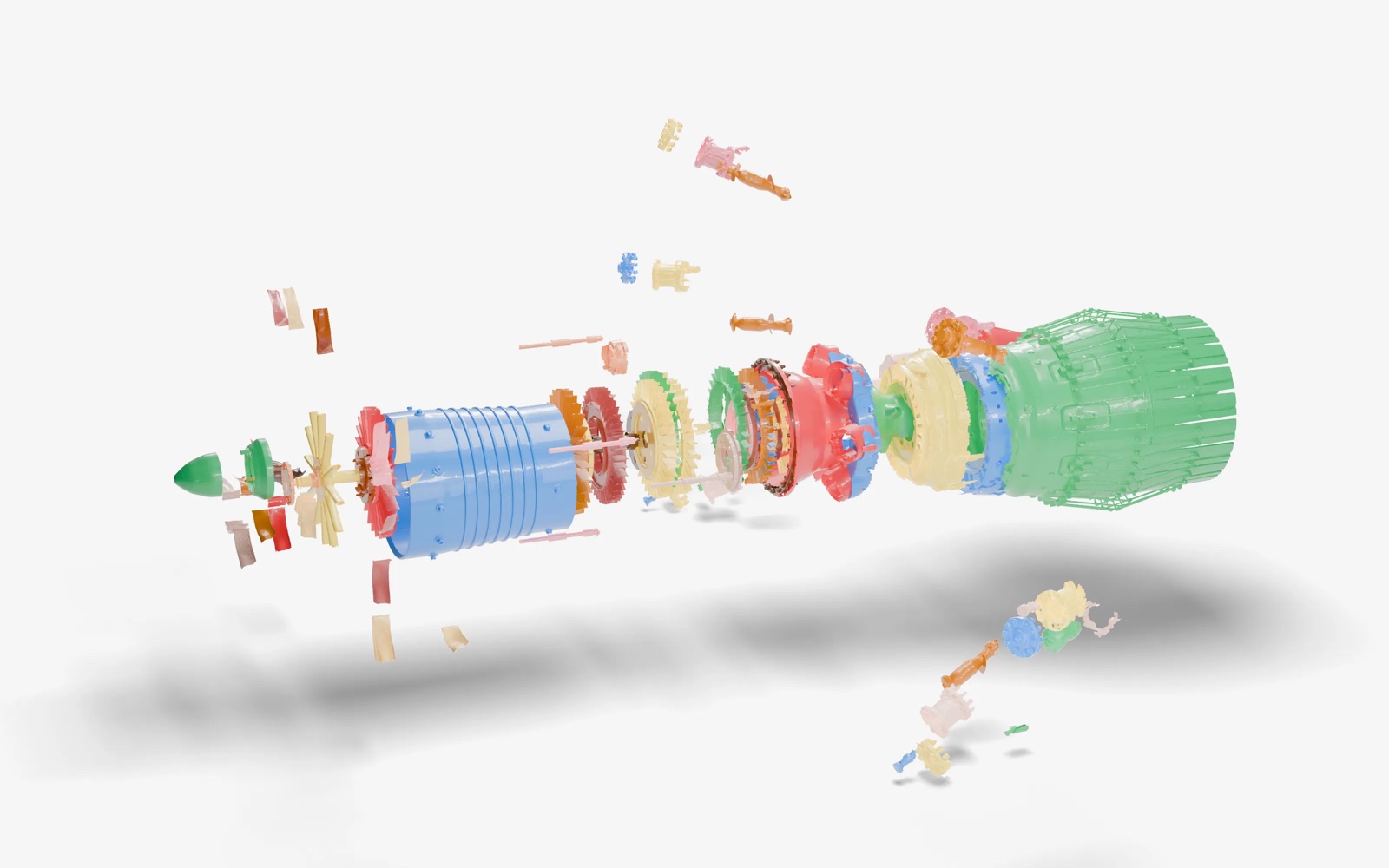
Skyfall AI unveils SKY-001, an engineering world model that turns text or sketches into executable CAD build steps, claiming 51x faster and 150x cheaper than GPT-6 Astra on CAD

Skyfall AI, founded by the team behind Maluuba (acquired by Microsoft), released a research preview of SKY-001 on October 19, billing it as the first engineering world model. Instead of next-token prediction, it starts from text or a 2D image, generates several rough 3D options in parallel, recursively decomposes the chosen design into a parts tree, sketches and extrudes each part, then assembles them hierarchically for viewing in CAD tools such as Autodesk Fusion. On its own 3D CAD test it reports 79.7% IoU versus 79.1% for GPT-6 Astra, at 3.9 s and $0.005 per case versus 199 s and $0.75. Access is waitlist-only, with commercial deployment targeted for early 2027; all benchmarks are self-reported.

Skyfall AI unveils SKY-001, an engineering world model that turns text or sketches into executable CAD build steps, claiming 51x faster and 150x cheaper than GPT-6 Astra on CAD

Key Takeaways

  • 3D CAD (self-reported): SKY-001 79.7% IoU, 3.9 s, $0.005 per case; GPT-6 Astra 79.1%, 199 s, $0.75; Opus 5.5 69.4%; Grok 4.7 completed none.
  • BIM (self-reported): SKY-001 43.6% IoU, 1.22 s, about $0.0024 per case; best LLM Gemini 3.8 Flash at 42.3%; 118x faster and 188x cheaper than GPT-6 Astra.
  • Four stages: parallel design exploration, recursive diffusion-based 3D decomposition, 2D-to-3D latent modeling, hierarchical assembly; the Jaguar E-Type demo yields 103 leaf parts and 139 nodes.
  • Availability: research preview behind a waitlist; the press release targets commercial deployment in early 2027; parameter count, training data and API pricing are not disclosed.
  • Team: Maluuba founders Sam Pasupalak, Kaheer Suleman and Sumit Pasupalak; backers include Fidelity, Touring Capital, M13 and iNovia Capital.
Read full story

Claude Opus 5.5 fast mode leaves research preview and drops the waitlist: same model, up to 2.5x output speed at $8/$40 per MTok

On 2026-10-15 Anthropic moved Claude Opus 5.5 fast mode out of research preview and removed the waitlist: no access request and no fast-mode-2026-02-01 beta header needed, just speed: "fast". Same weights, up to 2.5x output tokens/sec per Anthropic, at 2x standard price ($8/$40 per MTok). Start/Build/Scale tiers get a default fast rate limit; it is live on Microsoft Foundry (Azure-hosted) with Google Cloud coming soon. Opus 5 and Opus 4.8 fast mode remain in research preview.

Key Takeaways

  • Pricing: Opus 5.5 fast is $8/$40 per MTok, 2x the $4/$20 standard; Opus 5/4.8 fast stay in preview at $10/$50 (docs)
  • Speed: up to 2.5x output tokens/sec per Anthropic; gains are OTPS, not TTFT; same weights
  • Access: no request and no beta header; default dedicated fast limits on Start/Build/Scale tiers (release notes)
  • Platforms: Claude API (incl. Managed Agents) and Microsoft Foundry Azure-hosted; Google Cloud coming soon; not on Batch API, Priority Tier, or Claude Platform on AWS
  • Gotchas: switching speeds invalidates the prompt cache; 429 on limit; check usage.speed
Read full story

Anthropic Claude Code Review generally available for Team/Enterprise: ~3x faster reviews (about 20 min → 6–10 min), Quick/Standard/Deep per repo

On 2026-10-15 Anthropic moved Claude Code’s Code Review out of research preview to general availability for Team and Enterprise organizations. Most reviews finish about 3x faster (roughly 20 minutes down to 6–10). Admins pick Quick, Standard, or Deep per repository; the Claude GitHub App auto-reviews new PRs, or anyone with write access can comment @claude review. Eligible Enterprise orgs can claim at least $10,000 in Code Review credits by January 15, 2027 (credits expire 30 days after claim).

Key Takeaways

  • Scope: Code Review leaves research preview for Claude Team and Enterprise; enable via Claude GitHub App and selected repos (GA announcement)
  • Speed: Anthropic says most reviews finish ~3x faster than preview — about 20 minutes down to 6–10 minutes
  • Tunable depth: admins set Quick / Standard / Deep per repo (Standard default); triggers: once on PR open, every push, or @claude review only
  • Pipeline: multi-agent Find → Verify → Rank → Post; inline comments + check run; never approves or blocks the PR (docs)
  • Billing & credits: billed on token usage credits (no flat per-review price); eligible Enterprise orgs can claim ≥$10,000 Code Review credits by Jan 15, 2027 (expire 30 days after claim)
Read full story

GitHub Copilot updates HydraFusion and adds HydraFusion Max, with Claude Opus 5.5 and the GPT-6 family in its model pool

On 2026-10-14 GitHub updated HydraFusion, Copilot's multi-model orchestration feature, and added HydraFusion Max for harder tasks. The pool now includes Claude Opus 5.5, GPT-6 Astra, GPT-6.1 Sol and GPT-6 Luna; effort is tuned per stage (medium for drafts, high for review), Cascade gains a judging step, and Critique now inspects the workspace with tools using parallel critics. Both remain in research preview across VS Code, the Copilot app and Copilot CLI.

Key Takeaways

  • Pool: Claude Opus 5.5, GPT-6 Astra, GPT-6.1 Sol, GPT-6 Luna, chosen per workflow (GitHub Changelog)
  • Per-stage effort: medium for drafts, high for review (previously each model's default)
  • Cascade adds a judge that requests repair only when needed; Critique uses tools on the workspace plus parallel critics
  • Two tiers: HydraFusion (balanced) and HydraFusion Max (deepest reasoning, orchestration still minds tokens)
  • Available in VS Code, Copilot app and Copilot CLI on Pro, Pro+, Business and Enterprise with preview features enabled
Read full story

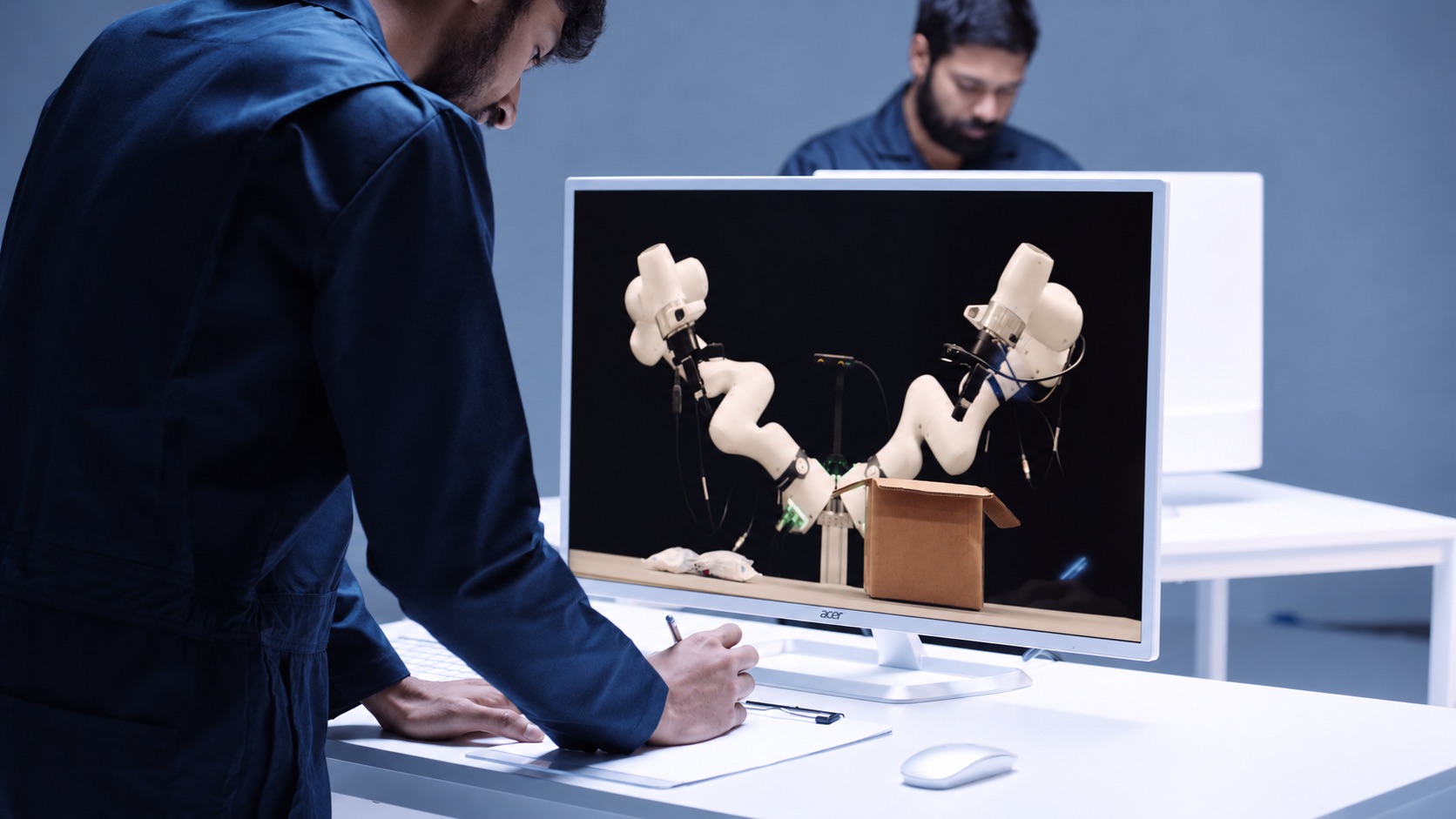
Artificial Analysis launches AA-Robotics v0.1: coding agents drive a real robot arm, GPT-6 Astra leads at 69.4

Artificial Analysis released AA-Robotics v0.1 on 2026-10-14, a research preview in which frontier models running inside coding-agent harnesses (Codex, Claude Code, Antigravity) control a 6-axis robot arm over an HTTP API across eight tabletop tasks. GPT-6 Astra scores 69.4, ahead of GPT-6.1 Sol (64.6), Gemini 4 Argon (55.3), Claude Opus 5.5 (48.8) and Claude Fable 5.1 (46.3). Models take about 30 minutes per task versus roughly 20 seconds for a human.

Artificial Analysis launches AA-Robotics v0.1: coding agents drive a real robot arm, GPT-6 Astra leads at 69.4

Key Takeaways

  • Scores (out of 100): GPT-6 Astra 69.4, GPT-6.1 Sol 64.6, Gemini 4 Argon 55.3, Claude Opus 5.5 48.8, Claude Fable 5.1 46.3 (AA article)
  • Speed: ~30 min per task for models (Argon ~52 min) vs ~20 s for a human
  • Cost: GPT-6.1 Sol cheapest at $1.93/task, GPT-6 Astra $16.36/task; ~70% of spend is input context
  • Grasp success: Astra 45%, Fable 5.1 44%, Opus 5.5 40%, Argon 36%, Sol 28%
  • Measure-the-box (within 2 mm) tops out at 17/100 across all five models
Read full story

Odyssey launches Odyssey-3 world model: new SOTA 66.1 on Physics-IQ Verified, free real-time browser preview, and robot-arm control

On Oct 8 Odyssey released Odyssey-3, a foundation world model built as an autoregressive diffusion transformer. Odyssey-3 Pro (720p) scores 66.1 on Physics-IQ Verified video-to-video, the highest reported score, and 54.7 image-to-video. A free browser research preview (Flash variant) offers first/third-person navigation and free camera; API access is by request, with no open weights or public pricing. Odyssey says tens of hours of demos are enough to control various robot arms.

Odyssey launches Odyssey-3 world model: new SOTA 66.1 on Physics-IQ Verified, free real-time browser preview, and robot-arm control

Key Takeaways

  • Physics-IQ Verified v2v: Odyssey-3 Pro 66.1 (best-of-8, highest reported) / 63.4 prompt-enhanced; 480p model 51.8 → 61.6 → 64.4 (launch post)
  • Image-to-video: Odyssey-3 Pro 54.7; vendor says 1st in 3 of 4 WorldMark categories (self-reported)
  • Architecture: autoregressive diffusion transformer predicting environment evolution in real time from past observations plus latest actions/events
  • Physical AI: an action decoder trained on tens of hours of demos controls robot arms, with recovery behaviors absent from training data (technical write-up)
  • Access: free browser research preview; API by request, no open weights or public pricing
Read full story
Linked Models & Agents:
⚡ Odyssey-3⚡ Odyssey-3 Pro⚡ Odyssey-3 Flash🌐 Odyssey
ADSponsored

GitHub open-sources ReviewBench, a 219-PR benchmark for AI code review: Copilot, Devin and Qodo lead; Cursor's grounded recall is 9.6%

GitHub's blog post ReviewBench (Oct 5, 2026) launches an offline AI code-review benchmark as a research preview. It has 219 PRs from 187 open-source repos in 19 languages, sampled to match the distribution of 103.9M GitHub PRs. The golden set combines human reviewers, several frontier LLMs and static analysis. Claude Sonnet 5 is the judge, and senior engineers agreed with its labels 96.6% of the time. On the leaderboard, grounded recall is 26.0% for Copilot Code Review (Balanced), 23.8% for Devin, 22.1% for Qodo and 9.6% for Cursor. The dataset, judge prompt and runner are MIT-licensed on GitHub.

GitHub open-sources ReviewBench, a 219-PR benchmark for AI code review: Copilot, Devin and Qodo lead; Cursor's grounded recall is 9.6%

Key Takeaways

  • Scale: 219 PRs from 187 open-source repos in 19 languages, sampled to match the distribution of 103.9M GitHub PRs (blog)
  • Trust: senior engineers independently re-labeled every golden finding and agreed with the benchmark 96.6% of the time; Claude Sonnet 5 is the judge
  • Leaderboard grounded recall: Copilot Balanced 26.0% (87.8% precision) > Devin 23.8% > Qodo 22.1% > Codex GPT-5.6 Sol Ultra 19.9% > Cursor 9.6%
  • Offline matched online: in a multi-model ensemble experiment, the online A/B showed +8.0% precision, +13.6% recall and −8.0% cost per review; critical comments were predicted at +227% offline and measured at +262% online
  • To submit: bring your own container image and model key, run the 25-PR test set, then the full 219 PRs over 3 rounds. The repo review-bench/ReviewBench is MIT-licensed
Read full story

Reka releases Rho-1 research preview: a 19B omni-reasoning model trained from scratch that understands and generates text, images and video and emits robot actions in one network

On Oct 5 Reka Labs released a research preview of Rho-1, a 19B omni-reasoning model trained from scratch that unifies text, image, video and robot-action tokens in one network and one KV cache, with no tool calls or second model. Each transformer block has an understanding stream and a generation stream with shared attention, trained jointly with next-token prediction and flow matching. Reka reports base video generation at 0.79x real time (median) and a distilled 8-step variant (vs 99) returning a 5.3s clip in about a second. The checkpoint was trained on 320 H100s for three months. Research preview only; no public weights.

Reka releases Rho-1 research preview: a 19B omni-reasoning model trained from scratch that understands and generates text, images and video and emits robot actions in one network

Key Takeaways

  • Scale: 19B parameters trained from scratch on just 320 H100s for three months
  • Speed: base video at 0.79x real time (median), ~6s to a watchable stream; distilled 99→8 denoising steps returns a 5.3s clip in ~1s
  • Architecture: dual expert streams (understanding/generation) per block with shared attention and one KV cache; next-token + flow-matching objectives
  • Limits: native video capped at 672x384; long-horizon drift, temporal grounding and edit stability are admitted weak points
  • Access: research preview only, no open weights or public API; partnerships via [email protected]
Read full story
Linked Models & Agents:
⚡ Rho 1🌐 reka

Anthropic opens multi-agent Code Review to Claude Code Team/Enterprise: substantive comments 16%→54%

Anthropic blog Code Review (Last-Modified 2026-10-02) and docs: multi-agent Code Review research preview for Claude Code Team/Enterprise. Parallel find→verify→rank; overview + inline comments; never approves/blocks. Vendor stats: substantive comments 16%→54%; large PRs 84% with findings; ~$15–25/review, ~20 min. Local /code-review remains for other plans.

Key Takeaways

  • Sources: claude.com/blog/code-review + code.claude.com docs; Last-Modified 2026-10-02
  • Team/Enterprise research preview; not for ZDR orgs; others keep local /code-review
  • Multi-agent find→verify→rank; CLAUDE.md/REVIEW.md; @claude review triggers
  • Vendor: substantive comments 16%→54%; large PRs 84% with findings; ~$15–25/review
  • Setup: GitHub App, per-repo triggers, spend caps; forks need explicit @claude review
Read full story
Linked Models & Agents:

Claude Code Cloud Sessions leave research preview: GA for Pro/Max/Team with try credits

On 2026-09-23 Anthropic updated its Claude Code on the web post: Cloud Sessions are generally available for Pro, Max, and Team users, plus Enterprise users with premium or Chat + Claude Code seats. Sessions keep running after you close the laptop; CLI handoff uses claude --cloud and --teleport, with Auto-fix for PRs. ClaudeDevs also announced one-time cloud try credits for existing subscribers ($100 Pro / $250 Max).

Claude Code Cloud Sessions leave research preview: GA for Pro/Max/Team with try credits

Key Takeaways

  • Anthropic blog update 2026-09-23: Cloud Sessions are generally available for Pro/Max/Team (+ eligible Enterprise)
  • Docs cover browser/mobile/Desktop/terminal; claude --cloud / claude --teleport; Auto-fix PRs (docs)
  • ClaudeDevs: one-time cloud try credits $100 Pro / $250 Max for existing subscribers
  • Start at claude.ai/code; cloud usage shares Claude Code rate limits
Read full story

OpenAI: GPT-Rosalind leaves research preview for eligible orgs via API, Codex, ChatGPT Enterprise

OpenAI Developers: GPT-Rosalind is out of research preview for eligible orgs via API, Codex, and ChatGPT Enterprise—stronger biological reasoning across papers and experiments. Codex Life Sciences plugins connect genomic/protein/translational workflows to 50+ scientific tools.

Key Takeaways

  • GPT-Rosalind GA for eligible orgs on API, Codex, and ChatGPT Enterprise.
  • Life-science focus: evidence weighing, target analysis, experiment planning.
  • Codex Life Sciences plugins link 50+ scientific tools and genomic/protein workflows.
Read full story
Linked Models & Agents:
⚡ OpenAI GPT Rosalind🤖 codex🌐 OpenAI