
AI Coding Live News

OpenAI Shares Progress on ChatGPT and Codex for Hardware Engineering: GPT-6 Astra Designs a Codex Device in Under a Week, Mazda Joins for Aerodynamics Research

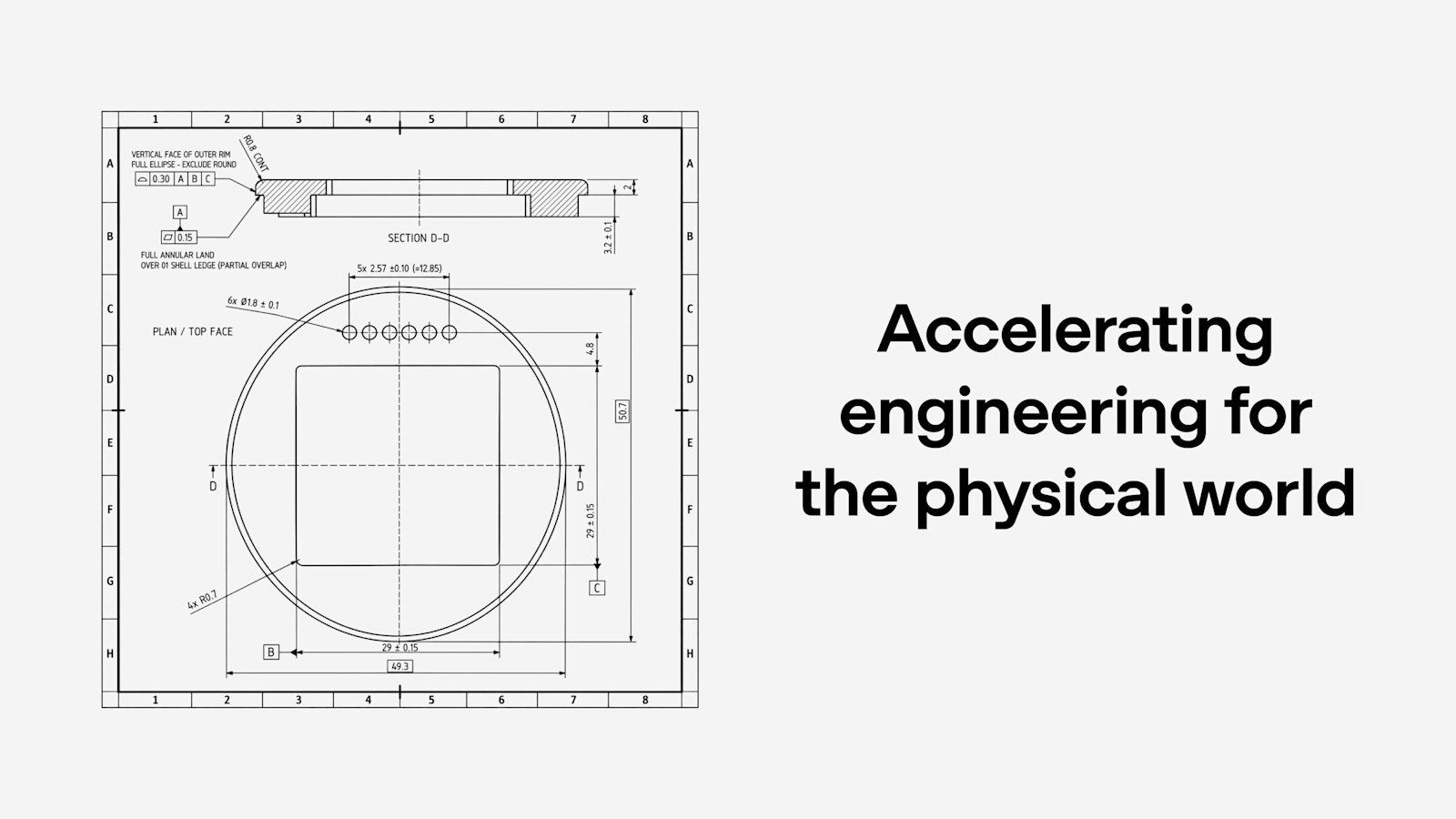
On November 3, OpenAI published "Accelerating engineering for the physical world," describing how its models help with mechanical design, electrical design and simulation. Two employees used GPT-6 Astra to design a device for talking to Codex (enclosure, PCB, firmware and software) in under a week, and a contract manufacturer built a small prototype batch in under a month, though manufacturing readiness still took several rounds of human review. Token usage across OpenAI hardware teams has grown 23-fold since February. On BenchCAD 2.0, a newer internal model averaged 0.875 versus 0.594 for GPT-6 Astra at its highest reasoning setting (OpenAI-reported). OpenAI is also expanding its work with Chip Ganassi Racing and announced a new research collaboration with Mazda.
OpenAI Shares Progress on ChatGPT and Codex for Hardware Engineering: GPT-6 Astra Designs a Codex Device in Under a Week, Mazda Joins for Aerodynamics Research

Key Takeaways

  • In a test with no direct human edits, GPT-6 Astra handled the look, enclosure structure, component selection, PCB layout, UI and firmware; two employees finished the design in under a week as a side project, and prototypes came back in under a month, per the OpenAI blog.
  • OpenAI names the gaps: Astra did not consistently account for the manufacturer's production limits, tolerances or assembly details, so manufacturing readiness took several rounds of review.
  • OpenAI hardware and infrastructure teams use Codex and ChatGPT for CAD models, 2D manufacturing drawings, simulation and FEA setup, and design reviews; token usage has grown 23-fold since February (OpenAI-reported).
  • BenchCAD 2.0 (reconstructing 3D parts and assemblies, identifying circuit-board connections): a newer internal model scored 0.875 versus 0.594 for GPT-6 Astra at its highest reasoning setting (OpenAI-reported; the internal model is unnamed and unreleased).
  • Collaborators: Chip Ganassi Racing is testing 3D-scan-to-editable-CAD and 2D drawing workflows; Mazda is working with OpenAI researchers on airflow and structural simulations for vehicle design, with results promised "in the coming months."

Read full story

Claude API launches the Usage and Cost Analytics API in beta and raises the request size limit to 128 MB

Per the official Claude API release notes, on Oct 29 Anthropic launched the Usage and Cost Analytics API in beta, with two endpoints, /v1/organizations/analytics/usage and /analytics/cost, that filter and group token usage and cost by model, workspace, API key, and the user or service account behind each request, with 1-minute, 1-hour, or 1-day buckets. The older Usage and Cost API is now legacy but still supported. On Oct 28 the maximum request size for the Messages and Token Counting APIs on the first-party Claude API rose from 32 MB to 128 MB.

Key Takeaways

  • The new API needs the analytics-usage-cost-2026-08-24 beta header; one endpoint returns token and request counts, the other cost in USD (per the official docs)
  • group_by takes up to 5 dimensions, time buckets can be 1m, 1h, or 1d, and each filter accepts up to 100 values
  • Claude Console and Claude Enterprise organizations share the same endpoints and fields; it also works on Claude Platform on AWS and Claude Models on Google Cloud (Anthropic managed)
  • The old Usage and Cost API and four Enterprise Analytics usage and cost report endpoints are now legacy but still supported, with migration guides
  • Since Oct 28 the Messages and Token Counting APIs accept requests up to 128 MB instead of 32 MB (4x), on the first-party Claude API only
Read full story

Nous Research raises $90M Series B at $1.5B to take MIT-licensed Hermes Agent into businesses

On Oct 7 Nous Research, maker of the open-source Hermes Agent, confirmed a $90M Series B at a $1.5B valuation led by Robot Ventures, with NVIDIA, Microsoft's M12, Samsung, USV, Y Combinator and Menlo among backers, bringing total funding to $158M. Nous says Hermes Agent has been cloned over 24M times and drives about 2.5% of global token usage (internal estimate). The money funds Hermes for Businesses: a team tier with shared balance and skill library, and an Enterprise edition on customer-controlled infrastructure with SSO and SLAs, plus a mobile app.

Nous Research raises $90M Series B at $1.5B to take MIT-licensed Hermes Agent into businesses

Key Takeaways

  • Round: $90M Series B at $1.5B, led by Robot Ventures; $158M raised in total (TechCrunch)
  • Scale: Hermes Agent cloned 24M+ times, ~2.5% of global token usage per Nous's internal estimate (Nous note)
  • GitHub: NousResearch/hermes-agent has ~252K stars and ~54K forks, MIT, latest release v2026.9.24 (GitHub, checked 2026-10-08)
  • Revenue: ~$36M annualized by mid-September, targeting $100M+ by year-end, per WSJ
  • Business tier: shared balance, per-member caps, team skill library; Enterprise runs on customer infrastructure with SSO and SLAs (Hermes Business)
Read full story

MiniMax open-sources Code CLI: MIT terminal coding agent, SOTA on FrontierHarness

MiniMax officially open-sourced MiniMax Code CLI v0.4.12 under MIT for developers worldwide. It is a terminal coding agent that works with MiniMax accounts or bring-your-own models, plus search, plugins, and multimodal tools. On FrontierHarness Eval it claims SOTA pass rate, fastest average task completion, and second-lowest token usage; open-sourcing aims to let teams inspect tool calls and permissions for reliable enterprise apps.

Key Takeaways

  • Official @MiniMax_AI open-sourced MiniMax Code CLI (GitHub: MiniMax-AI/minimax-code) under MIT at v0.4.12.
  • Terminal coding agent: understand repos, edit code, run tests; MiniMax or BYO models with search/plugins/multimodal tools.
  • Claims SOTA FrontierHarness pass rate, fastest avg task time, second-lowest token use; OSS for inspecting tool calls and permissions.
Read full story
ADSponsored

Sourcegraph Cody introduces semantic context compaction preserving AST call chains across 200k token windows

Sourcegraph introduced a semantic context compaction engine for Cody. Designed for deep call-stack comprehension, the algorithm prunes boilerplate while strictly retaining function signatures, type contracts, and critical execution paths. This compresses token usage by 60% and increases multi-package code synthesis accuracy by 34%.

Key Takeaways

  • Prunes boilerplate while strictly preserving type contracts and critical AST paths.
  • Improves cross-package code completion and refactoring accuracy by 34%.
  • Rolled out across Cody VS Code, JetBrains IDE plugins, and Sourcegraph Enterprise.
Read full story