AI Coding Live News

BoxWorks 2026: Box and NVIDIA Unveil Box Context Retrieval, Permission-Aware Retrieval for Enterprise Agents Built on Nemotron Retriever, Plus Box Architect and Box Mount

At BoxWorks 2026 on November 5, Box announced an expanded NVIDIA collaboration: Box Context Retrieval, a new engine built on NVIDIA Nemotron Retriever embedding models, combines keyword and semantic search to return the most relevant passages to AI agents while honoring existing file permissions, with general availability for Enterprise Advanced customers planned for early next year. Box's press release claims 20% better search accuracy (Recall@5), 90% fewer tokens and 4x faster answers. Open-weight Nemotron models, starting with Nemotron 3 Ultra, are available in Box AI now. Box also unveiled Box Architect, which designs workflows from a stated goal; Box Mount, which mounts Box folders inside agent sandboxes and works with NVIDIA OpenShell; and agent security controls including MCP Guardrails.
BoxWorks 2026: Box and NVIDIA Unveil Box Context Retrieval, Permission-Aware Retrieval for Enterprise Agents Built on Nemotron Retriever, Plus Box Architect and Box Mount

Key Takeaways

  • Box Context Retrieval uses NVIDIA Nemotron Retriever with hybrid keyword and semantic search, honoring existing file permissions
  • Vendor claims: +20% Recall@5 accuracy, 90% fewer tokens, 4x faster answers; GA for Enterprise Advanced early next year
  • Open-weight Nemotron models, starting with Nemotron 3 Ultra, are available in Box AI now
  • Box Mount puts Box folders inside agent sandboxes and works with the NVIDIA OpenShell secure runtime
  • New agent security controls include MCP Guardrails, classification-based access policies and audit trails
Read full story
Linked Models & Agents:
⚡ Nemotron 3 Ultra⚡ Nemotron Retriever🌐 box🌐 Nvidia (NIM)

Gemini API Computer Use Tool Goes GA: Browser, Mobile and Desktop Agents Production-Ready, No Breaking Changes from Preview

The Gemini API changelog shows the Computer Use tool reached general availability on October 30 across both the Interactions and GenerateContent APIs; @GoogleAIStudio announced on November 4 that there are no breaking changes from preview and it is production-ready for browser, mobile and desktop control agents. Official docs list supported models: Gemini 4 Argon, the recommended Gemini 3.8 Flash, Gemini 3.5 Flash-Lite and Gemini 3 Flash Preview. Actions carry an intent field, responses may include a safety_decision requiring user confirmation, and opt-in screenshot prompt-injection detection is available.

Key Takeaways

  • Computer Use is GA on both the Interactions and GenerateContent APIs as of October 30
  • Google says there are no breaking changes from preview, so existing code carries over
  • Three environments: browser, mobile and desktop; Gemini 3.8 Flash is the recommended model
  • Every action includes an intent field; safety_decision can require user confirmation or block
  • Opt-in screenshot prompt-injection detection (Gemini 3.5 Flash-Lite and later, off by default)
Read full story

Artificial Analysis: Tencent Hy4 Scores 35 on Intelligence Index v5, Ranked No.2 Among China Labs, 31% on FrontierCode 2.0

Independent evaluator Artificial Analysis published Tencent Hunyuan Hy4 results on the Intelligence Index v5 on November 5 (08:28 UTC): a composite score of 35, tying Grok 4.7 (xhigh) and one point behind Claude Haiku 5.5 (max). Among China-based labs it ranks second only to Kimi K3.1 Pro (46). On agentic coding it scores 31% on FrontierCode 2.0 and 37% on Terminal-Bench 4.0; cost per Intelligence Index task is about $0.78, roughly one-tenth of same-score Grok 4.7.

Artificial Analysis: Tencent Hy4 Scores 35 on Intelligence Index v5, Ranked No.2 Among China Labs, 31% on FrontierCode 2.0

Key Takeaways

  • Intelligence Index v5 composite 35: ties Grok 4.7 (xhigh), one point behind Haiku 5.5 (max, 36); No.2 China-lab model behind Kimi K3.1 Pro (46)
  • FrontierCode 2.0 at 31% (leads China labs; DeepSeek V4.1 Flash 1017 max 28%, Kimi K3.1 Pro 25%); Terminal-Bench 4.0 at 37%
  • AA-Omniscience v1.1 accuracy 50% but hallucination rate 89% (Kimi K3.1 Pro hallucination 37%); HLE-Diamond 33%
  • About $0.78 per Intelligence Index task: ~10x cheaper than same-score Grok 4.7, ~13x cheaper than Qwen3.8 Max (34), nearly 2x Haiku 5.5
  • Pricing about $0.834/$2.501 per 1M input/output tokens, cache reads $0.042; 1M context; text and image input
Read full story

Notion: MCP Shared Brain Lets ChatGPT, Claude, Muse and Bot Share Memories and Skills, With Official Agent Setup Prompts

On November 4 NotionHQ announced that via Notion MCP, ChatGPT, Claude, Muse and Bot can read and write the same Memories and Skills—one shared brain across agents. Official setup prompts (v0.0.6, Oct 30), help docs and a Nov 3 MCP use-cases blog corroborate the product push.

Notion: MCP Shared Brain Lets ChatGPT, Claude, Muse and Bot Share Memories and Skills, With Official Agent Setup Prompts

Key Takeaways

  • NotionHQ post (Nov 4, 19:14 UTC) had about 3,271 likes, 225 reposts, 4,560 bookmarks and ~589K views when fetched
  • Product claim: ChatGPT / Claude / Muse / Bot share Memories and Skills in Notion so switching agents does not reset context
  • Official setup prompt v0.0.6 (2026-10-30): walks agents through an Agent Operating Guide and custom-instruction paste for ChatGPT / Claude
  • Help center: Notion MCP works with Claude, Cursor, ChatGPT Pro and more; Enterprise can approve a whitelist and govern connections
  • Vendor blog (Nov 3): five team stories of MCP workflows as reusable SOPs; Skills via MCP are listed as coming soon
Read full story
ADSponsored

OpenAI Realtime Lead: GPT-Live Outbound Telephony API Hits GA via Any SIP Trunk, with HD Voice and DTMF

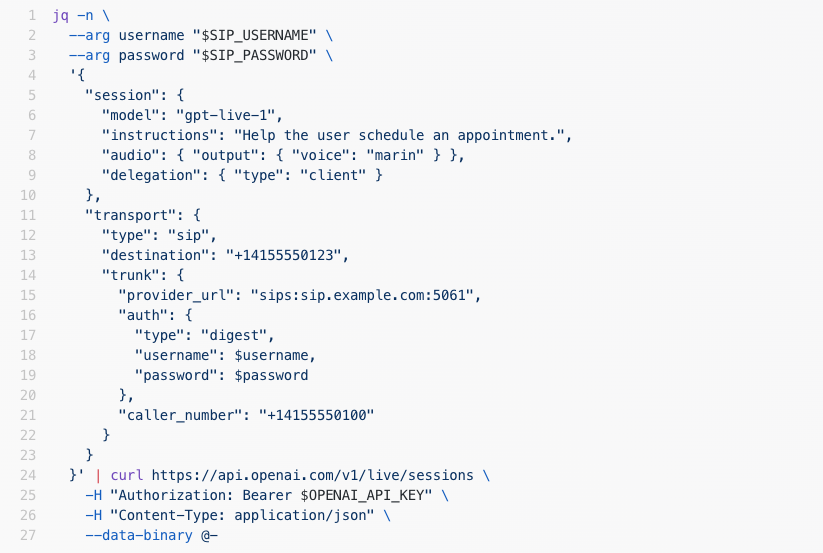
On November 4, Justin Uberti, Head of Realtime AI at OpenAI, said the GPT-Live outbound telephony API is generally available: Live voice agents can dial through any SIP trunk such as Telnyx or Twilio, with HD Voice and bidirectional DTMF. Official docs describe Live API + SIP transport; Greg Brockman amplified the note.

OpenAI Realtime Lead: GPT-Live Outbound Telephony API Hits GA via Any SIP Trunk, with HD Voice and DTMF

Key Takeaways

  • Justin Uberti (Head of Realtime AI, OpenAI): GPT-Live outbound telephony API is GA via any SIP trunk
  • Official docs: Live API POST /v1/live/sessions with transport.type=sip; HD Voice and bidirectional DTMF
  • Trunks need TLS (sips:) signaling and SDES-SRTP; examples cite Telnyx and Twilio
  • Documented limits: ~3 minutes ringing and ~2 hours connected call duration
  • Amplified by Greg Brockman; frame as a first-hand employee note, not an @OpenAI press post
Read full story
Linked Models & Agents:
⚡ OpenAI GPT Live 1🌐 OpenAI

Anthropic: Claude Helps Map the First Prokaryotic Vault Particle Structure; Purification in ~90 Minutes, First Model in ~34 Hours

On November 4 Anthropic's biology team reported that Claude helped determine the first 3D vault structure from a prokaryotic/phage system (protein L05). Vendor-reported timing: ~90-minute purification and a first model in ~34 hours, plus an open discussion of mistakes and the multi-agent research workflow.

Anthropic: Claude Helps Map the First Prokaryotic Vault Particle Structure; Purification in ~90 Minutes, First Model in ~34 Hours

Key Takeaways

  • Official Anthropic research: Claude helped determine the first 3D prokaryotic/phage vault structure (protein L05)
  • Vendor-reported timing: purification cut from ~3 days to ~90 minutes; first model ready in ~34 hours
  • L05 forms a ~9.5 MDa shell of 96 chains with ~25% more volume than mammalian vaults
  • Anthropic also discloses failures: a medium additive cost ~2 weeks; an early cryo-EM map was mirrored
  • For developers: a concrete case of a science multi-agent harness with human oversight, not biology trivia
Read full story
Linked Models & Agents:
⚡ Anthropic Claude🤖 claude🌐 Anthropic

GitHub Copilot Comes to JetBrains Air: Run Coding Tasks Locally in the IDE or in Isolated Cloud Environments via ACP, Billed to Your Copilot Subscription

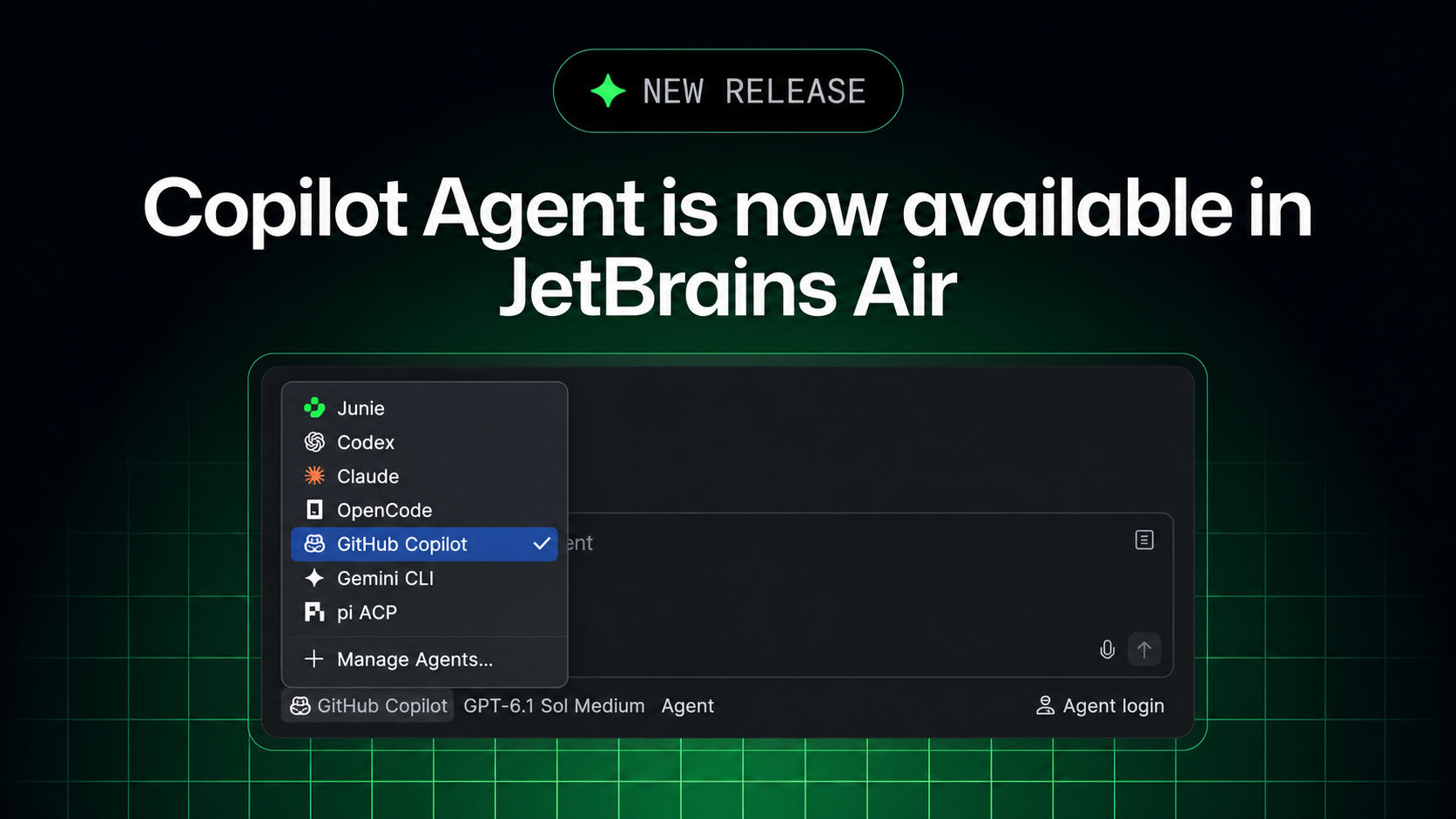
On November 3 GitHub announced on its official changelog that GitHub Copilot is now available in JetBrains Air. The integration is built on the Agent Client Protocol (ACP): developers pick Copilot in Air's agent picker, delegate coding tasks, track several sessions in parallel and review changes next to their code. Tasks can run locally in a JetBrains IDE or in isolated cloud environments through Air Teams, and they draw on the Copilot subscription rather than JetBrains AI credits.

GitHub Copilot Comes to JetBrains Air: Run Coding Tasks Locally in the IDE or in Isolated Cloud Environments via ACP, Billed to Your Copilot Subscription

Key Takeaways

  • Copilot now appears in JetBrains Air's agent picker and works with an existing Copilot account
  • The integration uses the Agent Client Protocol (ACP) and can be used alongside the existing GitHub Copilot plugin
  • Developers can track multiple agent sessions in parallel and review changes next to their code using project context and IDE tools
  • Cloud tasks run through Air Teams, each in a Docker container on a fresh virtual machine, with traffic through a proxy and no state kept between tasks
  • Cloud tasks use the Copilot plan rather than JetBrains AI credits, but Air analytics do not include Copilot usage and admins cannot set Copilot spending limits inside Air
Read full story

Claude Code Background Subagent Status Lines Now Written by Haiku 5.5: About 99% Cheaper per Update, About 6% More Prompts per Limit

On November 4 ClaudeDevs, Anthropic's official developer account, said the status line that a background subagent in Claude Code refreshes every 30 seconds used to re-read its whole conversation each time, and is now written by Haiku 5.5 from short notes, so each update costs about 99% less. Anthropic says sessions with background subagents used about 5% less of the limit, giving about 6% more prompts on the same limit. It is live for most Pro, Max and Ultra users and everyone on Team and Enterprise, on v2.1.316 or later.

Key Takeaways

  • A background subagent refreshes its status line every 30 seconds, and each refresh used to re-read the subagent's whole conversation
  • Haiku 5.5 now writes the status line from short notes, which Anthropic says makes each update about 99% cheaper
  • The subagent itself keeps its own model; only the status line is written by Haiku 5.5
  • Anthropic says sessions with background subagents used about 5% less of the limit, so the same limit gives about 6% more prompts
  • It is live for most Pro, Max and Ultra users and everyone on Team and Enterprise; update to v2.1.316 or later
Read full story

Together AI Launches Together Compiler: Agents Continually Optimize Production Inference, Up to 2.6x Higher TPS

On November 4 Together AI launched Together Compiler (TKCC), which pairs a swarm of AI agents with a persistent inference engine to keep rewriting inference kernels for real traffic, models and hardware, as part of what it calls Polymorphic Inference. The company says that within 24 hours it reached up to 2.6x higher TPS on models such as Kimi K3, GLM 5.3, MiniMax M3.1-Flash and DeepSeek v4.1-Flash, up to 50% faster on customer workloads, and it already serves trillions of tokens a day in production.

Key Takeaways

  • Together Compiler recasts inference optimization from a classic compiler problem into an agentic search: agents propose kernel changes, a persistent engine checks speed and correctness, and only verified changes reach production
  • Together says that within 24 hours it reached up to 2.6x higher TPS on Kimi K3, GLM 5.3, MiniMax M3.1-Flash and DeepSeek v4.1-Flash, and up to 50% faster on customer workloads
  • On InferenceX low-latency batch size 1 it reports 1,111 TPS on MiniMax M3.1-Flash and 1,205 TPS on DeepSeek v4.1-Flash (company-reported); SemiAnalysis said it validated one of the results
  • The persistent engine hot-reloads candidate forward passes, cutting time to serving to 9 seconds versus 467 seconds for restarting an engine, with 252x higher experiment throughput than baseline agentic optimization systems
  • It already serves trillions of tokens a day in Together's production stack, where 40+ models are now optimized by agents
Read full story

Cat Wu, Formerly on Claude Code at Anthropic, Announces She Is Joining OpenAI to Lead Product Management for Core Products

Cat Wu (@_catwu) announced on X on November 5 that she is joining OpenAI to lead product management for Core Products; her X bio says she previously worked on Claude Code at Anthropic. She said she will work with Tibo (@thsottiaux) and the PM team to build agents that have users' and teams' backs and keep them in control. The post drew about 6,900 likes, and Tibo posted a welcome. OpenAI has not published an official announcement.

Key Takeaways

  • Cat Wu announced on X herself that she is joining OpenAI to lead product management for Core Products
  • Her X bio says she previously worked on Claude Code at Anthropic, and before that at Dagster and Scale AI
  • She named Tibo (@thsottiaux, bio: Codex & ChatGPT @OpenAI) as a collaborator, with a focus on agents that keep users in control
  • Tibo welcomed her with a "Welcome Cat" post; her announcement drew about 6,900 likes and nearly 900 replies
  • OpenAI has not issued an official announcement, and which products Core Products covers was not specified
Read full story
ADSponsored

Google Antigravity v2.29 Brings Remote Agents and a Gemini Live Voice Mode: Agent Sessions Run in a Google-Managed Cloud and Keep Working After You Close Your Laptop, Rolling Out to AI Pro and Ultra

Ivan Leo, who works on developer experience at Google DeepMind, shared the official docs for Antigravity's new Remote Agents feature on X on November 4. Per the docs, Remote Agents run agent sessions and tools in an isolated, Google-managed remote environment, so tasks keep going when you close your laptop or browser or switch between desktop and mobile. Sessions start from the Antigravity App, the Antigravity CLI (1.4.12+, agy --remote-agent) or the web at antigravity.google.com, and remote projects can attach GitHub repositories, Google Drive files and uploads. It is rolling out gradually to Google AI Pro and Ultra subscribers on personal accounts; it is not available on the free plan, AI Plus or business accounts. The official changelog shows this ships in Antigravity v2.29.0 (November 3), which also starts rolling out a voice mode powered by Gemini Live for handing requests to the agent by voice, redesigns the Automations page into Scheduled, Always on and Paused lists, and adds a native Jupyter notebook viewer.

Key Takeaways

  • Remote Agents run in an isolated Google-managed environment with no local machine required; Remote Control instead connects to your own computer or server, and the web sidebar switches between them.
  • Three entry points: a New Remote Project in the Antigravity App, agy --remote-agent in CLI 1.4.12+, or antigravity.google.com in any browser, including mobile.
  • Remote projects can attach GitHub repositories (cloned automatically), Google Drive files and uploads (8 MiB per file, 100 MiB per project, 2 GiB per account).
  • CLI remote sessions default to the always-proceed (turbo) permission preset, so commands run without approval; locally installed MCP servers, plugins and skills are not available remotely yet.
  • Also in v2.29.0 (November 3): a Gemini Live voice mode rolling out gradually, a redesigned Automations page, and native rendering of .ipynb notebooks.
Read full story

Artificial Analysis Makes Time per Task Its Headline Performance Metric: GPT-6 Astra Finishes a Max-Effort Task in About 17 Minutes, Ahead of Opus 5.5 and Gemini 4 Carbon

Independent benchmarker Artificial Analysis announced on X on November 4 (17:34 UTC) a new version of its API performance benchmarking: the headline metric moves from output speed to Time per Task, the time to finish one Intelligence Index task (output tokens per task divided by end-to-end output speed). It covers about 1,000 serverless endpoints, measures speed from sending the request to the final token, and adds multi-turn agentic coding and knowledge-work workloads. Per its data, GPT-6 Astra at max effort runs at 51 tokens/s yet finishes a task in about 17 minutes, against about 26 for Claude Opus 5.5 (max) and about 29 for Gemini 4 Carbon (high).

Key Takeaways

  • Time per Task equals output tokens per Intelligence Index task divided by end-to-end output speed, so a model that is fast per token but verbose can finish later than a slower model that uses fewer tokens.
  • End-to-end output speed runs from sending the request to the final token, including the wait before the first token (prefill and hidden reasoning); output tokens now come from each provider's API-reported counts instead of the o200k_base tokenizer.
  • GPT-6 Astra (max) runs at 51 tokens/s with about 50k output tokens per task and takes about 17 minutes; Claude Opus 5.5 (max, 111 tokens/s) takes about 26 minutes and Gemini 4 Carbon (high, 71 tokens/s) about 29, using roughly 120k to 170k tokens per task.
  • At each lab's API default effort (medium for all three), GPT-6 Astra, GPT-6.1 Sol and Opus 5.5 cut Time per Task by about 3 to 5x and Cost per Task by about 2 to 4x, scoring about 5 to 11 points lower; Opus 5.5 drops from about 26 minutes and $10.04 to about 6.8 minutes and $2.45.
  • The official methodology page lists this as version 3.0.0 (October 30), with runs now every 6 hours and a new endpoint error rate metric.
Read full story

Ricursive Open-Sources Ripple-65B Preview: A 65B Dense Model Pretrained From Scratch, TerminalBench 2.1 80.5, Apache 2.0

Ricursive Intelligence released its first model, Ripple-65B Preview, on November 4 (18:24 UTC), open-sourcing the instruction-tuned model (BF16 and NVFP4) and a base model on Hugging Face under Apache 2.0. The official model card describes a 65B dense Transformer pretrained on 12T tokens with up to 1M context, and self-reports TerminalBench 2.1 80.5, SWE-bench Pro v2.0 Hard 79.1 and DeepSWE 1.1 44.3, ahead of much larger US open-weight models on agentic coding. It fits on local hardware such as the DGX Spark. CEO Anna Goldie says it cost about a tenth of the prior comparable state of the art.

Ricursive Open-Sources Ripple-65B Preview: A 65B Dense Model Pretrained From Scratch, TerminalBench 2.1 80.5, Apache 2.0

Key Takeaways

  • Ripple-65B Preview is a 65B dense model with a thin-and-deep shape (80 layers, d_model 5120), moving from an Olmo 3 baseline to a Gemma 3N-like architecture.
  • It was pretrained on 12T tokens at 8K sequence length, then went through mid-training, long-context training, SFT and mixed-domain RL, with up to 1M context.
  • Self-reported TerminalBench 2.1 is 80.5, above Reflection Beam 501B (80.1) and Muse Spark Open 816B (76.4), but SWE-bench Verified 76.5 and DeepSWE 1.1 44.3 show it does not lead everywhere.
  • Ricursive says the core team grew from one to five people and code compute efficiency improved 16x versus the Olmo 3 ladder; it reaches about 250 tok/s on 2x B200.
  • Hugging Face hosts BF16, NVFP4, base and DFlash2 speculative-decoding checkpoints, all under Apache 2.0.
Read full story
Linked Models & Agents:
⚡ Ripple-65B Preview⚡ Reflection Beam 501B⚡ Muse Spark Open⚡ Nemotron 3 Ultra🌐 Ricursive Intelligence🌐 NVIDIA

Conductor Is Joining Meta: The Multi-Agent Coding Tool Team Moves to MSL, Conductor Cloud Shuts Down on November 20

Charlie Holtz of Conductor announced on X on November 4 (18:18 UTC) that Conductor is joining Meta, where the team will build "the next interface" with Nat Friedman and Alexandr Wang at Meta Superintelligence Labs (MSL). The official announcement sets a timeline: from November 4 there are no new sign-ups and Pro features are free for existing users; on November 13 Conductor Cloud goes read-only and active subscribers get refunds; on November 20 Cloud shuts down and cloud data deletion begins; the local app keeps getting new models and critical fixes until early 2027. Terms were not disclosed.

Conductor Is Joining Meta: The Multi-Agent Coding Tool Team Moves to MSL, Conductor Cloud Shuts Down on November 20

Key Takeaways

  • Conductor launched in July 2025 as a tool for running a team of coding agents at once (it runs first-party agents such as Claude Code, Codex, Cursor and OpenCode under the hood), and its site claims 100k+ builders.
  • The team joins Meta Superintelligence Labs to work with Nat Friedman and Alexandr Wang; the official word on the new product is only "early next year", with no details.
  • Key dates: sign-ups and downloads stop on Nov 4, Cloud goes read-only with refunds on Nov 13, Cloud shuts down and data deletion starts on Nov 20, and the local app is maintained until early 2027.
  • To migrate, right-click a cloud workspace and choose Transfer to local, or export everything via Settings, Account, Export data.
  • Terms were not disclosed; on the same day HumanLayer announced it is joining Factory, a sign the coding-agent tooling market is consolidating quickly.
Read full story

Axiom Formalizes the Entire Stacks Project in Lean With AI Agent Swarms: About 16 Million Lines, Billed as the Largest Reusable Formal Math Library Yet

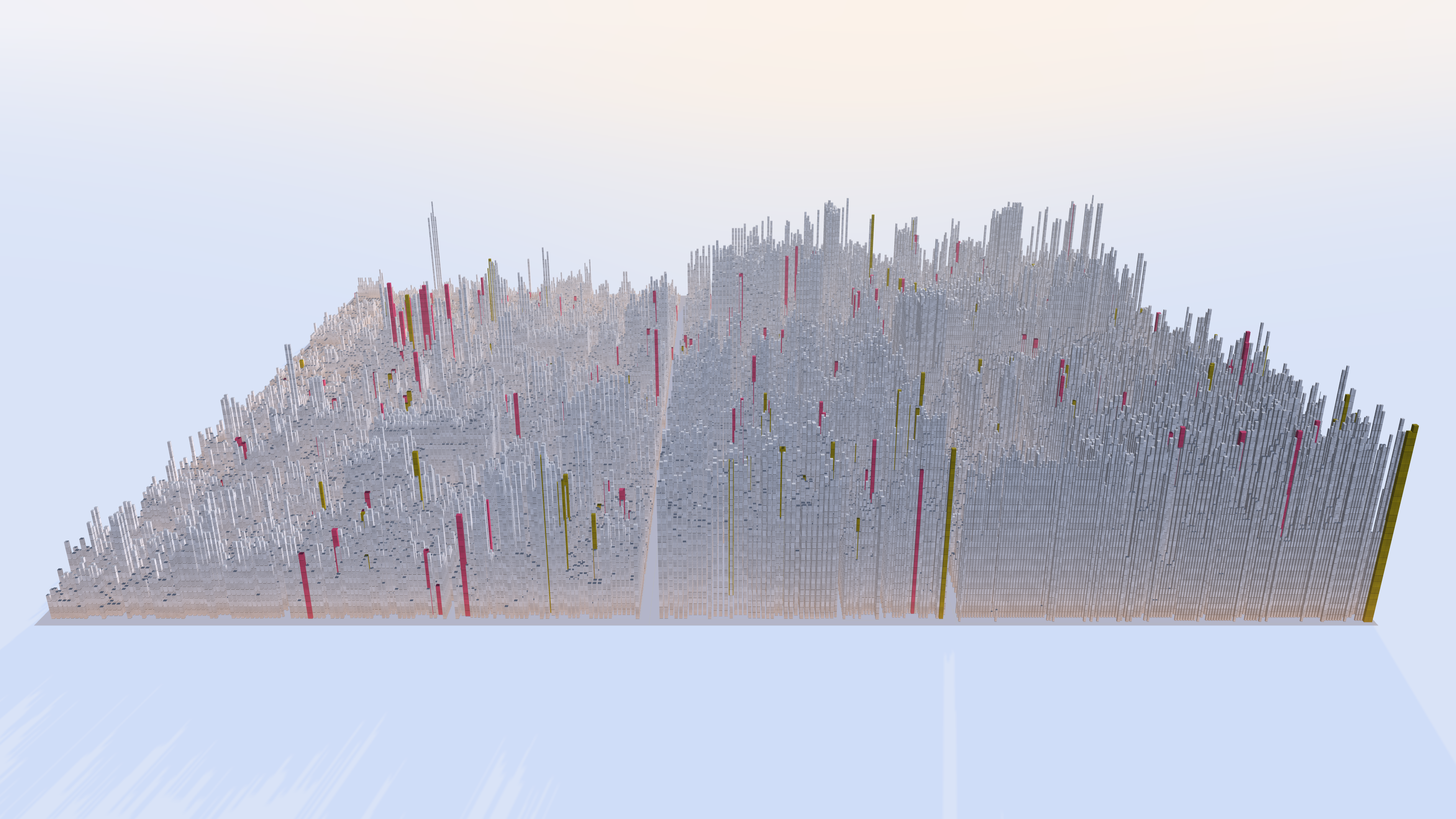
Axiom released a Lean formalization of the entire Stacks Project on November 4 (official X post at 17:13 UTC, with over 2 million views). The roughly 7,500-page open-source algebraic geometry reference, started by Johan de Jong in 2005, becomes about 16 million lines of code, which Axiom calls the largest integrated, reusable formal math library ever built. Hierarchically coordinated AI agent swarms did the work and surfaced dozens of statements in the original that needed local fixes, with counterexamples. The library is open source and browsable side by side with the original text at stacks.axiommath.ai.

Axiom Formalizes the Entire Stacks Project in Lean With AI Agent Swarms: About 16 Million Lines, Billed as the Largest Reusable Formal Math Library Yet

Key Takeaways

  • Scale: about 7,500 pages of source text and roughly 16 million lines of Lean, which Axiom calls the largest integrated reusable formal math library (vendor claim).
  • Method: hierarchical AI agent swarms translate statements, search Mathlib for existing abstractions and build proofs in parallel, with multi-agent auditing and semantic cross-checks against the source to keep statements faithful.
  • Findings: the system surfaced dozens of statements needing local refinement, including missing hypotheses and edge cases in positive characteristic, and built explicit counterexamples where claims failed.
  • The permanent Stacks tag structure is preserved so every Lean declaration links back to the original text; stacks.axiommath.ai offers side-by-side reading and a dependency graph.
  • This follows Axiom's October 27 formalization of the Classification of Finite Simple Groups (CFSG); per de Jong's request, corrections are kept in Axiom's own repository rather than sent upstream.
Read full story
Linked Models & Agents: