AI Coding Live News

DigitalOcean Launches Cuttlefish: iPhone App to Approve, Steer, and Pause Managed Agents

On 2026-11-05 DigitalOcean launched Cuttlefish, a native iPhone app for Managed Agents (Public Preview): follow live sessions and tool calls, approve or deny full commands or diffs, require Face ID/passcode for high-risk actions, and steer, pause, checkpoint, or roll back. Sessions run in cloud microVMs that keep going when the phone is locked or offline. With Box as launch partner, Box Mount (Private Preview) syncs a Box folder into the agent sandbox under Box permissions and version history.
DigitalOcean Launches Cuttlefish: iPhone App to Approve, Steer, and Pause Managed Agents

Key Takeaways

  • Official: @digitalocean post 2026-11-05 14:11 UTC; blog introducing-cuttlefish; App Store, Public Preview
  • Live sessions/reasoning/tool calls; approve full command, path, or diff; Face ID/passcode for high-risk; steer, pause, resume, stop
  • In-app previews of sites/docs; browse workspace files; checkpoints with fork/rollback
  • Supervises harnesses including Claude Code, Codex CLI, OpenCode, OpenHands, Hermes, LangGraph, CrewAI
  • Box Mount (Private Preview): sync a Box folder into the sandbox; edits/deletes write back with Box permissions and version history
Read full story

Nous Research Ships Hermes Agent v0.23.0 “The Hearth”: Browser Webapp Desktop, Unified Gateway Sessions, Plugin Catalog Past 1,050

On 2026-11-05 Nous Research released Hermes Agent v0.23.0 (The Hearth). Your gateway can serve the full Desktop in a browser; CLI/TUI/Desktop/editors/bots/cron share one session authority; the plugin catalog grew from ~600 to 1,050+; plus conversation rewind, inline terminal images, and paid-MCP spend limits. Official: ~1,950 merged PRs and 666 contributors.

Nous Research Ships Hermes Agent v0.23.0 “The Hearth”: Browser Webapp Desktop, Unified Gateway Sessions, Plugin Catalog Past 1,050

Key Takeaways

  • Official GitHub release: Hermes Agent v0.23.0 (2026-11-05), codename The Hearth
  • Webapp: gateway serves full Desktop in a browser (off by default; webapp.enabled)
  • Unified sessions: one gateway owns chats so surfaces stop double-writing
  • Plugin catalog ~600→1,050+ with a Verified tier; paid MCP tools can declare cost + chat spend caps
  • Since v0.22.0 (vendor): ~10,080 commits / ~1,950 PRs / 666 contributors
Read full story
Linked Models & Agents:

AWS Kiro Crew Ships Bots GA: Named Long-Running Agents with Own Memory and Parallel Sessions — Delegate Processes, Not Tasks

On November 5 Kiro (@kirodotdev) announced Kiro bots GA in open-source multi-agent Kiro Crew. Each bot has persistent Notes, its own workspace and Dashboard; it launches parallel workers, redirects drift, consolidates results, and asks approval when needed — with schedules and per-role minimal tool permissions.

AWS Kiro Crew Ships Bots GA: Named Long-Running Agents with Own Memory and Parallel Sessions — Delegate Processes, Not Tasks

Key Takeaways

  • Primary: @kirodotdev 2026-11-05 post + official blog Introducing bots in Kiro Crew
  • Shape: named long-running bot = Notes memory + parallel workers + one ongoing chat
  • Capabilities: monitor/redirect/consolidate; schedules; Dashboards
  • Permissions: tools scoped per role; expansion needs approval; Notes editable
  • Start: Kiro Crew sidebar Bots → Add a bot (default or custom agent)
Read full story

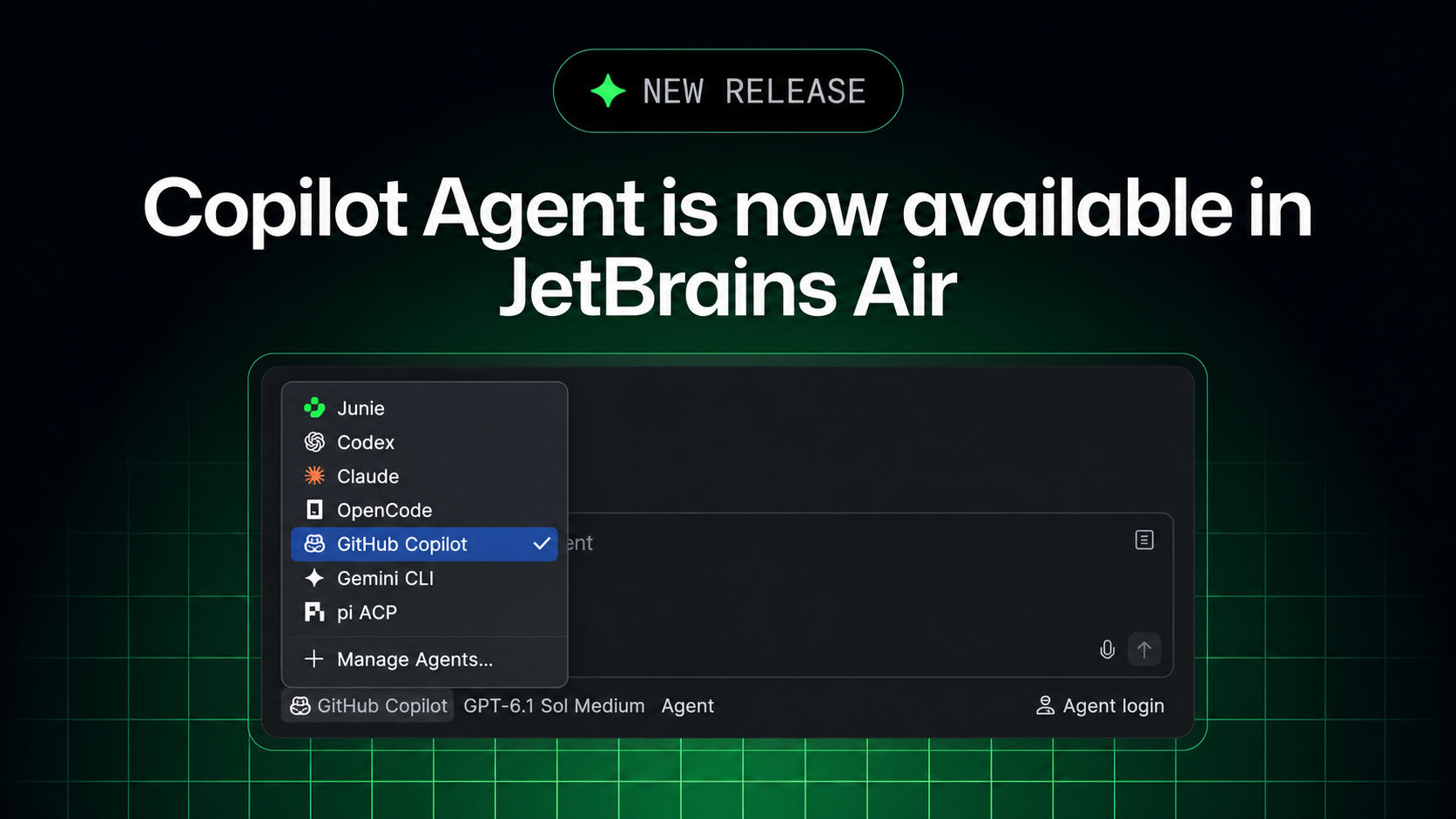
GitHub Copilot Comes to JetBrains Air: Run Coding Tasks Locally in the IDE or in Isolated Cloud Environments via ACP, Billed to Your Copilot Subscription

On November 3 GitHub announced on its official changelog that GitHub Copilot is now available in JetBrains Air. The integration is built on the Agent Client Protocol (ACP): developers pick Copilot in Air's agent picker, delegate coding tasks, track several sessions in parallel and review changes next to their code. Tasks can run locally in a JetBrains IDE or in isolated cloud environments through Air Teams, and they draw on the Copilot subscription rather than JetBrains AI credits.

GitHub Copilot Comes to JetBrains Air: Run Coding Tasks Locally in the IDE or in Isolated Cloud Environments via ACP, Billed to Your Copilot Subscription

Key Takeaways

  • Copilot now appears in JetBrains Air's agent picker and works with an existing Copilot account
  • The integration uses the Agent Client Protocol (ACP) and can be used alongside the existing GitHub Copilot plugin
  • Developers can track multiple agent sessions in parallel and review changes next to their code using project context and IDE tools
  • Cloud tasks run through Air Teams, each in a Docker container on a fresh virtual machine, with traffic through a proxy and no state kept between tasks
  • Cloud tasks use the Copilot plan rather than JetBrains AI credits, but Air analytics do not include Copilot usage and admins cannot set Copilot spending limits inside Air
Read full story
ADSponsored

Claude Code Background Subagent Status Lines Now Written by Haiku 5.5: About 99% Cheaper per Update, About 6% More Prompts per Limit

On November 4 ClaudeDevs, Anthropic's official developer account, said the status line that a background subagent in Claude Code refreshes every 30 seconds used to re-read its whole conversation each time, and is now written by Haiku 5.5 from short notes, so each update costs about 99% less. Anthropic says sessions with background subagents used about 5% less of the limit, giving about 6% more prompts on the same limit. It is live for most Pro, Max and Ultra users and everyone on Team and Enterprise, on v2.1.316 or later.

Key Takeaways

  • A background subagent refreshes its status line every 30 seconds, and each refresh used to re-read the subagent's whole conversation
  • Haiku 5.5 now writes the status line from short notes, which Anthropic says makes each update about 99% cheaper
  • The subagent itself keeps its own model; only the status line is written by Haiku 5.5
  • Anthropic says sessions with background subagents used about 5% less of the limit, so the same limit gives about 6% more prompts
  • It is live for most Pro, Max and Ultra users and everyone on Team and Enterprise; update to v2.1.316 or later
Read full story

Google Antigravity v2.29 Brings Remote Agents and a Gemini Live Voice Mode: Agent Sessions Run in a Google-Managed Cloud and Keep Working After You Close Your Laptop, Rolling Out to AI Pro and Ultra

Ivan Leo, who works on developer experience at Google DeepMind, shared the official docs for Antigravity's new Remote Agents feature on X on November 4. Per the docs, Remote Agents run agent sessions and tools in an isolated, Google-managed remote environment, so tasks keep going when you close your laptop or browser or switch between desktop and mobile. Sessions start from the Antigravity App, the Antigravity CLI (1.4.12+, agy --remote-agent) or the web at antigravity.google.com, and remote projects can attach GitHub repositories, Google Drive files and uploads. It is rolling out gradually to Google AI Pro and Ultra subscribers on personal accounts; it is not available on the free plan, AI Plus or business accounts. The official changelog shows this ships in Antigravity v2.29.0 (November 3), which also starts rolling out a voice mode powered by Gemini Live for handing requests to the agent by voice, redesigns the Automations page into Scheduled, Always on and Paused lists, and adds a native Jupyter notebook viewer.

Key Takeaways

  • Remote Agents run in an isolated Google-managed environment with no local machine required; Remote Control instead connects to your own computer or server, and the web sidebar switches between them.
  • Three entry points: a New Remote Project in the Antigravity App, agy --remote-agent in CLI 1.4.12+, or antigravity.google.com in any browser, including mobile.
  • Remote projects can attach GitHub repositories (cloned automatically), Google Drive files and uploads (8 MiB per file, 100 MiB per project, 2 GiB per account).
  • CLI remote sessions default to the always-proceed (turbo) permission preset, so commands run without approval; locally installed MCP servers, plugins and skills are not available remotely yet.
  • Also in v2.29.0 (November 3): a Gemini Live voice mode rolling out gradually, a redesigned Automations page, and native rendering of .ipynb notebooks.
Read full story

SenseTime Ships SenseNova 6.8 Flash: An Office Agent Model With Long-Term Memory and Proactive Interaction That Builds Animated Slides, Motion Posters and Editable Blender 3D Projects

On the evening of November 2, SenseTime released the official version of SenseNova 6.8 Flash, a multimodal agent model with two main upgrades. First, long-term memory and proactive interaction: it keeps user goals and constraints across tasks and sessions and flags affected items when information changes. Second, design generation across Web, SVG, Three.js, Blender, animated PPT and motion posters, with Figma integration. It is live in SenseNova Studio, the Raccoon assistant and the SenseNova Token Plan; the official X account says the Token Plan offers a free trial of 1,500 API requests every 5 hours. SenseTime says it beats some international frontier models on agent collaboration, data analysis and presentation generation, but the announcement lists no specific scores.

SenseTime Ships SenseNova 6.8 Flash: An Office Agent Model With Long-Term Memory and Proactive Interaction That Builds Animated Slides, Motion Posters and Editable Blender 3D Projects

Key Takeaways

  • The official release landed on the evening of November 2, positioned as a multimodal agent model for office collaboration and design delivery
  • Long-term memory plus proactive interaction: it remembers goals, constraints and preferences across sessions and suggests changes when related information shifts (demos ran on an internal Raccoon build)
  • Design output spans Web, SVG, Three.js, Blender, animated PPT and motion posters, producing editable PPTX files and Blender projects, with Figma integration
  • Available in SenseNova Studio, the Raccoon assistant and the SenseNova Token Plan; the official X post cites 1,500 free API requests every 5 hours
  • SenseTime only says it beats some international frontier models on agent collaboration, data analysis and presentation generation; no scores were published and there is no independent evaluation yet
Read full story
Linked Models & Agents:
⚡ SenseNova 6.8 Flash⚡ SenseNova Loop-9B-Preview🤖 Raccoon🌐 SenseTime

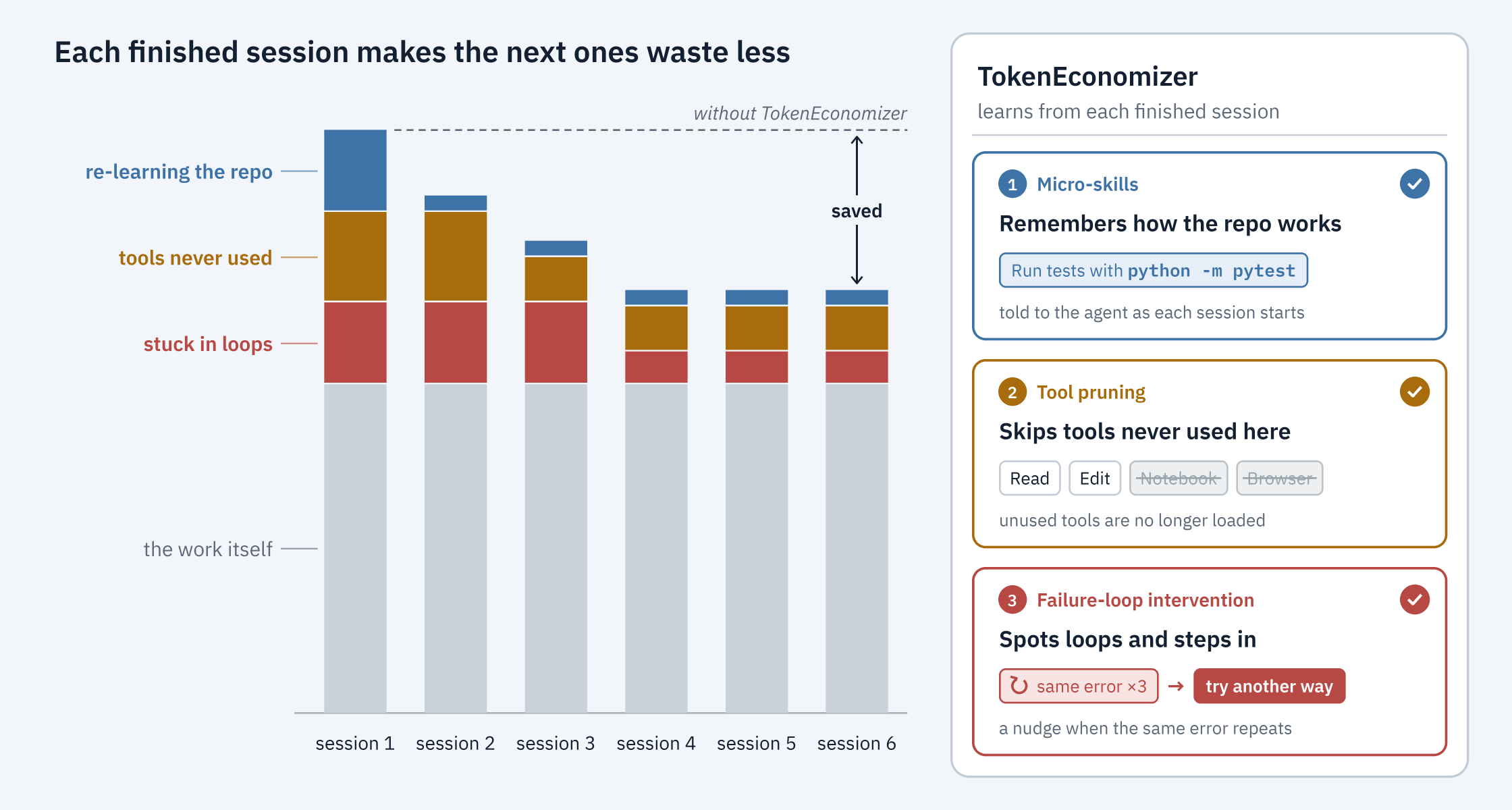
Microsoft Research and UC Berkeley open-source TokenEconomizer, a plugin that cuts Claude Code and Codex costs by 18.4–30.9% on SWE-Bench without changing the agent

Microsoft Research, Microsoft Security and UC Berkeley open-sourced TokenEconomizer on GitHub (Apache 2.0, v0.1.0 released October 26), a plugin for Claude Code, Codex, GitHub Copilot CLI and Pi, with experimental opencode support. It learns from earlier sessions in the same repository: micro-skills remember repo facts, tool pruning drops tool definitions that go unused, and a loop guard nudges an agent that is stuck. The paper reports 18.4–30.9% lower mean cost across five agent and model combinations on 277 SWE-Bench tasks (paper figures).

Microsoft Research and UC Berkeley open-source TokenEconomizer, a plugin that cuts Claude Code and Codex costs by 18.4–30.9% on SWE-Bench without changing the agent

Key Takeaways

  • Cost: on 277 SWE-Bench tasks across 6 repositories and 5 agent and model combinations, mean cost fell 18.4–30.9%, and all 30 repository-by-combination cells got cheaper (paper figures, including the plugin's own model calls)
  • Success rate: Pass@1 rose in 4 of 5 combinations, e.g. Copilot CLI with Sonnet 5 cost 18.4% less with Pass@1 +2.6, while Claude Code with Opus 4.8 cost 30.9% less with Pass@1 -1.0
  • Three mechanisms: micro-skills (repo facts stated only after three sessions confirm them), tool pruning (by default a tool unused over 10 prompts across 2 sessions is left out), and a failure-loop guard (one redirect when a judge is at least 0.7 confident, never stopping a turn itself)
  • Generalization: 16–21% lower cost on Web-Bench and 6–20% lower on two security-auditing benchmarks where every task is a new repository
  • Deployment: Apache 2.0, Python 3.10+, no API key of its own, and learned experience stays local in ~/.tokeneconomizer
Read full story

OpenAI Agents API ships Auto Review, async compaction, experimental time awareness and mid-session tool updates

The OpenAI Developers account shared a post by Steve (@stevendcoffey), who works on the API at OpenAI, listing five Agents API updates this week: Codex-style Auto Review of commands before execution, compaction that runs in the background, an experimental time-awareness feature, updating a session's tools at any time, and automatic caching of system prompts across all sessions. As of writing, the official API changelog does not list these items yet.

Key Takeaways

  • Five updates: Auto Review, async compaction, time awareness (experimental), updating session tools at any time, and automatic cross-session system prompt caching
  • Auto Review mirrors the Codex mechanism and evaluates commands for potential bad behavior before they run
  • Time awareness lets the model act on time-boxed instructions such as "timebox CI fixes to 10 minutes"
  • The Agents API entered public beta on September 10, and this is another round of features within 7 weeks (after computer use on Sep 29, sandbox prewarming on Oct 9 and Ultrafast mode on Oct 16)
  • OpenAI has published no latency or cost-saving numbers, and the changelog has not listed these items yet
Read full story

OpenAI says Daybreak Blue sessions on personal accounts may be used for training even with the training toggle off, drawing security researcher backlash on X

OpenAI's "Data controls in ChatGPT" Help Center page now has a "Trusted Access on personal accounts" section: during sessions in Trusted Access programs such as Daybreak Blue, OpenAI may use interaction content to improve its models even when "Improve the model for everyone" is off, to strengthen safeguards against cyber misuse, while other activity still follows the user's setting. Emails that several users shared on X say the change takes effect November 29, and researchers including Sean Heelan criticized it for pulling unreported vulnerabilities and research into training data.

Key Takeaways

  • Official wording: Trusted Access sessions such as Daybreak Blue on personal accounts may be used to improve models regardless of the "Improve the model for everyone" toggle
  • The exception covers only Trusted Access sessions; other chats on the account still follow the existing setting
  • Managed workspaces such as Business and Enterprise, and the API, are still not used for training by default
  • Emails users shared on X say it takes effect November 29, and some users say individuals lose Daybreak Blue API access on November 20 (the official pages do not state either date yet)
  • Sean Heelan's critical post drew 600+ likes and 100+ reposts, and several bug bounty hunters said they would reconsider using the program
Read full story
ADSponsored
A
Anthropic@AICoder·
👀103
🔥80

Claude Code 2.1.314 adds a block on writes outside working directories, IdP group routing for the apps gateway, and idle compaction in VS Code and Desktop

Anthropic published Claude Code v2.1.314 on GitHub at 01:06 UTC on Oct 30. The official CHANGELOG lists 119 entries, more than half of them fixes. The new features lean enterprise: permissions.blockWritesOutsideWorkingDirectories makes Write, Edit and NotebookEdit refuse paths outside the working directories in every permission mode; Claude apps gateway upstreams can be limited to IdP groups, and Bedrock upstreams can log which guardrail fired; idle compaction now also runs in VS Code and the Code tab of Claude Desktop. It also fixes sessions failing repeatedly when an admin caps effort, and claude -p exiting 0 with no output when startup failed.

Key Takeaways

  • Size: the official v2.1.314 CHANGELOG has 119 entries, more than half of them fixes; released at 01:06 UTC on Oct 30
  • Safety: the new permissions.blockWritesOutsideWorkingDirectories setting stops Write, Edit and NotebookEdit from writing outside the working directories in every permission mode
  • Enterprise gateway: upstreams take an optional groups list so only developers in those IdP groups are routed there, failover included; Bedrock upstreams gain guardrail_trace
  • Experience: idle compaction now runs in VS Code and the Claude Desktop Code tab, summarizing idle conversations above 200K tokens
  • Fixes: when an admin caps effort, Claude Code lowers it and retries; a failed claude -p startup now prints the error and exits 1
Read full story
Linked Models & Agents:

Google is winding down its async coding agent Jules: read-only after Nov 11 and shut down on Dec 31, with its learnings moving into Antigravity

On Oct 29, Google announced through the official @julesagent account and the Jules changelog that Jules will wind down on December 31, 2026. Users can keep finishing sessions until November 11, after which Jules becomes read-only until the end of the year. Google says its learnings from Jules are going into Google Antigravity, its agent-first development platform, to combine autonomous remote background task execution with an agent-first environment. Google also published an export path for settings, environment variables, scheduled tasks, repositories, memories and every session.

Key Takeaways

  • Key dates: sessions can run until Nov 11, then Jules is read-only, and it shuts down on Dec 31
  • Next stop: Jules learnings go into Google Antigravity; Google does not promise automatic migration of sessions, memories or schedules
  • Export: run npm install -g @google/jules and jules login, then paste the official export prompt into a CLI coding agent; data lands in ~/jules-export
  • Code, branches and PRs already live in GitHub and are unaffected; env-variables.json holds secrets, so keep the export folder out of repos
Read full story

Claude Code lead Boris Cherny on faster usage drain: every shared session reviewed, no regression found, fixes for a few smaller issues rolling out

Since Oct 21 many developers on X have complained that Claude Code was draining usage limits much faster. On Oct 28 (UTC) Boris Cherny, who leads Claude Code at Anthropic, replied on X that the team reviewed every session ID users shared, found no single root cause and no regression in Claude Code, and is rolling out fixes for a few smaller issues that made some sessions burn tokens faster. Most fast-drain cases traced back to one or two heavy sessions using xhigh effort, /goal, Workflows, Agent Teams or long SDK jobs.

Key Takeaways

  • The complaint post that started it said usage was draining 5x faster and drew about 1,660 likes and 240+ replies (a user claim, not official data)
  • Boris Cherny: the team checked every shared session ID, found no single root cause or Claude Code regression, and is rolling out fixes for a few smaller issues
  • Heavy features were the main driver: xhigh effort, /goal, Workflows, Agent Teams and long SDK jobs
  • Subagents inherit the session effort level by default, which adds up fast; /usage shows where tokens went
  • The official docs say Agent Teams use about 7x more tokens than standard sessions when teammates run in plan mode
Read full story
Linked Models & Agents:

Entire, led by ex-GitHub CEO Thomas Dohmke, launches a Git forge for agent-human collaboration: Trails replace PRs, pushes up to 89x faster than GitHub per its benchmarks

On Oct 26, Entire co-founder and CEO Thomas Dohmke announced on X and the company blog that Entire is live as "the Git forge for agent-human collaboration." It has three parts: Trails, which replace diff-based review with eval scores computed on every push; Git-compatible distributed hosting that can replicate across regions or mirror from GitHub; and Continuous Memory, which stores agent sessions in the repo. Buildkite and Depot are the first CI integrations, and it is open to any developer today.

Entire, led by ex-GitHub CEO Thomas Dohmke, launches a Git forge for agent-human collaboration: Trails replace PRs, pushes up to 89x faster than GitHub per its benchmarks

Key Takeaways

  • Push speed (vendor-reported, open-source benchmark): Entire 418 pushes/s vs Cursor Origin 65, Pierre 15, GitLab 10, GitHub 4.7, i.e. up to 89x faster than GitHub and 6x faster than Cursor Origin
  • Trails: on every push, several review agents score the change independently in cloud sandboxes (defaults include Security, Slop and Human Review Required), showing the last 5 runs plus the current one; per-repo Gates can require human approval and passing CI before merge
  • Continuous Memory: two open-source, local-first plugins, entire-graph and entire-brain; entire-graph saved up to 71% of tokens in Entire's testing
  • Regions at launch: US, EU, Australia and India; repos can be mirrored from GitHub with GitHub kept as the source of truth
  • Pricing: not stated in the launch post
Read full story

VS Code 1.143 makes the Copilot SDK-based harness the default, adds multi-model comparison and on-device MAI Code 1.1 Flash

Microsoft shipped Visual Studio Code 1.143. The Copilot harness, built on the Copilot SDK, is now the default for new sessions and works across the editor and Agents window. A Compare Models preview runs several models on one task with an optional Judge model, an experimental mode runs MAI Code 1.1 Flash on a local NVIDIA GPU, and large chats open much faster.

VS Code 1.143 makes the Copilot SDK-based harness the default, adds multi-model comparison and on-device MAI Code 1.1 Flash

Key Takeaways

  • Default harness: new sessions use the Copilot harness built on the Copilot SDK, which can run in the background and move between the editor and the Agents window
  • Compare Models (Preview): one prompt runs 2 or more models in parallel, mixing Copilot, Claude and Codex harnesses, with an optional Judge model scoring time and token use and a Synthesize step
  • On-device models (Experimental): download MAI Code 1.1 Flash to run locally, labeled On-device with no AI credits used; needs an NVIDIA GPU with 96 GB+ memory
  • Performance (vendor figures): cold-opening a ~1,150-request chat dropped from 35.6 s to 9.0 s, and window freeze time from 28.3 s to 0.6 s
  • Also: the editor diagnostic highlight limit rises from 500 to 5,000 per file, and the Windows installer can install GitHub Copilot CLI
Read full story